Table of Contents
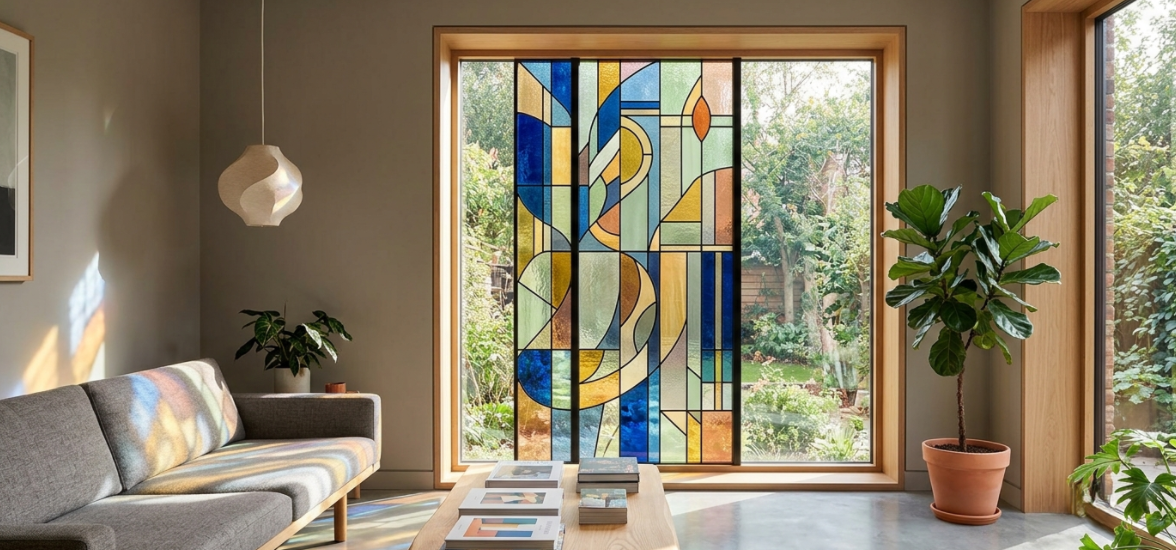
Walk through any newly built villa in DHA or a boutique café that opened in Karachi in the last year, and you’ll notice something that would have seemed out of place a decade ago colored glass, catching the light, doing exactly what it did in the havelis and mosques of old Lahore centuries ago. Stained glass never really disappeared from Pakistan it just went quiet for a generation while plain glass and minimalist design took over. Now it’s back, and not as a nostalgia trend confined to heritage restoration projects. It’s showing up in brand-new construction, in interiors designed by architects who trained on clean lines and neutral palettes, and in spaces that have no historical pretensions at all.
If you’ve noticed the same thing and found yourself wondering why a centuries-old craft is suddenly relevant again in 2026 interiors, you’re not imagining it. This is a real, traceable shift in how people are thinking about light, color, and personality in their homes. This guide walks through exactly why stained glass is making a comeback, what’s driving the shift, and where it’s actually showing up in modern Pakistani interiors right now.
A Quick History, Because Context Matters
Stained glass has been around for well over a thousand years, first used widely in European cathedrals to tell religious stories in colored light for congregations who couldn’t read. In South Asia, colored and cut glass found its own expression through Mughal-era jharoka windows, jaali screens, and the glass mosaic work still visible in shrines and havelis across Lahore, Multan, and beyond. The craft has always done the same basic job wherever it appeared turning plain daylight into something with mood, story, and color.
What changed over the last several decades wasn’t the appeal of that effect it was the rise of minimalist, glass-and-concrete modern architecture that treated windows purely as functional light sources rather than as design features in their own right. Stained glass got filed away as something for old buildings, churches, and heritage sites. Plain glass became the default, everywhere, for almost everything.
That default is now being questioned and that’s the real story behind this comeback.
Quick Facts About the Stained Glass Revival:
- Interior designers across major Pakistani cities report a sharp rise in client requests for colored and patterned glass features over the past two to three years.
- Modern fabrication techniques, including copper foil work and layered glass, deliver the traditional stained glass look at a fraction of historical leaded-glass cost and installation time.
- The trend is strongest in three specific applications entryway features, bathroom privacy panels, and interior room dividers.
- Social media, particularly interior design accounts on Instagram and Pinterest, has played a measurable role in reintroducing stained glass to a younger homeowner audience.
- Stained glass now regularly appears alongside otherwise minimalist, neutral-toned interiors, rather than only in maximalist or heritage-styled spaces.
Why Stained Glass Is Coming Back Now
1. People Are Tired of Rooms That Feel the Same
The last decade of interior design, in Pakistan and globally, leaned heavily into a specific formula: white walls, neutral furniture, matte black fixtures, plain glass. It photographed well, it was safe, and it worked for a while. But a huge number of homeowners have ended up with interiors that feel interchangeable a beautiful kitchen that looks exactly like the beautiful kitchen three houses down the street.
Stained glass breaks that sameness immediately. A colored glass transom above a front door, or a patterned panel filtering light into a hallway, can’t be replicated by simply buying the same furniture everyone else bought. It’s custom by nature, which makes it one of the few design elements that genuinely can’t be mass-produced into a trend that looks identical in every home that adopts it.
2. Natural Light Is Being Treated as a Design Material, Not Just a Utility
There’s been a broader shift in how architects and homeowners think about daylight. It’s no longer just something a window lets in it’s increasingly treated as a material in its own right, something that can be shaped, colored, and directed the same way you’d choose a paint color or a flooring material.
Stained glass is the most direct way to design with light itself. A geometric pattern in amber and smoke grey tones changes not just what a room looks like, but what it feels like at different times of day the quality of light at 8 a.m. is completely different from the same window at 5 p.m., and stained glass makes that daily variation part of the room’s character instead of an afterthought.
3. Modern Fabrication Has Made It Far More Accessible
Traditional leaded stained glass historically hand-cut, hand-leaded, and installed by specialist craftsmen was expensive and slow enough that it stayed out of reach for most residential projects outside of religious buildings and the homes of the very wealthy. Modern techniques, including copper foil construction and layered safety glass fabrication, deliver a visually similar effect at a meaningfully lower cost and with a much shorter production timeline.
This matters enormously for the current revival. A design trend can only become a real trend, not just an aspiration seen on Pinterest, once it’s achievable for a realistic range of budgets. Stained glass crossed that threshold in the last several years, and that’s a large part of why it’s showing up in ordinary homes now rather than staying confined to palaces and cathedrals.
4. It Solves a Real Problem: Privacy Without Losing Light
This is one of the more practical, less talked-about reasons stained glass is returning, and it explains why bathrooms, staircases, and street-facing windows are some of the most common places it’s being installed right now.
Plain frosted glass solves privacy by blocking almost everything it lets light through but removes any visual interest along with the sightline. Stained glass does the same privacy job the pattern itself breaks up any silhouette from outside while adding color, texture, and personality instead of just opacity. For a bathroom window, a street-facing panel, or a shower enclosure, that’s a genuinely better solution to a problem every home has, not just a decorative choice.
5. Open-Plan Living Created a New Need for Soft Divisions
The last fifteen years of residential design pushed hard toward open-plan living rooms, kitchens, and dining areas flowing into one another without walls. It works well for a lot of homes, but it also created a new problem: how do you create some visual separation between spaces without going back to solid walls and closing the plan off entirely?
Stained glass room dividers have become one of the more elegant answers. A colored glass partition lets light and a sense of connection pass between an open living and dining area while still giving each zone its own visual identity. It’s a soft boundary a wall would remove the openness that made the plan appealing in the first place stained glass keeps the openness while still marking a transition.
6. Social Media Rediscovered What Architecture Had Forgotten
It would be incomplete to talk about this revival without mentioning the very direct role Instagram and Pinterest have played. Colored light streaming through a patterned window photographs unusually well the interplay of shadow, color, and texture changes throughout the day, which makes stained glass installations a recurring, popular subject on design accounts and home renovation content.
For a lot of younger homeowners planning their first major renovation, that’s often where the idea reenters their awareness stained glass stopped being something only seen in old churches or their grandparents’ homes, and started being something they saw tagged in a beautifully lit reel from a boutique café or a renovated apartment. Visibility drives demand, and stained glass has had a genuine visibility moment over the past few years.
7. Boutique Hospitality Led the Way, and Homeowners Followed
Cafés, boutique hotels, and small restaurants have been early, visible adopters of stained glass as a design statement long before it became common in residential projects. A single abstract stained glass feature wall can define an entire café’s identity and become the backdrop for nearly every photo customers take inside making it one of the more effective, low-cost ways a commercial space can build a distinctive visual brand.
That commercial visibility has a trickle-down effect. Homeowners who experience stained glass in a café or boutique hotel setting, and respond to it emotionally, are far more likely to ask their own architect or interior designer whether something similar could work at home. Hospitality design has effectively done a lot of the awareness-building work that residential stained glass is now benefiting from.
8. It Bridges Heritage and Modern Design Without Feeling Costume-y
One of the trickier challenges in Pakistani interior design has always been how to incorporate genuine heritage elements Mughal-inspired lattice work, traditional motifs, calligraphic detail without a space ending up feeling like a themed restaurant rather than a real, livable home.
Stained glass solves this unusually well because it can flex along a spectrum from purely abstract, contemporary color-block panels that could sit in any minimalist interior, to Mughal-inspired jharoka-style windows with colored glass behind traditional latticework, all the way to fully calligraphic or motif-driven designs for clients who want a more overt heritage statement. That range means stained glass can serve a starkly modern villa and a heritage-style haveli restoration equally well, without either project feeling like it borrowed the wrong idea from the other.
9. Durability and Safety Standards Have Caught Up
An underappreciated factor in this revival is that stained glass installations today can be paired with tempered or laminated safety glass, addressing a legitimate structural and safety concern that used to make architects hesitant to specify decorative glass in prominent locations, especially at height or in homes with children.
This matters because it removed a real practical objection. A decade or two ago, a cautious architect might have steered a client away from a large stained glass feature simply because the safety case was harder to make. With layered safety glass now standard practice for exterior stained glass installations, that hesitation has largely disappeared, clearing the way for larger and more prominent applications than would have been comfortably specified before.
Where This Is Actually Showing Up in Interiors Right Now
It’s one thing to talk about why stained glass is returning in the abstract, and another to see exactly where it’s landing in real homes and businesses. A few applications stand out as the clearest evidence of the trend.
Entryway transoms and sidelights. The front door remains the single most popular place for a homeowner’s first stained glass installation a colored geometric or abstract panel above or beside the main entrance, setting the tone for the whole home before a guest even steps inside.
Bathroom and shower windows. Privacy-driven, but increasingly chosen for its aesthetic value as much as its function, colored and textured glass panels are replacing plain frosted glass in a growing share of bathroom renovations.
Staircases and stairwell skylights. A colored glass skylight above a central staircase turns a purely functional circulation space into one of the most visually memorable parts of a home, washing the stairwell in shifting, tinted daylight throughout the day.
Interior partitions and room dividers. As open-plan living remains the default layout for new construction, stained glass partitions are increasingly used to introduce soft zoning between kitchen, dining, and living spaces.
Commercial feature walls. Cafés, boutique hotels, and retail storefronts continue to be some of the most visible and influential adopters, often using backlit stained glass panels that stay vibrant even without direct daylight.
Is Stained Glass Right for Every Interior?
Not every space needs it, and that’s worth saying honestly rather than treating stained glass as a universal upgrade. It tends to work best where a few conditions line up.
Spaces with meaningful natural light get the most value from stained glass, since the entire effect depends on light passing through the glass. A north-facing room with limited direct sun can still work well with lighter, warmer color tones, but a stained glass installation in a consistently dim space won’t deliver the same impact.
Rooms where privacy and light both matter bathrooms, street-facing windows, ground-floor rooms near a boundary wall are natural fits, since stained glass solves a real functional problem rather than serving as decoration alone.
Homes and businesses willing to treat it as a long-term design investment tend to be happiest with the result. Stained glass, done well, isn’t a trend that needs replacing in five years the same way a paint color or furniture style might. It’s closer in spirit to a piece of architecture than a piece of decor, which means it rewards a bit more upfront thought about placement, color palette, and how it relates to the rest of the interior.
What to Keep in Mind Before Starting a Project
If the idea has you thinking about your own home or business, a few practical considerations are worth sorting out early, before falling in love with a specific design.
Match the style to the room’s actual function, not just its aesthetic appeal. A bold, dark color-block panel might look stunning in photos but could make a small, light-starved room feel dim and closed in.
Think about the building’s existing architecture. A design that would feel completely natural in a heritage-style home can look oddly out of place bolted onto a starkly modern villa, and the reverse is just as true. The best stained glass installations tend to work with a building’s existing character rather than against it.
Ask about safety glass requirements early, particularly for exterior windows, doors, or anything installed at height. This is a structural decision, not just an aesthetic one, and it’s far easier to plan for from the start than to retrofit later.
Be realistic about timeline for custom work. Standard geometric or floral patterns can typically be produced and installed relatively quickly, but fully custom designs calligraphy, commemorative pieces, intricate landscape scenes take considerably longer and benefit from an unhurried design and approval process.
A Trend With Real Staying Power
It’s fair to ask whether this is a passing design moment or something with more lasting relevance and the underlying reasons behind the revival suggest it’s the latter. Stained glass isn’t returning because of a single viral moment it’s returning because it solves several real, ongoing problems at once: the fatigue with sameness in modern interiors, the desire to treat natural light as a genuine design material, the practical need for privacy without sacrificing character, and the softer zoning open-plan living has created a demand for. Those aren’t temporary conditions. If anything, they’re becoming more central to how people think about their homes, not less.
That’s also why this piece is meant as a starting point for thinking about stained glass, not a sales pitch for any particular style. Whether the right fit for your space is a subtle geometric transom, a full backlit feature wall, or something drawing more directly on Mughal-inspired latticework, the first useful step is simply understanding why this material is having a moment again and whether the reasons behind that moment apply to your own space.
At Green Glass Designer, we spend a lot of our time talking through exactly this question with homeowners and architects across Lahore, Karachi, Islamabad, and beyond people who’ve noticed the same shift in modern interiors and want to understand what it could look like in their own home before committing to a specific design. If you’re at that early stage of simply exploring the idea, our stained glass installation service page has more examples of the range this material can cover, from subtle to bold.
Get a Free Consultation or reach out on WhatsApp to talk through whether stained glass makes sense for your space no obligation, just a conversation about what’s possible.