Most people do not start by searching for frosted glass. They start with a problem. A bathroom window faces the neighbour’s terrace. A new glass office partition leaves every phone call on display. A living room that was meant to feel open suddenly feels like a shop window. The need is simple and very human: we want light, space and a modern look, but we also want to feel unobserved in our own rooms.
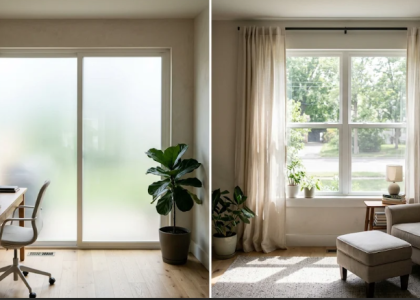
This is exactly the problem frosted glass solves. It lets daylight in while keeping prying eyes out, and it does so without the heavy, closed-in feeling of a solid wall or the dusty fuss of curtains. That is why architects, interior designers and homeowners across Pakistan keep coming back to it, from apartments in Karachi to corporate offices in Lahore and Islamabad.
This guide is written for the beginning of that journey. You do not need to know anything about glass types, thicknesses or fabrication. We will explain what frosted glass is, how it creates privacy, where it makes the biggest difference, and what to think about before you choose it. By the end, you will understand why so many people consider it a must-have rather than a nice-to-have.
What Is Frosted Glass?
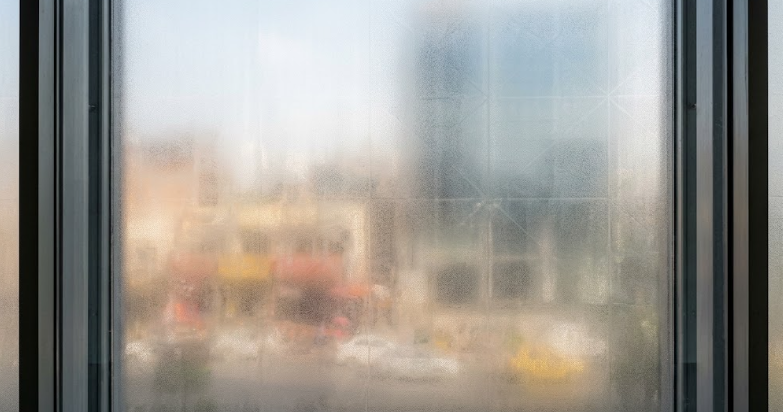
Frosted glass is ordinary clear glass that has been treated so that one or both surfaces become finely textured. Instead of a smooth, polished face that lets you see straight through, the surface is covered in microscopic irregularities. Light still passes through, but it is scattered in many directions. The result is a soft, milky, translucent look where you can tell that someone is standing behind the glass, but you cannot see who they are or what they are doing.
The word “frosted” comes from the resemblance to frost on a winter window. Unlike real frost, the effect is permanent and controlled. Depending on the method, the glass can be lightly misted for a gentle blur or heavily frosted for near-complete privacy. It can also be patterned, so that clear areas and frosted areas work together as a design.
Frosted glass is sometimes confused with other glass products, so it helps to separate them:
- Clear glass is fully transparent and offers no visual privacy.
- Tinted glass is coloured throughout, which darkens the view but does not blur it, so people can still see in at the right angle.
- Reflective glass works like a one-way mirror in bright daylight, but it can reverse at night when lights are on inside.
- Frosted glass diffuses the view itself, which means privacy works day and night, from every angle.
That last point is the key. Privacy that depends on the time of day or the position of the viewer is unreliable. Frosted glass is dependable because it changes how the glass handles light, not just how bright it looks.
How Frosted Glass Creates Privacy
To understand why frosted glass works so well, it helps to think about how you see through a window in the first place. When light bounces off a person or object and passes through clear glass, the rays stay in order. Your eyes receive them neatly, and your brain assembles a sharp image.
When that same light passes through frosted glass, the rough surface bends each ray in a slightly different direction. The rays arrive at your eye scrambled. You still receive brightness, and you still notice colour and movement as a soft shape, but the detail is lost. A face becomes a blur. A phone screen becomes a glow. A document on a desk becomes an unreadable smudge.
The distance effect
Privacy from frosted glass also improves with distance between the object and the glass. A person standing right against the surface may show up as a fairly clear silhouette. A person standing a metre or two behind it fades into a vague shape. This is useful to know when planning a space. If you want maximum privacy, think about how far people will normally be from the glass.
The day and night effect
In daylight, most of the light comes from outside, so people inside are hard to see from the street. At night, the situation reverses. If your room is lit and the outside is dark, the glass lights up from within. Because frosted glass scatters that light, passers-by see only a soft glow and not the detail of what is happening inside. This is where it clearly beats clear glass with thin curtains, which can show clear silhouettes at night.
Worth Noting Frosted glass hides detail, not presence. You may still see a shape or a light behind it. If you need to hide even silhouettes, choose a heavier frosting, a laminated option, or combine frosted glass with solid sections placed where people sit or stand.
Why Privacy Matters More Than Ever in Modern Spaces
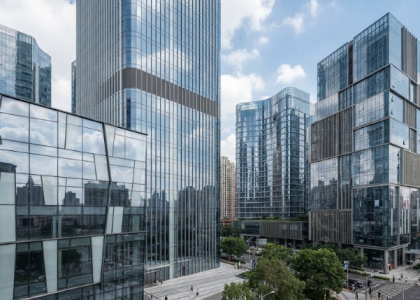
Modern architecture loves glass. Large windows, glass doors, open-plan offices and glass staircases are everywhere, and for good reason. They bring in daylight, make rooms feel larger and give buildings a clean, contemporary look. But the same openness that makes these spaces attractive also creates new privacy problems.
Closer neighbours, smaller plots
In dense cities, buildings are closer together than ever. Apartment blocks look directly into each other. Houses on narrow plots share boundary walls with windows facing one another. A window that felt private ten years ago may now look directly into a new building next door. Privacy is no longer just a matter of closing a door. It is a matter of controlling what each window and each glass surface reveals.
Open-plan living
Open-plan homes are popular, but families still need quiet corners. A study area, a prayer room, a guest bedroom or a home office often sits close to the main living space. Frosted glass allows these areas to be separated visually without building a solid wall and giving up the light.
Work, meetings and confidentiality
In offices, privacy is not only about comfort. It is about confidentiality. Meeting rooms, HR rooms, finance desks and doctor consultation areas all handle information that should not be seen or overheard casually. Fully transparent glass walls look impressive, but they can make staff and clients feel exposed. Frosted glass offers a middle path that keeps the space bright and modern while giving people the sense of a protected room.
Cultural comfort
In many Pakistani homes, family privacy is deeply valued. Guest areas, family lounges and bedrooms are often kept visually separate, particularly when visitors are present. Frosted glass fits this need well. It allows a home to feel airy and contemporary without compromising the privacy that families expect.
Where Frosted Glass Makes the Biggest Difference
Frosted glass is flexible enough to be used almost anywhere that glass is used. Some places, however, benefit from it far more than others. Here are the spaces where it earns its place most clearly.
Bathrooms and washrooms
This is the classic use, and it remains the most important. Bathroom windows, shower enclosures and glass doors all need to let in light while hiding what is inside. Frosted glass removes the need for blinds or curtains in a damp room where fabric can attract mould. A frosted bathroom window can stay open for ventilation without worrying about being seen, and a frosted
shower glass cabin keeps the space bright without turning bathing into a performance.
Bedrooms
Bedroom windows that face a road, a neighbour or a shared courtyard are ideal candidates. Frosting the lower portion of a window, or the entire pane, lets morning light in while making the room feel secure. It can also soften harsh sun, which makes the room more comfortable in summer.
Living rooms and dining areas
Glass doors and large windows facing the street can leave a living room feeling exposed. A frosted panel above eye level, or a frosted section across the lower half, can preserve the view of the sky while hiding the interior. Frosted glass dividers also work well between a lounge and a dining space where you want a sense of separation without building a wall.
Home offices and study rooms
If you work from home, you know how distracting movement in the background can be. A frosted glass partition around a study corner gives a defined work zone, reduces visual distractions and keeps the rest of the house from appearing in your video calls.
Staircases and corridors
Glass stair panels and corridor walls can make a home feel light, but they can also reveal more than you want to. Frosting selected panels creates privacy for upper floors while keeping the staircase feeling open.
Offices and meeting rooms
Commercial spaces are where frosted glass shows its practical value most. Conference rooms, manager cabins and reception areas can all keep the daylight flowing across the floor while protecting sensitive conversations. Our
office glass partitions are a good example of how frosted sections can sit alongside clear glass to create a balanced layout.
Clinics and healthcare spaces
Patients need to feel comfortable and protected. Frosted glass on consultation rooms, examination areas and waiting zones gives a clean, hygienic look and ensures a sense of dignity, without sealing everything in with solid walls.
Restaurants, hotels and salons
Hospitality spaces depend on atmosphere. Frosted glass creates semi-private dining zones, hides back-of-house areas and gives salons a calm, protected feeling. Many businesses also use frosting to add a logo or pattern, which turns a privacy feature into a branding feature.
Shopfronts
Retail spaces often use frosted bands or patterns on
shopfront glass so that staff and stock rooms stay out of sight while the display area remains visible. A frosted band at eye level is also a safety cue that stops people from walking into large glass panels.
Types of Frosted Glass You Should Know About
Not all frosted glass is made the same way. The method affects how it looks, how it feels, how it performs and how it ages. You do not need to be an expert, but knowing the basic options helps you understand what is possible.
Acid-etched frosted glass
In this process, the glass surface is treated with acid, which creates a smooth, even, satin-like finish. It has a soft, uniform look and feels silky to the touch. It is one of the most popular choices for elegant interiors because the finish is consistent and refined.
Sandblasted frosted glass
Here, fine abrasive material is blasted onto the surface under pressure. This creates a slightly coarser, more textured frosted effect. It is ideal when you want patterns, borders or logos, because the sandblasting can be masked and controlled with great precision. Designs can range from simple stripes to detailed artwork.
Frosted film (vinyl)
A frosted film is applied directly onto clear glass. It is the most budget-friendly and the quickest way to add privacy to an existing window. It also suits rented homes and offices where changing the glass itself is not possible. Films do not last as long as etched glass, but they are an excellent way to start.
Laminated frosted glass
Laminated glass has a tough interlayer sandwiched between two panes. When the interlayer is frosted or one pane is etched, you get privacy plus added strength, sound reduction and safety. If glass breaks, the fragments stay bonded to the layer instead of scattering. See our overview of
laminated glass installation for how this works in practice.
Custom patterned and branded frosting
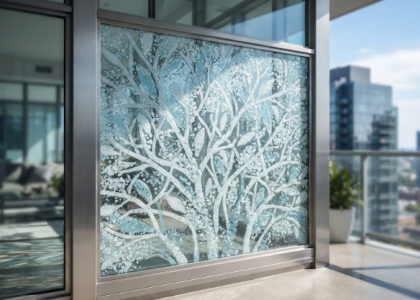
Frosting does not have to be a plain blur. You can combine clear and frosted zones to create stripes, geometric patterns, floral designs or company logos. This lets you control exactly where privacy is needed and where you want to see through.
| Type |
Look and feel |
Best for |
| Acid-etched |
Smooth, soft, uniform |
Bathrooms, bedrooms, elegant interiors |
| Sandblasted |
Textured, patterns possible |
Partitions, doors, feature panels |
| Frosted film |
Light, quick to apply |
Existing windows, rented spaces |
| Laminated frosted |
Strong, safe, quieter |
Offices, family areas, high-traffic spaces |
| Custom patterned |
Designed, decorative |
Branding, feature walls, creative spaces |
Frosted Glass vs Other Privacy Options
Frosted glass is not the only way to get privacy. Curtains, blinds, solid walls and window films are all common. The question is not which one is best in every situation, but which one gives you the privacy you need with the fewest trade-offs.
| Option |
Privacy |
Natural light |
Upkeep |
| Curtains |
Good when closed |
Blocked when closed |
Frequent washing, collects dust |
| Blinds |
Adjustable |
Partly blocked |
Slats need regular cleaning |
| Solid wall |
Complete |
None |
Low, but permanent |
| Tinted glass |
Partial, depends on angle and lighting |
Reduced |
Low |
| Frosted glass |
Consistent day and night |
Mostly preserved |
Very low |
The big advantage of frosted glass is that you do not have to choose between privacy and light. Curtains and blinds force you to give up daylight when you want to be private. Solid walls give privacy, but they make rooms smaller and darker. Frosted glass lets you keep the light and still avoid being seen.
There is also a practical point: nobody has to remember to close anything. Privacy is built in, so it is there at 7 a.m. when you wake up and at 11 p.m. when the lights are on.
More Benefits Beyond Privacy
Privacy is the main reason people choose frosted glass, but it brings several other advantages that make it even more valuable.
Soft, natural light
Because frosted glass scatters light, it spreads daylight more evenly across a room. You get fewer harsh patches and sharp shadows. This makes spaces feel calmer and more comfortable, and it reduces the glare that makes screens hard to read.
A cleaner, more modern look
Frosted glass has a quiet, refined appearance that suits modern, minimal and classic interiors alike. It can make a space feel more expensive without adding clutter. When combined with metal or aluminium frames, it creates a sleek architectural look.
Easier maintenance than fabric
Curtains need washing and blinds collect dust. Frosted glass needs only a soft cloth and a mild glass cleaner. In humid rooms such as bathrooms, this makes a real difference, because there is no fabric to hold moisture.
Safety when combined with the right glass
Frosted glass can be made from tempered or laminated glass, which are designed to be tougher than ordinary glass and to break more safely. This matters in family homes, offices and public spaces. When you choose frosting, you can choose a safety-rated base glass at the same time.
Sense of space
Because light still passes through, rooms separated by frosted glass do not feel cut off. A small apartment divided with frosted panels feels bigger and brighter than one divided with solid walls.
Added design value
Patterns, borders and logos let you personalise the glass. A home can have decorative frosted panels in a hallway door. A company can display its logo across a meeting room wall. The glass becomes part of the design instead of just a functional barrier.
Common Myths About Frosted Glass
A few misunderstandings keep some people from considering frosted glass. Here are the most common ones.
Myth 1: Frosted glass makes a room dark. In reality, frosted glass transmits a large share of daylight. It softens and spreads the light rather than blocking it. A frosted window usually keeps a room far brighter than a curtain or solid panel would.
Myth 2: It looks plain or old-fashioned. Modern frosted glass can be sleek, patterned, branded or layered with clear sections. Used well, it looks contemporary and intentional.
Myth 3: It stains easily. Quality frosted glass is simple to clean. Fingerprints and marks can be wiped off with an appropriate cleaner. The finish is part of the glass, so it does not peel the way cheap coatings do.
Myth 4: It is only for bathrooms. Bathrooms are the best-known use, but frosted glass is just as useful in bedrooms, offices, clinics, shopfronts, staircases and room dividers.
Myth 5: Privacy is all or nothing. You can choose how much privacy you want. Lightly frosted glass gives a soft blur, while heavier frosting gives stronger privacy. Patterns let you combine both.
How to Decide If Frosted Glass Is Right for You
Before choosing, take a few minutes to think through how you use the space. These questions help you narrow your thinking at an early stage.
- What exactly needs protection? Think about who can see in, from where, and at what times of day.
- How much privacy do you need? A bathroom needs more than a hallway door. Decide whether a soft blur is enough or whether you need stronger coverage.
- How much light do you want to keep? If daylight is your priority, consider frosting only part of the glass, such as the lower half or a central band.
- Is this a new build or an existing window? New builds can use etched or sandblasted glass. Existing windows might be better served by a film or by replacing the pane.
- Who will use the space? In family homes, public offices or busy areas, safety-rated laminated or tempered glass is a sensible choice.
- What style do you want? Think about whether you want a plain, uniform surface, a pattern or a logo.
- Will it need to match other glass? If you already have mirrors, doors or railings, consider how the frosted finish will sit alongside them.
Worth Noting Partial frosting is often the smartest design. A frosted band at standing eye level, with clear glass above and below, protects privacy where it matters while keeping the room open and bright.
Simple Design Ideas to Spark Your Thinking
If you are early in the planning stage, a few ideas can help you picture what is possible.
- Full frosted bathroom window. The classic solution that keeps natural light and privacy without curtains.
- Half-height frosted panels. Frosted below, clear above. This protects privacy at seated or standing height while letting light flow from above.
- Striped or banded frosting. Horizontal or vertical lines create a modern look and make glass doors easier to see.
- Frosted glass room divider. Separate a study, prayer corner or guest area from a living room without a wall.
- Branded meeting room glass. A frosted logo or pattern adds a professional touch to an office wall.
- Frosted sliding doors. Sliding glass doors between rooms keep light flowing while hiding what is on the other side. If you like the idea, explore our frameless sliding doors.
- Decorative frosted accents. Patterned frosting on a front door side panel or a hallway window adds style and privacy together.
Caring for Frosted Glass
One of the nicest things about frosted glass is how little attention it needs. A few simple habits will keep it looking fresh for years.
- Clean with a soft, lint-free cloth and a mild glass cleaner.
- Spray the cleaner onto the cloth rather than directly on the glass, especially near frames and edges.
- Avoid abrasive pads and harsh chemicals, which can damage the surface or film.
- Wipe fingerprints promptly, because oils can leave marks on textured finishes if left for long.
- For films, check the edges occasionally, and follow the supplier’s care advice.
With this basic care, frosted glass keeps its look and its privacy performance without ongoing cost.
Frequently Asked Questions
1. Can people see through frosted glass at all? They can see light and vague shapes, but not detail. How much shape is visible depends on how heavy the frosting is and how close the person stands to the glass.
2. Does frosted glass block natural light? No. It lets most daylight through while scattering it, which creates soft, even illumination. It is much brighter than curtains or blinds in the closed position.
3. Is frosted glass good for bathrooms? Yes, it is one of the best choices. It keeps light in, keeps views out, and has no fabric to trap moisture.
4. Is frosted glass safe? Safety depends on the base glass. When made from tempered or laminated glass, frosted glass is a strong, safe choice for homes and offices.
5. Can I frost only part of a window or partition? Yes. Partial frosting, patterns and borders are very common, and they are a smart way to keep both privacy and openness.
6. Is frosted glass difficult to clean? Not at all. A soft cloth and a mild glass cleaner are usually enough.
7. What is the difference between frosted glass and frosted film? Frosted glass has the texture built into the glass itself, which is long-lasting. Film is applied on top of clear glass, which is quicker and more affordable but generally less durable.
8. Where do I start if I want frosted glass? Start by noting which windows or partitions need privacy, and take rough measurements. A glass specialist can then guide you through finishes and options.
Privacy You Can Live With, Light You Do Not Have to Give Up
Good design rarely forces you to choose between comfort and beauty. Frosted glass is a good example. It protects what is private, keeps the light you love and adds a clean, modern look to almost any space. It works in the morning and at night, on a bathroom window and on an office wall, in a small apartment and in a large commercial project.
If you are only beginning to think about privacy for your home or workplace, the most helpful step is to look at the spaces that currently feel exposed and imagine them with soft, diffused light instead of open views. You may find that frosted glass is the simplest upgrade you can make.
When you are ready to explore options, you can read more about our frosted glass partition installation services, browse our
project references, or schedule a free consultation with the Green Glass Designer team. You can also message us on WhatsApp to talk through your space.