Table of Contents
Walk past a modern office tower, an airport terminal or a stylish new home, and you may notice glass that looks different from the usual clear pane. Tiny dots, soft lines or bold graphic patterns fade across the surface, softening the light and adding texture. That glass is very likely frit glass, and it has quietly become one of the favourite materials of architects and interior designers around the world.
If you are just beginning to explore glass for a home, shop, office or building project, you may have a few simple questions. What exactly is frit glass? Is it just a decorative effect, or does it do something useful? Is it only for giant commercial towers, or can an ordinary house use it too? This guide answers those questions in plain language. We will not talk about prices or technical jargon. Instead, we will walk through what frit glass is, how it is made, why it looks so good and, just as importantly, how it makes buildings more comfortable, private and safe. By the end, you will know enough to decide whether frit glass deserves a place on your ideas list.
What Is Frit Glass?
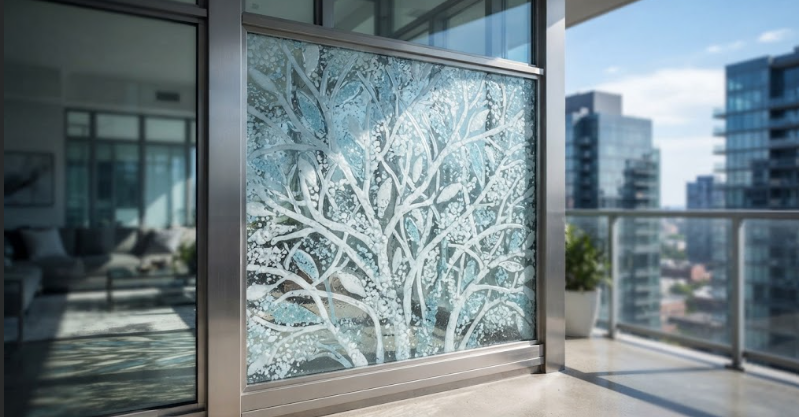
Frit glass is glass that carries a pattern made of ceramic “frit”. Frit is a mixture of finely ground glass particles, pigments and a binding medium. It is applied to the surface of a glass sheet in a chosen design, then fired at high temperature so that it fuses permanently into the glass. Once fired, the pattern is no longer a layer of paint sitting on top. It becomes part of the glass itself.
You may also hear it called ceramic frit glass, fritted glass or ceramic-coated glass. All of these terms point to the same idea: a clear or tinted glass panel with a baked-in pattern that controls how light passes through it.
The pattern can be almost anything. Common choices include small dots, thin lines, grids, squares, gradients that fade from solid to clear, or fully custom artwork. Because the pattern is partly opaque, it blocks some light and heat while letting the rest through. That simple trick is what gives frit glass its two big strengths: it looks beautiful, and it works hard.
How Frit Glass Is Made
Understanding the process helps explain why frit glass is so durable. You do not need to remember every step, but the outline is simple.
Step 1: Choosing the glass and the design
Every project starts with a base glass. This could be clear glass, low-iron glass for extra clarity, or tinted glass for a specific colour tone. The design is then prepared digitally or as a screen, so the pattern can be repeated accurately across many panels. This is why a large façade can show one continuous pattern without visible mismatches.
Step 2: Applying the frit
The ceramic ink is applied through a fine screen, much like screen printing on fabric, or through digital printing methods that allow more detailed images. The ink contains tiny glass particles and colour pigments. Only the areas of the design receive ink, which is why you can have dots, stripes or complex artwork while leaving the rest of the glass clear.
Step 3: Firing and strengthening
The printed glass goes into a furnace, usually as part of the heat-strengthening or tempering process. The heat melts the frit so it bonds with the glass surface. At the same time, tempering makes the whole panel stronger and safer than ordinary glass. The result is a pattern that resists scratching, fading and weathering, which is exactly what you want on a building that faces sun, dust and rain every day.
Step 4: Inspection and finishing
The finished panels are checked for pattern accuracy, edge quality and flatness. They may then be combined into other glass products, such as double-glazed units or laminated glass, depending on the needs of the building.
Popular Frit Patterns and Finishes
One reason architects love frit glass is the sheer variety. Here are the most common directions you will come across when you start browsing.
| Pattern type | What it looks like | Typical use |
|---|---|---|
| Dots | Small or large circles, evenly spaced or in varying sizes | Façades, shopfronts, privacy panels |
| Lines and stripes | Vertical, horizontal or diagonal bands | Office partitions, stair enclosures, balconies |
| Gradients | Pattern that fades from dense to light | Tall façades, skylights, entrance walls |
| Grids and geometric shapes | Squares, hexagons, diamonds, repeating motifs | Lobbies, feature walls, interior glazing |
| Full coverage | Solid colour over the whole panel | Spandrel panels that hide floor slabs and services |
| Custom artwork | Logos, cultural motifs, calligraphy, photographic images | Landmark buildings, hotels, brand spaces |
Colour is another playful variable. Classic white and black are popular because they are clean and timeless. Grey, bronze and soft pastel tones are also common, and bolder colours can be used for brand identity or artistic effect. Frit can also be applied on different faces of the glass, which changes how the pattern looks from inside and outside.
How Frit Glass Adds Style to Architecture
Style is usually the first thing people notice. But frit glass does more than decorate. It changes the way a building feels, and it does so in several ways at once.
1. It gives large glass surfaces a sense of depth
A big wall of plain glass can look flat or even cold. A pattern breaks that expanse into something with rhythm and texture. As the sun moves, the shadows cast by the frit shift across floors and walls, so the same room looks different in the morning and the evening. The building appears alive instead of static.
2. It creates a signature identity
A custom pattern can become a building’s fingerprint. A hotel might use a motif inspired by traditional jali screens. A corporate headquarters might echo its logo in an abstract way. A café might use a dotted gradient that matches its interior palette. Because the artwork is fused into the glass, the identity is permanent and does not peel or fade like a sticker.
3. It softens light beautifully
Harsh sunlight can make interiors feel uncomfortable. Frit glass diffuses the light, spreading it more gently across a room. The result is a calm, even glow that photographs well and feels pleasant to live and work in. Designers often describe this as the “filtered light” look, and it is a major reason frit glass appears in galleries, libraries and lounges.
4. It blends modern and traditional design
Because patterns can be drawn from any source, frit glass bridges styles easily. Geometric Islamic patterns, floral motifs, minimalist lines and futuristic grids can all be rendered with the same technique. This flexibility makes it suitable for a contemporary villa, a heritage-inspired restaurant or a high-tech office.
5. It keeps the building transparent but not exposed
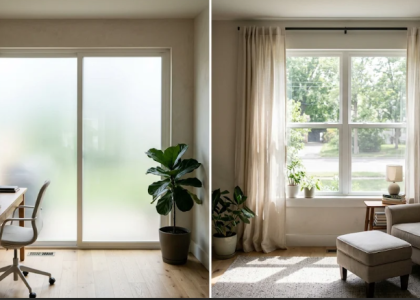
Many people want the openness of glass without feeling watched. Frit glass offers a middle path. You still enjoy daylight and views, but patterns reduce direct sightlines. It is a graceful alternative to curtains and blinds, which can hide the very light you installed glass to enjoy.
6. It works as an art piece
Used on a feature wall, staircase enclosure or entrance, frit glass becomes a piece of installed art. Photographic or illustrated images can be fired onto glass and lit from behind or by natural light, turning ordinary partitions into focal points. If you enjoy decorative surfaces, you may also like exploring our decorative glass installation service and stained glass options, which approach the same artistic goals in different ways.
Curious how a pattern would look on your building? Tell us about your space and we will talk you through ideas, with no obligation.
How Frit Glass Adds Functionality
Here is where frit glass proves it is more than a pretty face. Each of the benefits below solves a real problem that buildings face, especially in hot, bright climates like those across Pakistan.
1. Solar control and a cooler interior
Sunlight carries heat. A fully clear glass façade lets much of that heat inside, which makes rooms warm and forces air conditioners to work harder. Because frit patterns are partly opaque, they block or reflect part of the sunlight before it enters. Designers can adjust how dense the pattern is to control how much heat is stopped. A denser pattern shields more; a lighter one lets in more daylight. The aim is to find the right balance for each side of a building. West-facing walls, for example, often need more protection than north-facing ones.
2. Reduced glare
Glare is the harsh brightness that makes screens hard to read and eyes tired. By scattering and softening direct light, frit patterns help reduce glare in offices, classrooms and living rooms. People can work near windows without squinting or closing the blinds, which means they actually use the natural light the glass was meant to provide.
3. Privacy without darkness
Frit glass allows you to decide how private a space should be. A bathroom window might use a dense pattern for strong privacy. A meeting room might use horizontal bands at eye level for partial privacy while still letting light flow through. This is especially popular in office glass partitions, where teams want openness but need confidential conversations to stay private. If privacy is your main concern, you may also want to read our guide on frosted glass for privacy.
4. UV protection for interiors
Ultraviolet rays are the main reason furniture, carpets, artwork and flooring fade over time. By reducing the amount of direct sunlight entering a space, frit glass helps slow this fading. It is a quiet benefit, but over the years it can protect a lot of valuable interior finishes.
5. Durability that lasts
Because the frit is fused into the glass during firing, it resists scratching, peeling and fading. It also copes with rain, dust and temperature swings, which makes it a reliable choice for outdoor façades and balconies. Tempered or heat-strengthened frit glass is stronger than regular glass, so it handles wind pressure and everyday knocks better.
6. Safety and bird-friendliness
Tempered glass is safer than ordinary glass because it breaks into small, blunt pieces rather than sharp shards. For extra protection, frit glass can be combined with laminated glass, which holds fragments together if a panel is damaged. Another lesser-known advantage is that visible patterns help people notice glass surfaces and avoid walking into them. Patterns can also help birds see the glass, which is why many green-building projects include frit on façades near trees, parks and open areas.
7. Hiding what you do not want seen
On tall buildings, there are parts you do not want visible from outside, such as floor slabs, ducts, wiring and structural edges. Fully covered frit panels, called spandrel glass, hide these elements behind a clean, consistent surface that matches the neighbouring glass. This keeps the façade looking neat from every angle.
Where Architects Use Frit Glass
Frit glass is flexible enough for projects of almost every size. Here are the places where you are most likely to see it, and where it might fit your own plans.
Building façades and curtain walls
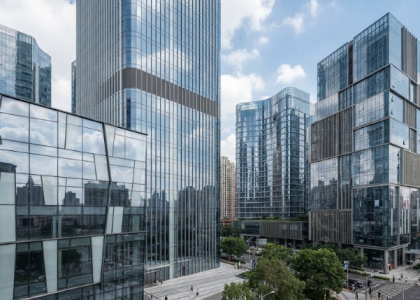
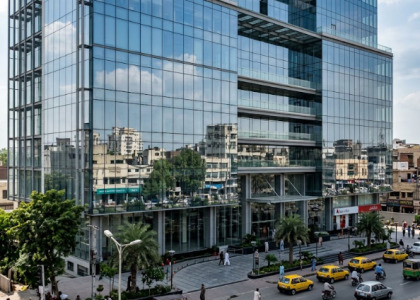
This is the classic use. On commercial buildings, frit patterns reduce heat and glare while giving the exterior a distinctive look. They pair naturally with curtain wall systems and point-fixed glass façades, where large panels create a seamless skin.
Shopfronts and storefronts
Retail owners use frit glass to attract attention while managing sunlight. A bold pattern or brand motif can turn a shopfront into a signboard that works day and night. It also protects displayed products from strong sun. Learn more about options in our shopfront glass panels.
Office partitions and meeting rooms
Modern offices love glass walls for light and openness. Frit patterns add privacy for meetings and give the workspace a more designed, premium feel than plain glass.
Residential interiors
In homes, frit glass appears in stair railings, balcony enclosures, sliding doors, bathroom windows and entrance panels. A patterned glass door, for instance, lets light into a hallway while keeping the living room private. Consider pairing it with frameless sliding doors for a clean, contemporary look.
Skylights and canopies
Overhead glass can bring in too much heat. Frit patterns on skylights and canopies filter the sun, keeping the space beneath bright but comfortable, and they cast beautiful moving shadows on the floor below.
Public and institutional buildings
Airports, metro stations, hospitals, universities and government buildings use frit glass to balance daylight, energy use and visual identity across large surfaces. In hospitals, for example, it can bring in daylight while limiting glare and heat in patient areas.
Hotels, restaurants and hospitality
Hospitality design relies on atmosphere. Frit glass helps create cosy corners, softly lit dining areas and memorable lobbies. Custom patterns can reflect a hotel’s theme or local culture.
Frit Glass vs Other Glass Types
If you are comparing options, this simple table shows how frit glass differs from other familiar glass types. Many of these can also be combined, so it is rarely an either-or choice.
| Glass type | Main strength | Look | How it compares to frit glass |
|---|---|---|---|
| Clear glass | Maximum transparency | Plain and open | Lets in more heat and glare; offers no pattern or privacy |
| Frosted glass | Even privacy | Soft, milky | Uniform look; frit allows custom designs and controlled coverage |
| Tinted glass | Reduces brightness | Coloured tone over the whole pane | Tint is uniform; frit works through pattern and can keep parts clear |
| Reflective glass | Strong solar reflection | Mirror-like exterior | Can look harsh; frit gives a softer, more textured result |
| Laminated glass | Safety and sound reduction | Clear or tinted | Often combined with frit for added safety |
| Double-glazed glass | Insulation | Two panes with a sealed gap | Frit can be built into one pane for combined insulation and shading |
In short, frit glass stands out when you want a combination of looks and performance. If you only want privacy, frosted glass might be enough. If you only want clarity, clear glass wins. But if you want a facade or interior that is expressive and practical at the same time, frit glass is hard to beat. For projects that need insulation as well, take a look at double-glazed glass alongside frit options.
Design Tips for First-Time Users
You do not need to be an architect to make good choices with frit glass. These beginner-friendly ideas will help you think through your project.
- Start with the problem you want to solve. Is it heat, glare, privacy, looks or all four? Your main goal will guide the pattern density and placement.
- Think about orientation. The side of the building that faces the afternoon sun usually needs more shading than the side facing away from it.
- Test the pattern at real scale. A design that looks lovely on a small sample can feel very different on a three-metre panel. Ask to see mock-ups or large samples.
- Consider the view. If there is a view you love, use lighter patterns or gradients that fade, so the glass frames the scenery instead of hiding it.
- Match the pattern to your style. Minimal interiors suit fine lines or small dots. Traditional or cultural spaces suit geometric or motif-based designs.
- Plan lighting early. Patterned glass looks dramatic when lit from behind or from the side in the evening. Think about this while the project is still on paper.
- Work with an experienced supplier. Good fabrication, accurate pattern alignment and careful installation make the difference between average and outstanding results.
Common Myths About Frit Glass
“Frit glass is only for big commercial buildings.”
Not at all. Homes use it in doors, windows, partitions and railings. Any place where you want both light and privacy is a candidate.
“It makes rooms dark.”
It depends on the pattern. Light gradients and sparse dots let in a lot of daylight. Designers can choose the coverage level, so rooms stay bright while heat and glare are reduced.
“The pattern will wear off.”
Because the frit is fired into the glass, it is far more durable than paint, film or stickers. It does not peel or fade quickly, even outdoors.
“Patterned glass looks old-fashioned.”
Modern frit glass is among the most contemporary glazing options available. Clean geometric designs, subtle gradients and custom artwork are all current trends in architecture.
“Only a few patterns are possible.”
Standard patterns exist, but custom artwork is a major strength. If you can draw it, a skilled fabricator can usually adapt it for glass.
Frequently Asked Questions
1. What is frit glass in simple words?
It is glass with a ceramic pattern fused onto its surface by heat. The pattern controls light, heat and visibility while adding a decorative look.
2. Is frit glass strong?
Yes. It is usually tempered or heat-strengthened during firing, which makes it stronger and safer than ordinary glass.
3. Can frit glass be used outdoors?
Yes. The fused pattern resists weather, scratching and fading, which makes it suitable for façades, balconies and canopies.
4. Does frit glass reduce heat?
It can. The patterned areas block part of the sunlight, which reduces heat gain. The amount depends on the pattern density and the type of glass used.
5. Is frit glass good for privacy?
Yes. You can choose a pattern that gives strong, partial or light privacy depending on the room.
6. Can I get a custom design?
Yes. Many suppliers can print custom patterns, logos and artwork. Share your idea at the start so the design can be prepared properly.
7. Is it suitable for homes?
Absolutely. Homeowners use it for doors, stair railings, windows, shower areas and decorative partitions.
8. How do I clean it?
Use a soft cloth and a non-abrasive glass cleaner. Avoid harsh scrapers on the surface, and wipe gently along the pattern.
9. Can frit glass be combined with other glass types?
Yes. It is often used with laminated or double-glazed glass to add safety and insulation.
10. How do I get started?
Share your space, your goals and a few reference images with a glass specialist. A short consultation is usually enough to explore patterns and options.
Bringing Style and Function Together
Frit glass proves that beauty and performance do not have to compete. A single pane can soften sunlight, protect interiors, add privacy, make buildings safer and express a design idea, all at the same time. Whether you are planning a new home, refreshing a shopfront or imagining a landmark façade, frit glass offers an elegant way to turn a simple window into a thoughtful part of the architecture.
If this guide sparked ideas, the next step is simple: collect a few photos you like, note the problems you want to solve and talk to a specialist. You can explore our ceramic frit glass contractors page, view our project references, or talk to our team about your space.