Table of Contents
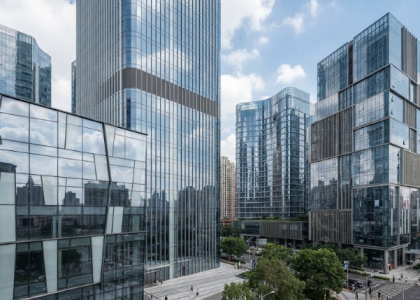
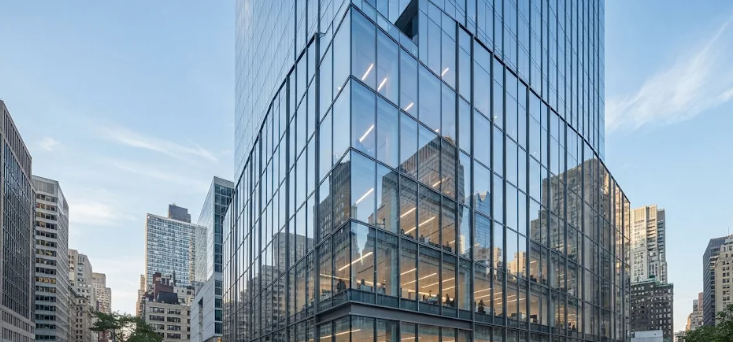
Walk through the business districts of Lahore, Karachi, or Islamabad and you will notice a pattern. The newest office towers, hotels, and corporate headquarters rarely look like the concrete boxes of past decades. They are wrapped in sleek, reflective, light-filled skins of glass and aluminium. That skin is usually a curtain wall.
If you are an architect, developer, business owner, or simply curious about how modern buildings are put together, you may be wondering why curtain walls have become so central to commercial design. Is it only about looks? Not at all. A well-designed curtain wall affects how much energy a building uses, how comfortable people feel inside, how quickly the project is built, and how the brand behind it is perceived. In this guide, we explain what a curtain wall is, how it works, and the practical reasons it has become essential in commercial architecture, especially in a climate and market like Pakistan’s.What Is a Curtain Wall?
A curtain wall is a non-structural exterior wall system that hangs from the edges of a building’s floor slabs or structural frame. The key word is non-structural. Unlike a traditional load-bearing wall, a curtain wall does not hold up the building. Its job is to protect the interior from weather, noise, and heat, while carrying only its own weight and the wind loads that act on it. Most curtain walls have three main components:- An aluminium frame: a grid of vertical mullions and horizontal transoms that forms the skeleton of the system.
- Infill panels: most often glass, but also ACP (aluminium composite panel), stone, or metal sheet.
- Seals, gaskets, and anchors: the parts that keep water and air out and connect the system to the main structure.
Common Types of Curtain Wall Systems
Not every curtain wall is built the same way. Understanding the main types helps you see why the technology adapts so well to different commercial projects. Stick-built systems. Frame components are delivered to site and assembled piece by piece, with glass installed afterwards. This approach suits low-rise and mid-rise buildings and projects with complex shapes. Unitized systems. Large panels are fabricated and glazed in a factory, then lifted into place on site. Quality control is excellent, and installation is fast, which makes unitized systems popular for tall towers. Structural glazing. The glass is bonded to the frame with high-strength silicone, so no aluminium cap is visible from outside. The result is a smooth, uninterrupted glass surface. Point-fixed (spider) systems. Glass is held by stainless-steel spider fittings at its corners, which creates an almost frameless look. It is widely used for lobbies, atriums, and entrance façades.1. Curtain Walls Make Construction Faster and Lighter
Time is money in commercial development. Every month a building sits unfinished is a month without rent, sales, or operations. Curtain walls help here in two ways. First, they are significantly lighter than masonry or concrete façades. A lighter envelope reduces the load on the structure and foundations, which can lower material needs across the whole project. Second, much of the work happens off site. Aluminium frames and glass units are cut, fabricated, and sometimes fully glazed in a controlled workshop, then installed on site with precision. Because façade work can run in parallel with interior fit-out once the building is weather-tight, curtain walls also shorten the overall construction schedule. For developers, that means faster handover and earlier returns.2. Energy Efficiency and Thermal Comfort
In a country where summers are long and hot, a building’s envelope has a direct impact on cooling costs. This is where modern curtain walls have changed the conversation. The glass of the past was a liability. Today it is a performance material. A modern curtain wall can include:- Double-glazed or insulated glass units, which add an air or gas-filled gap that slows heat transfer.
- Low-E (low-emissivity) coatings, which reflect infrared heat while letting visible light through.
- Solar control and tinted glass, which cut glare and reduce heat gain.
- Thermally broken aluminium frames, which stop heat from travelling through the metal itself.
3. Natural Daylight and Better Workspaces
People spend a large part of their day in commercial buildings, and the quality of that environment matters. Daylight is one of the most valued features of a modern workplace. A curtain wall lets in far more natural light than a conventional wall with small windows. Studies and workplace surveys have repeatedly linked access to daylight and outside views with better mood, comfort, and concentration. For employers competing to attract and keep talent, a bright, open office is a genuine advantage. Daylight also reduces the need for artificial lighting during working hours, which adds another small but steady saving on energy. And with the right glass specification, you can enjoy the light without the harsh glare or heat.4. Design Freedom and Brand Identity
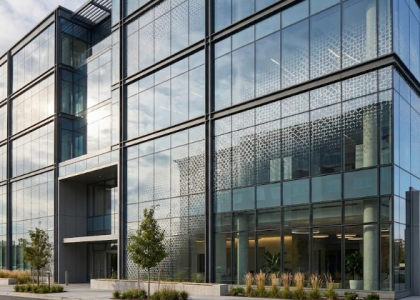
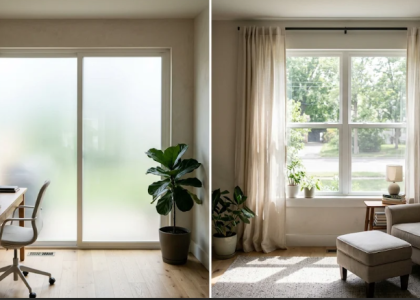
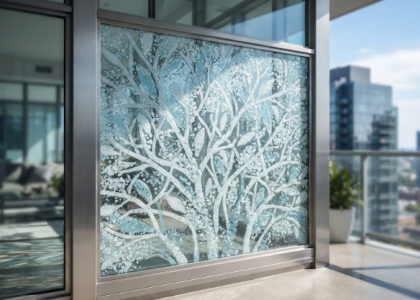
For a commercial building, the façade is a first impression. It is what customers, clients, and passers-by see before they ever step inside. Curtain walls give architects enormous flexibility. Glass can be clear, tinted, reflective, frosted, or fritted with ceramic patterns. Frames can be finished in a wide palette of colours. Panels of glass can be mixed with ACP cladding, stone, or metal for a layered look. Façades can be flat, curved, angled, or stepped. This allows a building to express the identity of the business inside it, whether that is a modern bank, a boutique hotel, a technology company, or a luxury retail centre. A distinctive façade becomes a landmark, and a landmark builds brand recognition. If you are exploring more creative surface options, look at how ACP wall cladding can work alongside glass.5. Strong Performance Against Weather and Structural Movement
A curtain wall may look delicate, but it is engineered to handle serious demands. Wind loads. Tall buildings face strong wind pressure. Curtain wall systems are designed and tested to resist both positive and negative wind loads, with glass thickness and frame depth selected accordingly. Water and air tightness. Multiple layers of gaskets, drainage channels, and pressure-equalised joints prevent rain from reaching the interior and stop uncontrolled air leakage. Building movement. Every building moves slightly because of thermal expansion, wind sway, and, in some regions, seismic activity. Curtain walls are designed with flexible joints and anchors so the façade can accommodate this movement without cracking or leaking. In a region where heavy monsoon rain, intense heat, and seismic activity are all real considerations, this engineered resilience is a major reason curtain walls are trusted for commercial work.6. Safety, Security, and Sound Control
Glass in commercial buildings is not ordinary glass. Curtain walls typically use tempered (toughened) or laminated glass, both designed for safety.- Tempered glass is several times stronger than standard glass and breaks into small, blunt pieces rather than sharp shards.
- Laminated glass has a tough interlayer that holds fragments together if the glass is damaged, which improves security and safety.
7. Long-Term Value and Low Maintenance
A curtain wall is an investment, and its value shows up over time. Aluminium frames with powder-coated or anodised finishes resist corrosion and fading for many years. Glass does not rot, rust, or need repainting. Routine maintenance is mostly regular cleaning and periodic inspection of seals, which keeps running costs predictable. A well-designed glass façade also lifts a property’s market appeal. Modern, well-lit, energy-efficient buildings tend to be more attractive to tenants and buyers, which supports higher occupancy and stronger asset value. Add the energy savings and the faster build time, and the overall return becomes clear.Common Myths About Curtain Walls
“Glass buildings are always hot.” Not anymore. Low-E coatings, solar control glass, and insulated units dramatically reduce heat gain. The glass specification matters more than the amount of glass. “Curtain walls are fragile.” They are engineered, tested, and built with safety glass and strong aluminium systems designed for real-world loads. “They are only for skyscrapers.” Curtain walls are just as useful on a three-storey office, a showroom, a school, or a hospital block. “They are too expensive.” The upfront cost can be higher than basic walls, but savings in energy, construction time, and maintenance often balance it out over the life of the building.Where Curtain Walls Are Used in Commercial Buildings
You will find curtain walls in almost every type of commercial and institutional project:- Corporate offices and business towers
- Hotels and serviced apartments
- Shopping malls and retail showrooms
- Hospitals and medical centres
- Universities and training campuses
- Banks, airports, and public buildings
- Mixed-use developments
What to Think About Before Planning a Curtain Wall
If you are considering a curtain wall for an upcoming project, a few early questions will help you get better results:- Climate and orientation: Which sides of the building face the strongest sun? Glass specifications can differ by façade.
- Performance goals: What are your targets for energy use, daylight, and acoustic comfort?
- Aesthetics: Do you want a fully glazed look, or a mix of glass with cladding and metal?
- Budget and timeline: Does a stick-built or unitized system suit your schedule?
- Maintenance access: How will the façade be cleaned and inspected in the future?
- Choice of partner: Is your supplier experienced, certified, and able to handle design, fabrication, and installation?