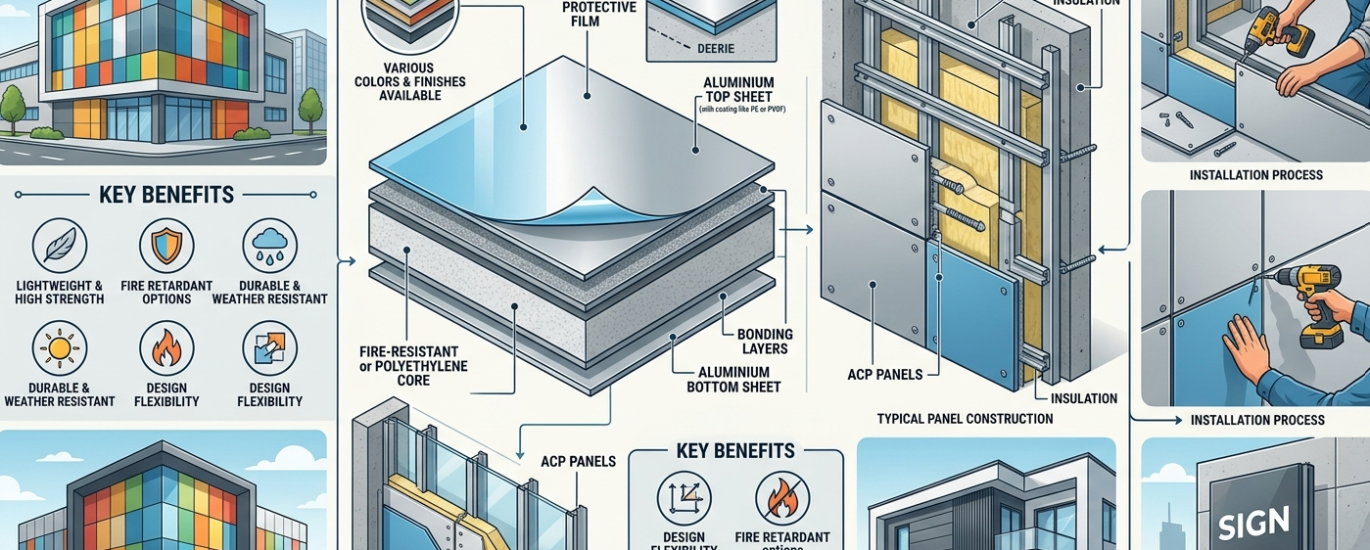
ACP wall cladding has become one of the most popular choices in modern architecture because it combines style, durability, and flexibility in one material. Whether you are designing a commercial building, upgrading a storefront, or planning a modern interior feature wall, ACP cladding can offer a clean and professional finish. For beginners, it may seem like a technical topic at first, but the concept is actually simple once broken down clearly.
ACP stands for Aluminium Composite Panel, and it is used as a surface covering for walls, façades, shopfronts, signage, and interior design features. It is widely appreciated because it is lightweight, visually attractive, and easy to shape into different styles. In the same way that Green Glass Designer focuses on modern glass and aluminium solutions for architectural and commercial spaces, ACP wall cladding also supports a sleek, practical, and premium design approach.
What ACP Wall Cladding Means
ACP wall cladding is a finishing layer made from aluminium composite panels that are fixed onto a wall surface. These panels usually consist of two thin aluminium sheets bonded to a non-aluminium core. That structure gives the material a balance of strength, light weight, and flexibility.
In simple words, ACP cladding works like a protective and decorative cover for walls. It helps improve the appearance of a building while also adding a layer of protection against weather, wear, and general damage. Because of this, ACP is commonly used on both exterior and interior walls in commercial buildings, corporate offices, retail stores, and modern homes.
Why ACP Is So Popular
There are several reasons ACP wall cladding has become a go-to material in modern construction. First, it gives buildings a polished and contemporary look. Second, it is much lighter than many traditional cladding materials, which makes installation easier and often more efficient.
Another major reason is design flexibility. ACP sheets come in a wide range of colours, textures, and finishes, including metallic, wood-like, stone-like, glossy, matte, and custom decorative looks. This means architects and designers can create a unique appearance without using expensive natural materials.
ACP is also valued for its low maintenance. Once installed properly, it is relatively easy to clean and does not require the same level of upkeep as some traditional wall finishes. For businesses that want a neat and long-lasting exterior or interior finish, that is a major advantage.
How ACP Wall Cladding Is Made
ACP panels are made using a layered construction. The outer faces are made of aluminium sheets, while the center is made from a non-aluminium core material. This core may vary depending on the product type and application.
The layered design gives ACP its strength while keeping it lightweight. In many products, a durable coating is added to the surface to improve weather resistance, UV resistance, and overall performance. This is one reason ACP works well for façades and exterior applications where the material is exposed to sunlight and changing weather conditions.
Common Uses of ACP Cladding
ACP wall cladding is used in many different places because of its versatility. One of the most common applications is on building exteriors, especially commercial façades and front elevations. It is also used for shopfronts, corporate entrances, and signage because it creates a modern and professional image.
Inside buildings, ACP can be used for decorative wall features, reception backdrops, columns, and feature panels. Since Green Glass Designer specializes in
architectural and
decorative glass solutions, including cladding, the use of ACP fits naturally into modern commercial design projects where elegance and performance both matter. In that sense, ACP is not only a construction material but also a design tool.
Benefits of ACP Wall Cladding
ACP cladding offers many practical and visual benefits. One of the biggest advantages is its lightweight nature. Compared with heavier materials, it puts less load on the building structure and can be easier to handle during installation.
Another major benefit is its visual appeal. ACP can mimic the look of premium materials such as wood, stone, or brushed metal while often being more affordable and easier to maintain. This helps businesses create upscale-looking spaces without unnecessary complexity.
ACP is also known for its durability. When installed correctly and maintained well, it can deliver long-term performance in both interior and exterior settings. It resists many common issues such as surface wear, fading, and environmental exposure, depending on the panel type and coating.
ACP vs Traditional Wall Finishes
Many beginners compare ACP cladding with other wall finishes such as paint, plaster, tiles, or stone. The main difference is that ACP is both decorative and protective. Paint can improve appearance, but it does not offer the same level of physical covering. Tiles and stone may be durable, but they are often heavier and more expensive to install.
ACP gives a modern finish with more design flexibility. It is often chosen when the goal is to create a clean, premium look with less weight and more customization. That is why it has become especially common in commercial architecture, where appearance and practicality must work together.
Types of ACP Sheets
ACP sheets are available in different types depending on the project’s requirements. Some are designed more for exterior use, while others are better suited for interior applications. The core material is one of the most important distinctions, because it affects the panel’s performance and safety characteristics.
There are also differences in finishes. Glossy ACP creates a bright, reflective look, while matte ACP provides a more subtle and refined appearance. Textured options such as wood grain, sand, or stone effects are useful when designers want to create a natural or decorative feel. Choosing the right type depends on the purpose of the space and the overall design style.
Where ACP Is Used in Architecture
ACP has become a standard material in modern architectural design because it adapts well to different functions. It is commonly used on building façades, office exteriors, commercial elevations, signs, canopies, and decorative internal walls. In many commercial projects, it helps create a strong first impression from the moment someone sees the building.
This connects well with the kind of work Green Glass Designer presents on its site, where modern glass façades,
curtain wall solutions,
office partitions, and cladding are part of a broader architectural and decorative service offering. ACP works especially well in environments where visual consistency and polished finishing matter.
Installation Basics
ACP wall cladding installation is a technical job and should be done carefully. The process usually starts with measurement and planning. Accurate measurements are important because even small errors can affect the alignment and finish of the panels.
After that, the panels are fabricated to the required sizes and shapes. Routing and folding are commonly used to prepare ACP sheets for installation. A proper support frame or mounting system is then used so the panels can be installed evenly and securely.
Waterproofing, spacing, and sealant application are also important parts of the process, especially for exterior cladding. Proper installation helps ensure the panels stay level, look clean, and perform well over time. Because ACP is often used in visible areas, precision matters just as much as material quality.
Maintenance and Care
One of the reasons ACP is attractive to property owners is that it does not demand complicated maintenance. Basic cleaning with mild solutions is usually enough to keep it looking fresh. Harsh chemicals and abrasive cleaning tools should be avoided because they can damage the surface finish.
Regular inspection is also important, especially for exterior panels. Checking for loose fittings, dents, sealant issues, or other surface problems can help extend the life of the cladding. Good maintenance is not difficult, but it does help preserve the quality and appearance of the installation.
Design Possibilities
ACP is popular not only because it is practical, but also because it opens up many design possibilities. The panels can be cut, bent, folded, and shaped into creative forms that are difficult to achieve with many other materials. This gives designers more freedom to create custom façade patterns, feature walls, and signage elements.
The material also works well with glass and aluminium systems, which are part of Green Glass Designer’s core service direction. In modern commercial design, ACP and glass are often used together to create a balanced visual experience: glass brings transparency and light, while ACP adds form, surface definition, and structure.
Safety Considerations
Beginners should also understand that ACP is not one single product category. Different core materials can change performance, especially in relation to fire safety. For that reason, it is important to choose the right product for the right application rather than focusing only on colour or appearance.
For exterior buildings and commercial projects, product selection should always consider safety standards, local regulations, and project conditions. Working with experienced professionals helps reduce risk and ensures the material is suitable for the intended use. This is one of the reasons project planning and expert installation matter so much.
When ACP Is the Right Choice
ACP wall cladding is a strong option when you want a modern look, design flexibility, and practical performance. It is especially suitable for offices, retail stores, building façades, reception areas, and feature walls. If your goal is to create a polished and professional environment, ACP can be an excellent solution.
It is also useful when a project needs a lightweight material that still looks premium. Because ACP offers many finish options, it works well for brand-led spaces where appearance matters. For businesses that want a contemporary architectural finish, ACP is often one of the most efficient choices.
Final Thoughts
ACP wall cladding is a smart, modern material that combines appearance, performance, and versatility. It is made from aluminium composite panels and used for walls, façades, shopfronts, and interior features. Its popularity comes from its lightweight structure, design flexibility, low maintenance, and ability to deliver a refined architectural look.
For beginners, the best way to understand ACP is to think of it as a protective design layer for walls. It improves the look of a building while also serving a practical purpose. When planned properly and installed by professionals, ACP can add lasting value to commercial and architectural spaces. That is why it fits naturally into the kind of modern glass and aluminium solutions highlighted by Green Glass Designer.