If you are reading this, you have probably moved past the “do I want a smart mirror?” stage. You have seen the soft, even glow, the touch controls and the clean look, and you can picture one in your bathroom, bedroom, salon or hotel suite. The question now is a more practical one: which features actually matter, and how do I tell a well-made mirror from one that only looks good in a photo?
That is harder than it sounds. Two decorative LED smart mirrors can look almost identical on a shop floor or a product listing, yet differ completely in lighting quality, glass, electronics and the support behind them. Most of those differences are invisible until the mirror has been on your wall for a few months.
This guide is written for the comparison stage. We will not spend time on why smart mirrors are popular. Instead, we walk through each feature that deserves your attention, explain what “good” looks like, flag where money is well spent, and give you the questions to put to any supplier. By the end, you should be able to read a specification sheet or quote and know exactly what you are getting.
What Makes a Decorative LED Smart Mirror Different
A
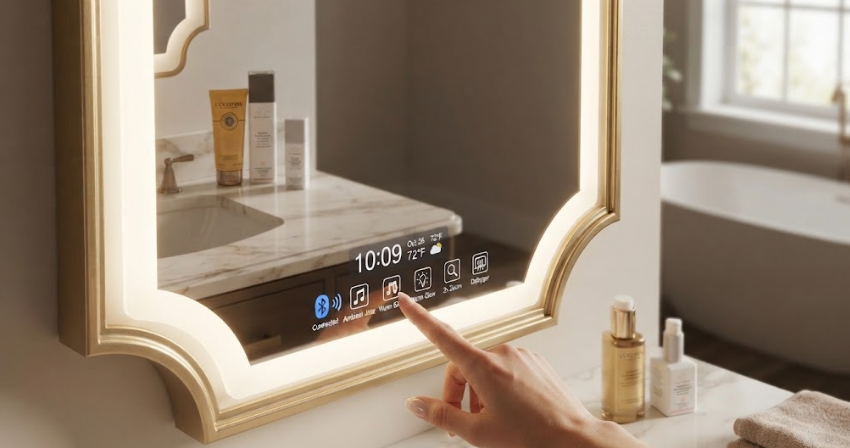
decorative LED smart mirror is a mirror and a light fitting in one product. Unlike a plain mirror with separate wall lights, the lighting, controls and often the anti-fog function are built into a single unit with one power connection. That is where the appeal comes from, and also where the risk sits: because several components are packed behind one pane of glass, the quality of each part affects the whole.
It helps to think of the mirror in layers:
- The glass: thickness, silvering quality, edge finishing and safety backing.
- The lighting: the LED strips or panels, their brightness, colour quality and how evenly they spread light.
- The electronics: the driver (power supply), touch or motion sensor, dimmer, defogger pad and any Bluetooth module.
- The frame and backing: the framing material, the moisture-resistant back panel and the mounting system.
- The service: measurement, fabrication, delivery, installation and warranty.
The word “decorative” matters too. These mirrors are meant to be seen as part of the interior, so shape, frame and finish carry as much weight as function. A good one performs well every day and looks right in the room.
Worth Noting “Smart mirror” is a label, not a specification. Always ask what is inside: the LED type, the sensor, the defogger, the backing and the warranty. A listing that mentions only size and “LED” is incomplete.
1. Lighting Quality
Lighting is the reason most people buy a smart mirror, so it is the first place to look closely. Four things separate good lighting from merely bright lighting.
Even light with no hot spots
A well-designed mirror spreads light smoothly across the face. A poorly designed one shows bright strips at the edges, dark patches in the middle or visible dots where individual LEDs sit. When you can, view the mirror switched on, from the distance you will actually stand at. Look for a soft, continuous glow rather than a row of pinpoints.
The lighting style also changes the effect:
- Front-lit mirrors shine light toward your face. They are the most practical for makeup, shaving and grooming because they reduce shadows.
- Back-lit mirrors create a halo around the edge. They look dramatic and are popular as accent pieces, though they provide less direct task lighting.
- Combination designs use both, giving you a decorative glow and practical light in one mirror.
If the mirror is mainly for grooming, lean toward front-lit or combination lighting. If it is mainly a feature piece, back-lit works well.
Adjustable colour temperature
Colour temperature describes whether light looks warm (yellowish), neutral or cool (bluish). It matters more than most buyers expect. Makeup applied under warm light can look very different in daylight, and cool light feels harsh late at night. A mirror that lets you switch between warm, neutral and cool settings gives you control for every situation: a soft warm glow in the evening, a neutral light for makeup, a brighter cool light for detail work.
If you shave, apply makeup or style your hair at this mirror, treat adjustable colour temperature as close to essential. For a purely decorative accent mirror, a single warm or neutral tone is fine.
Smooth dimming
Dimming sounds like a luxury until you use it. Full brightness at 6 a.m. in a dark bathroom is uncomfortable, and a dimmed glow is perfect for a night-time visit. Good mirrors dim smoothly rather than in coarse steps and do not flicker at low settings. Flicker is a sign of a weak driver or controller, so test it if you can.
Colour accuracy
For makeup, salon and dressing-room use, ask about colour rendering, usually described by a figure called CRI (colour rendering index). Higher values mean colours look closer to how they appear in natural light. You do not need laboratory numbers for a guest washroom, but for a vanity or salon, a supplier who can speak confidently about light quality is a good sign.
2. Touch and Sensor Controls
Controls are the part you touch every day, so they should feel effortless. Most decorative LED smart mirrors use one of three approaches.
Touch sensor switches
A touch sensor lets you tap the glass to switch the light on or off, and often to cycle through brightness or colour settings with a press and hold. This is the most common control and offers the cleanest look because there are no visible buttons. What to check:
- Responsiveness. It should react to a normal touch without needing a hard press or several attempts.
- Wet-hand performance. In a bathroom, hands are often damp. A good sensor still works reliably.
- Clear control logic. You should be able to tell how to change brightness and colour without reading a manual. Ask the supplier to demonstrate.
Motion sensors
A motion sensor switches the light on when you approach. It is convenient for guest washrooms and hotels, where guests want light without searching for a switch, and it saves power by turning off automatically. For a private home, it is a nice-to-have rather than a must-have.
Wall switch or remote control
Some mirrors connect to a wall switch instead of, or alongside, touch control. This can be a practical choice for commercial spaces where staff want central control. Ask whether the touch function and wall switch can be combined if you want both.
One switch or separate switches?
A small but important detail: find out how the anti-fog function is controlled. Some mirrors link the defogger to the main light switch, so it warms whenever the light is on. Others give it a separate control. Neither is wrong, but you should know which you are buying and whether it suits how you use the room.
3. Anti-Fog Technology
If your mirror is going in a bathroom, anti-fog is the feature you will value most once you have lived with it. A foggy mirror after a hot shower defeats much of the point of upgrading.
Anti-fog is usually delivered by a thin heating pad fixed behind the glass. It warms the surface slightly, so steam does not condense on it. When comparing mirrors, ask:
- How much of the glass does the pad cover? Larger pads clear more of the surface. A small pad may leave the edges misted.
- How quickly does it work? Good systems keep the glass clear or clear it within a short time.
- How is it controlled? As noted above, find out whether it runs on its own switch or with the light.
- Is it built to last? The pad sits in a humid environment, so its sealing and mounting matter.
Plan for anti-fog in any bathroom mirror, especially one above a vanity near a shower. It adds only a modest amount to the price and delivers a benefit you notice every single day. For bedrooms, dressing rooms and retail displays, where steam is not an issue, you can safely skip it and put the budget elsewhere.
Worth Noting If you must trim the specification to meet a budget, protect the anti-fog pad in a bathroom before cutting Bluetooth, displays or decorative extras. Its day-to-day value is far higher.
4. Glass Quality and Backing
The lighting and electronics get the attention, but the glass is what you look at. Poor glass ruins the effect of good lighting.
Silvering and clarity
A good mirror gives a clean, undistorted reflection with consistent silvering across the whole surface. Check for wavy reflections, dark spots or patches that look cloudy. These can appear in poor-quality glass or where the reflective coating has been applied unevenly. View the mirror from several angles and look at straight lines reflected in it. They should stay straight.
Thickness and strength
Thicker glass resists flexing, looks more premium and is less likely to chip during handling and installation. Larger mirrors need to be thicker to stay flat and safe. Ask what thickness is used for your size, and do not accept a vague answer.
Edge finishing
Edges matter for both appearance and durability. Polished or bevelled edges look refined and reduce the risk of chips. In a bathroom, humidity attacks edges first, so a well-finished and sealed edge is a mark of quality, particularly on frameless designs where the edge is fully exposed.
Safety backing
A protective film or backing on the rear of the glass holds the pieces together if the mirror is ever struck or broken. This is a safety feature rather than a cosmetic one, and it is especially valuable in homes with children and in busy commercial spaces. Ask whether safety backing is included, and do not assume it is.
Moisture-resistant back panel
The back panel protects the LED strips and wiring from damp. It is one of the least visible parts of the mirror and one of the most important. Buyers often skip this question, and it is the one they most often regret skipping.
5. Moisture Protection and Electrical Safety
A mirror with electronics in a damp room needs to be designed for it. This is not the place for guesswork.
Bathroom-rated construction
Ask directly whether the mirror is designed for bathroom use, and how. Look for sealed electronics, a moisture-resistant backing and protected edges. A reliable supplier will explain how the unit handles humidity rather than just saying “yes, it is fine.” Some products carry an ingress protection (IP) rating, which indicates resistance to water and dust. If a rating is quoted, ask what it applies to.
The driver
The driver converts mains electricity into the low voltage the LEDs need. It is the component that fails most often in cheap units, and a failed driver means a dead mirror even when everything else is fine. Ask whether the driver is included, whether it is protected against surges and overheating, and where it is placed. A good driver costs a little more and protects the entire investment.
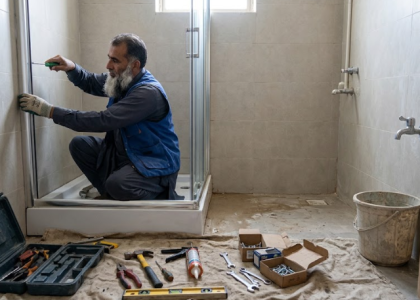
Safe installation
When a mirror is installed in a bathroom, the connection should be checked by a qualified electrician. Ideally, the circuit has a safety cut-off. Plan the power point before tiling begins, since adding one to a finished wall is far more awkward. Our
decorative glass installation service can coordinate the mirror together with other decorative glass work, so one team handles the job.
6. Shape, Size and Frame
Because these mirrors are decorative, shape and frame shape the whole look of the room. They also affect cost and fit.
Choosing a shape
The common options are rectangular, circular, oval and fully custom outlines.
| Shape |
Look and feel |
Best suited to |
| Rectangular |
Clean, classic, versatile |
Most bathrooms, vanities, dressing areas |
| Circular |
Soft, modern, gentle |
Powder rooms, bedrooms, entryways |
| Oval |
Elegant, slightly traditional |
Master bathrooms, luxury interiors |
| Custom |
Unique, statement piece |
Hotels, boutiques, feature walls |
Rectangular mirrors are the most economical because cutting and framing are straightforward. Rounded and custom shapes need more precise fabrication and cost more. Decide how much of your budget you want to put into shape versus features.
Getting the size right
A mirror that is well proportioned to its wall looks more expensive than a larger one that is badly placed. As a general guide, a vanity mirror should be slightly narrower than the vanity below it, and should sit at a comfortable height for the people who use it most. Measure the wall space carefully, including the distance from the vanity or floor, and allow for fixtures, switches and neighbouring tiles. Imported ready-made mirrors come in fixed sizes that rarely fit exactly, which can leave awkward gaps. A made-to-measure mirror avoids that problem.
Frame and finish
Frameless mirrors look sleek but expose the edge, so edge finishing must be excellent. Aluminium frames in black, gold, brushed or powder-coated finishes protect the edges and the wiring channel, and they double as a styling feature. Choose a finish that matches your taps, light fittings and door hardware so the mirror feels part of the room rather than an addition to it.
For more elaborate wall treatments, you may also want to compare a smart mirror with our
custom mirror wall installation.
7. Smart Extras: Bluetooth, Displays and Motion Sensors
The “smart” in smart mirror covers a range of extras. They are enjoyable, but they are not all equally useful, so it pays to be selective.
Bluetooth speaker
A built-in Bluetooth speaker lets you play music or take calls while getting ready. It is a comfort feature that many people enjoy in master bathrooms and salons. Check the sound quality if you can, since speakers hidden behind glass vary a lot, and ask whether it can be left out to reduce cost.
Time, date or temperature display
A small display behind the glass can show the time or temperature. It is useful for people who are always checking the time before leaving, and it looks sophisticated. It is also an extra component that can fail, so consider whether you will really use it.
Motion detection
As covered earlier, motion sensing is especially useful in hotel rooms, guest washrooms and commercial spaces, where convenience and energy saving matter more than personal preference.
How to decide
A simple rule works well. Spend first on features that affect daily use: lighting quality, dimming, colour temperature and anti-fog. Add extras like Bluetooth or displays only if there is budget left and you will genuinely use them. A mirror with excellent light and a reliable driver is a better buy than one with every extra and weak fundamentals.
8. Energy Efficiency and Lifespan
LED lighting uses far less power than the incandescent vanity bulbs it replaces, so running costs are small for typical household use. The actual figure depends on the mirror’s wattage, how long it is on and your electricity tariff, so ask for the wattage rather than assuming.
Lifespan is a more interesting question. Quality LEDs are rated for many thousands of hours, which means years of daily use. In practice, the part that usually limits a mirror’s life is not the LED itself but the driver or the sealing around the electronics. That is why backing quality and driver quality matter more than the headline word “LED” on the label.
When comparing two mirrors, ask what happens if a component fails: whether it can be replaced, how long the replacement takes and who does the work. A mirror that costs a little more for better components is often cheaper over its life than one that needs repair after two winters. If you are still working out budgets, our guide to
LED smart mirror cost in Pakistan explains what drives a quote up or down.
9. Customisation Options
One of the biggest advantages of buying from a local fabricator rather than a shelf is the ability to specify exactly what you need. At Green Glass Designer, our LED smart mirrors are custom made, and the main areas you can tailor are:
- Size: cut to fit your wall precisely.
- Shape: rectangular, circular, oval or custom outlines.
- Finish and frame: colours and materials chosen to match your interior.
- Features: touch sensors, dimming, colour temperature, anti-fog, motion sensing and Bluetooth, selected to suit your needs and budget.
- Quantity: single pieces for homes, or multiple identical units for hotels, salons and developments.
If you are a designer, architect or developer, say so at the start of the conversation. Repeat orders change both pricing and lead time, and a supplier who understands your programme can plan fabrication and delivery around it.
10. Warranty, Delivery and Installation
The features above describe the product. This section describes what stands behind it, which is just as important.
Warranty
Look for a written warranty that covers the electronics, not just the glass. The glass rarely fails, but the electronics are where problems tend to appear. Green Glass Designer’s LED smart mirrors include a 1 to 2 year warranty covering electronics and installation. Whatever supplier you choose, ask what is covered, for how long, and who handles claims. A verbal promise is not enough.
After-sales support
Support is part of the price. Ask how long a replacement driver or sensor takes to arrive, and whether technicians are available in your city. This is where locally fabricated mirrors often have an edge over imported units, since parts and expertise are close at hand.
Delivery
Glass needs careful packaging. Reputable suppliers use protective crating and deliver nationwide. Ask whether delivery is included in the quote and who is responsible for damage in transit.
Installation
Mirrors of this type are heavy and need the right fixings. Professional installation covers wall checks, secure mounting, electrical connection and testing every function. We offer optional on-site installation in Lahore, Karachi, Islamabad, Rawalpindi and other major cities, and we deliver across Pakistan.
Feature Priorities by Space
The right feature set depends on where the mirror will live. This table shows what to prioritise in each setting.
| Space |
Prioritise |
Often optional |
| Guest bathroom |
Reliable lighting, touch control, moisture protection |
Bluetooth, display |
| Master bathroom |
Dimming, colour temperature, anti-fog, quality frame |
Display |
| Bedroom or dressing area |
Colour temperature, dimming, good size and shape |
Anti-fog |
| Salon or beauty studio |
Light quality, colour accuracy, durable driver, warranty |
Bluetooth |
| Hotel or spa |
Motion sensor, anti-fog, consistent finish, fast support |
Display |
| Office or retail |
Custom shape, branded frame, uniform look |
Bluetooth, anti-fog |
This is a planning guide, not a rulebook. The right answer comes from how you will use the mirror, which is why a short consultation before ordering can save you from paying for features you will never touch.
Questions to Ask Every Supplier
Once you have shortlisted two or three suppliers, put the same questions to each. Differences in the answers will tell you more than differences in the price.
- What exactly is inside the mirror? Ask for the LED type, driver, sensor and defogger specification in writing.
- Is it designed for bathroom use? Ask how moisture is handled at the edges, backing and electronics.
- What glass thickness and backing do you use? The answer should be specific.
- Is safety backing included? It should be, especially for larger mirrors.
- What lighting options are available? Front-lit, back-lit, adjustable colour temperature, dimming.
- How is the anti-fog function controlled? Separate switch or linked to the light.
- What does the warranty cover? Electronics, installation, glass, and for how long.
- Who handles repairs and how fast? Ask about replacement parts and local technicians.
- Can I see similar completed work? Look at project examples and references.
- Is delivery and installation itemised? Separate lines make comparison fair.
A supplier who answers these clearly and in writing is usually one who builds carefully. Hesitation or vague answers are worth noting. You can also review our
project references to see the kind of work we deliver for residential and commercial clients.
Common Mistakes to Avoid
Most disappointments with decorative LED smart mirrors come from a small set of avoidable choices.
- Buying on price alone. A low price can mean savings on the driver, backing or warranty, the parts you cannot see. Compare specifications before prices.
- Choosing features over fundamentals. A mirror with Bluetooth and a display but a weak driver is a poor trade. Good lighting, glass and electronics come first.
- Ignoring the wall. Measure before you buy, and check where the power connection will sit. Retrofitting an outlet on a finished tiled wall is awkward.
- Skipping anti-fog in a bathroom. It is the feature people most often wish they had added.
- Forgetting about the frame. An unprotected edge in a humid room can deteriorate sooner than expected.
- Overlooking support. A warranty is only useful if someone is available to honour it quickly.
- Choosing by photograph. Photos flatter. If possible, see a mirror switched on, or look at completed installations.
Avoiding these is mostly a matter of asking the right questions early, which is exactly what the sections above are designed to help with.
Ready-Made or Custom: A Quick Comparison
Before you decide, it is worth weighing the two main routes side by side.
| Factor |
Imported ready-made |
Locally made custom |
| Size and shape |
Fixed options |
Cut to your wall and design |
| Feature set |
Fixed |
Chosen to suit you |
| Warranty and support |
Depends on the local seller |
Handled by the fabricator |
| Replacement parts |
Can be slow to source |
Available locally |
| Fit |
Often needs compromise |
Made to measure |
| Pricing |
Fixed per model, affected by exchange rates |
Quoted per project |
For most homes and nearly all commercial projects, a made-to-measure mirror delivers a better fit and a cleaner result. Our supplier page explains how we work and what we offer:
LED smart mirror supplier in Lahore. As a guide, our LED smart mirrors in Lahore typically range from PKR 18,000 to PKR 65,000, depending on size, features and customisation.
Pre-Quote Checklist
Having these details ready lets any supplier give you a faster, more accurate quote, and makes comparing quotes much easier.
- Exact wall space. Width, height and the distance from the floor or vanity.
- Preferred shape and frame. Rectangle, round, oval or custom, plus the finish.
- Lighting needs. Front-lit, back-lit or both, with dimming and colour temperature.
- Must-have features. Anti-fog, touch control, motion sensor, Bluetooth.
- Location and use. Home bathroom, salon, hotel or office.
- Power connection. Where the outlet is, or whether one needs to be added.
- Quantity. One piece or several, and any delivery schedule.
- Delivery city. This affects logistics and installation availability.
- Warranty expectations. What should be covered and who handles claims.
- Timeline. Custom fabrication takes time, so share your deadline early.
Our process is straightforward. We start with a consultation to understand your size, features and placement, then move to custom design and fabrication, integrate the lighting, defogging and touch controls, deliver safely and, if you wish, install on site before a final inspection with warranty support.
Frequently Asked Questions
1. What is the most important feature in a decorative LED smart mirror?
Lighting quality comes first because it affects everything you do at the mirror. Even, adjustable light, together with a reliable driver and good backing, matters more than any extra feature.
2. Do I really need anti-fog?
In a bathroom, yes. It keeps the glass clear after hot showers and is one of the features owners value most. In bedrooms and dressing areas where there is no steam, you can leave it out.
3. What is the difference between front-lit and back-lit mirrors?
Front-lit mirrors light your face directly and suit makeup and shaving. Back-lit mirrors create a decorative halo around the edge and suit accent walls. Combination designs offer both.
4. Are decorative LED smart mirrors safe in bathrooms?
Yes, when they are built with moisture-resistant backing and sealed electronics and installed correctly by a qualified electrician. Always confirm the mirror is designed for bathroom use.
5. Can I choose the shape and size?
Yes. Our mirrors are available in rectangular, circular, oval and custom shapes, made to fit your space. Shaped and oversized mirrors cost more than standard rectangles.
6. Is Bluetooth worth paying for?
It depends on how you use the room. It is a comfort feature rather than a necessity. Prioritise lighting, dimming and anti-fog first, and add Bluetooth if the budget allows.
7. What warranty should I expect?
Look for a written warranty that covers the electronics. Our LED smart mirrors include a 1 to 2 year warranty covering electronics and installation.
8. Do you deliver and install outside Lahore?
Yes. We deliver across Pakistan and provide installation in Lahore, Karachi, Islamabad, Rawalpindi and other major cities.
10. How do I get an exact quote?
Send your wall size, preferred shape and must-have features on WhatsApp or request a free consultation, and we will prepare an itemised quote.
Choosing With Confidence
A good decorative LED smart mirror is the sum of its parts: even, adjustable lighting, clear and well-finished glass, a reliable driver, proper moisture protection, a frame that suits your interior and a warranty that someone will honour. When you know which features affect your daily use, which are optional and which hide risk, you can spend where it counts and save where it does not.
The best next step is simple. Write down your size, must-have features and budget, ask two or three suppliers the same questions, and compare specifications before prices. If you would like help with that, you can explore our
Decorative LED Smart Mirror range, visit our LED smart mirror supplier page, or talk to our team about your space.