Table of Contents
A staircase is one of the few architectural features in a home that everyone interacts with, everyone sees, and everyone forms an impression from, whether they’re a guest walking in for the first time or a family member using it a dozen times a day. Despite that, staircase railings are often treated as an afterthought in home design, a safety requirement to satisfy rather than a genuine design opportunity. Glass railings change that equation entirely, turning a purely functional element into one of the most visually striking features a home can have.
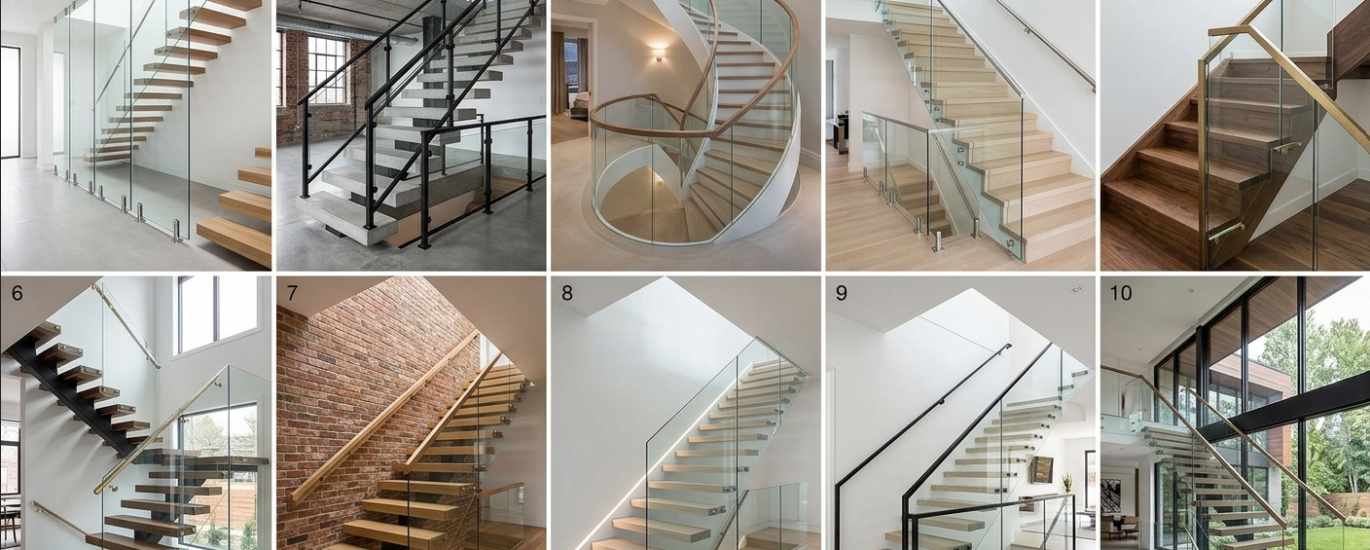
This guide walks through ten distinct glass railing design directions, from minimalist frameless panels to richly detailed stained glass accents, so you can see the real range of what’s possible before deciding what fits your own staircase, budget, and home’s overall design language. Every design here is genuinely achievable, not just an inspiration photo with no practical path to having it in your own home.
10 Directions
From minimalist frameless glass to richly detailed stained glass accents
Safety First
Every design here uses tempered or laminated safety glass appropriate to residential use
Nationwide
Green Glass Designer designs and installs staircase glass railings across Pakistan
Why Glass Railings Transform a Staircase So Effectively
Before getting into specific designs, it’s worth understanding why glass railings have such an outsized visual impact compared to traditional wood or wrought iron alternatives. A solid or heavily patterned traditional railing, however well made, visually breaks up a staircase and the space around it, creating a series of vertical elements that the eye has to look past rather than through. Glass, even in a stained or frit pattern, preserves sightlines and lets light travel through the staircase area in a way solid materials simply can’t.
This matters especially in homes where the staircase sits in or near an entryway, an open-plan living area, or beneath a skylight, exactly the kind of spaces where preserving light and openness has real value beyond the staircase itself. A glass railing doesn’t just look modern, it genuinely changes how a space feels, making a staircase read as part of the room’s overall openness rather than a separate, boxed-in functional element.
A Useful Starting Point Before You Choose a Design
Think about how much privacy or visual separation your staircase actually needs, a fully open floor plan staircase has very different requirements than one you’d like to visually distinguish from an adjacent room, and how much natural or ambient light the area currently gets, since some of the designs below rely more heavily on light transmission than others.
1. Frameless Glass Railing for a Clean, Minimalist Look
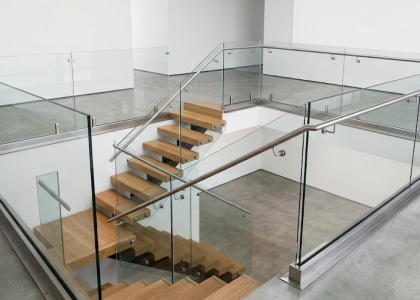
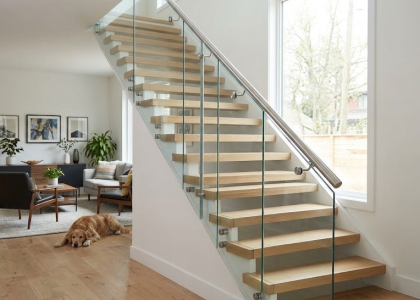
The frameless glass railing is the design most people picture first when they think “modern glass staircase,” and for good reason. Large panels of tempered or laminated glass are mounted using minimal hardware, often a discreet base channel or standoff fittings, with no visible top rail or vertical posts interrupting the glass. The result is about as close to an invisible railing as you can achieve while still meeting real safety requirements.
This design works exceptionally well in contemporary and minimalist homes where the goal is maximum openness and the staircase itself, its structure, its material, its form, becomes the visual feature rather than the railing competing for attention. It’s also one of the more straightforward glass railing designs to specify and install, since it doesn’t involve custom patterning or additional decorative elements.
Best For
Contemporary and minimalist homes, open-plan staircases where maximum transparency and light transmission matter most, and any staircase where the structure itself is architecturally interesting enough to be the focal point.
2. Frosted or Etched Glass Railing for Subtle Texture
For homeowners who want the light-preserving benefit of glass without full, unobstructed transparency, a frosted or etched glass railing offers a softer, more textured alternative. The entire panel, or sometimes just a band or pattern within it, is treated to create a translucent, diffused appearance rather than the fully clear look of standard frameless glass.
This design works particularly well in homes where a staircase sits close to a bedroom, home office, or other space where a bit more visual privacy is genuinely useful, without wanting to lose the light and openness a glass railing provides overall. It also tends to show fingerprints, dust, and smudges considerably less than fully clear glass, a genuinely practical advantage for a high-touch feature like a staircase railing that guests and family members handle constantly.
A Practical Advantage Worth Knowing
Frosted and etched glass railings are noticeably lower maintenance in terms of visible smudging and handprints compared to fully clear glass, which is a genuinely useful, if often overlooked, consideration for a railing that gets touched constantly throughout the day.
Not Sure Which Style Fits Your Staircase?
Send us a photo of your staircase and roughly what you’re picturing, and we’ll help you figure out which glass railing style actually suits your home’s layout and light.
3. Stained Glass Accent Panels Within a Glass Railing
For homeowners wanting genuine decorative impact rather than a purely minimalist look, stained glass accent panels set within an otherwise clear glass railing bring color and craftsmanship directly into one of the most-used features in the home. Rather than treating the entire railing run as a single stained glass surface, this approach typically uses one or a few carefully placed colored glass panels, at a stair landing, at the base of the staircase, or as a repeating accent at intervals along the run, letting the decorative element stand out precisely because it’s not competing with color across the entire railing.
This design works beautifully in homes with a more traditional or Mughal-influenced design language elsewhere in the property, and it’s a genuinely popular way to introduce stained glass into a home for people who love the look but aren’t ready to commit to a full stained glass window or dome elsewhere.
Best For
Traditional and heritage-inspired homes, staircases serving as a genuine focal point near an entryway, and homeowners wanting to introduce stained glass craftsmanship without covering an entire surface in color.
4. Gradient Frit Glass for a Contemporary, Functional Look
A gradient frit pattern, denser ceramic dot or line coverage toward the base of the railing and lighter toward the top, or vice versa, creates a genuinely contemporary look while also serving a practical purpose: providing a visible, safe boundary that meets accessibility and safety visibility standards without requiring fully solid glass. This design has become increasingly popular in modern Pakistani homes specifically because it strikes a clean balance between the minimalist appeal of frameless glass and a bit more visual texture and depth.
Frit patterns on railings also address a genuinely practical safety consideration: fully clear glass can occasionally be difficult to visually register, especially for children, guests unfamiliar with the home, or anyone moving quickly through the space, and even a subtle frit pattern gives the eye something to register the glass’s presence without needing a heavy-handed visual treatment.
Why This Design Has Grown So Popular
A frit gradient railing gives you a genuinely modern, on-trend look while quietly solving a real safety visibility consideration that fully clear glass doesn’t address as effectively, making it a smart practical choice as much as an aesthetic one.
5. Glass and Stainless Steel Combination Railings
Rather than glass alone, combining glass panels with a stainless steel or brushed metal top rail and base channel creates a design that reads as more substantial and architecturally grounded than a purely frameless glass approach, while still preserving most of the light and openness glass provides. The metal framing elements also add genuine structural reassurance for homeowners who want the visual benefit of glass but prefer the tactile, visible solidity of a metal handrail to grip while using the stairs.
This combination works particularly well in contemporary homes with other exposed metal design elements, light fixtures, kitchen hardware, structural accents, creating a cohesive material language across the home rather than treating the staircase as a completely separate design decision.
Best For
Contemporary homes with existing metal design accents, families wanting a more substantial handrail feel, and staircases in busy, high-traffic areas of the home where a robust, easy-to-grip rail matters.
6. Tinted or Colored Glass Railings for a Bold Statement
For homeowners wanting color without the intricate patterning of full stained glass, a uniformly tinted or colored glass panel, smoky gray, warm amber, deep bronze, offers a bolder visual statement than clear glass while remaining considerably simpler and more budget-conscious than custom stained glasswork. A tinted railing reads as a genuine design choice rather than a purely functional safety barrier, and it pairs particularly well with warm wood flooring, brass fixtures, and other rich material tones increasingly popular in contemporary Pakistani interior design.
This is also a practical choice for staircases that receive significant direct sun exposure through a nearby window or skylight, since tinted glass offers a degree of glare reduction that fully clear glass doesn’t, an added functional benefit alongside the aesthetic one.
A Design Worth Considering for Sunlit Staircases
If your staircase sits near a large window or skylight and receives strong, direct sun for meaningful parts of the day, a tinted glass railing offers genuine glare reduction alongside its aesthetic appeal, a practical benefit fully clear glass doesn’t provide.
7. Glass Railings With Integrated LED Strip Lighting
For a genuinely dramatic, modern effect, particularly appealing for evening ambiance, integrated LED strip lighting installed along the base channel or handrail of a glass railing creates a soft, glowing edge that highlights the staircase’s form after dark. This design works especially well with frosted or lightly frit-patterned glass, which diffuses the LED light more evenly than fully clear glass would, avoiding harsh, visible light points.
This approach is increasingly popular in contemporary homes and even more common in commercial and hospitality settings, boutique hotel lobbies, upscale retail staircases, where a staircase functions as much as an architectural feature and photo moment as a purely functional circulation element.
Best For
Contemporary homes prioritizing evening ambiance, staircases serving as a genuine architectural centerpiece, and any home wanting a distinctive, photograph-worthy design feature.
8. Glass Railings With Warm Wood or Marble Handrails
Pairing a glass panel railing with a warm wood or polished marble top handrail creates a genuinely elegant contrast between the coolness and transparency of glass and the warmth and texture of a natural material, a combination that reads as more traditional and formal than an all-glass or glass-and-metal approach while still preserving glass’s light and openness benefits. This design works particularly well in formal entryways and more traditionally styled homes wanting to soften the very modern, minimalist quality of an all-glass railing.
The tactile quality of a wood or marble handrail is also worth considering practically, it’s generally a more comfortable, temperature-neutral surface to grip than a metal or glass-edge handrail, particularly relevant in climates with significant temperature swings between seasons.
Why This Pairing Works So Well
Combining glass with a warm, natural handrail material softens what could otherwise feel like a very cold, purely modern design statement, making this a popular choice for homeowners wanting glass’s benefits within a more traditionally furnished or formally styled home.
9. Custom Motif or Calligraphic Glass Railing Panels
For homeowners wanting something genuinely unique rather than a standard pattern or plain glass, a custom-designed panel incorporating a family motif, a calligraphic phrase, or an original decorative design brings the same level of personalization to a staircase railing that’s more commonly associated with a stained glass window or ceiling feature. This approach can be executed in stained glass for full color and craftsmanship, or in frit glass for a more subtle, etched-in pattern effect, depending on the level of visual impact you’re aiming for.
This is a particularly meaningful choice for a home’s main or most prominent staircase, the one guests see immediately upon entering, where a genuinely custom, personal design element makes a lasting impression that a standard pattern simply can’t replicate.
Best For
Main entryway staircases, homes wanting a genuinely one-of-a-kind design element, and families wanting to incorporate personal or cultural significance directly into their home’s architecture.
10. Curved Glass Railings for Spiral and Curved Staircases
For homes with a spiral or gently curved staircase, a genuinely custom-curved glass panel railing, rather than a series of small straight segments approximating a curve, delivers a considerably more elegant, seamless result. Curved glass fabrication is more specialized and involved than standard flat panel work, requiring the glass to be shaped to the staircase’s specific curvature during manufacturing, but the visual payoff for a home with this kind of architectural staircase is substantial, a smooth, continuous glass surface that follows the stair’s form exactly rather than looking segmented or approximated.
This is one of the more technically demanding designs on this list and benefits from early planning, ideally during the staircase’s initial design or construction phase, so the glass fabrication can be planned around the stair’s exact curvature from the outset.
Why This Design Needs Early Planning
Curved glass panels need to be fabricated specifically to your staircase’s exact curvature, which means accurate measurements and, ideally, involvement early in the staircase’s design or construction process produce a considerably better result than trying to retrofit curved glass onto an already-completed, unusually shaped staircase.
Ten Staircase Glass Railing Designs at a Glance
| Design | Best Setting | Visual Character |
|---|---|---|
| Frameless Glass | Modern, minimalist homes | Clean, maximally transparent |
| Frosted/Etched Glass | Staircases near private spaces | Soft, textured, low-maintenance |
| Stained Glass Accent Panels | Traditional and heritage homes | Colorful, focal, craftsmanship-driven |
| Gradient Frit Glass | Contemporary homes | Modern, subtly textured, safety-conscious |
| Glass + Stainless Steel | Contemporary homes with metal accents | Substantial, architecturally grounded |
| Tinted/Colored Glass | Sunlit staircases, warm interiors | Bold, glare-reducing |
| LED-Integrated Glass | Homes prioritizing evening ambiance | Dramatic, glowing, photo-worthy |
| Glass + Wood/Marble Handrail | Formal and traditional homes | Elegant, warm contrast |
| Custom Motif/Calligraphic Panel | Main entryway staircases | Fully personalized, one of a kind |
| Curved Glass for Spiral Stairs | Homes with curved staircases | Seamless, architecturally elegant |
Safety and Practical Considerations Before You Choose
Regardless of which design direction appeals to you most, a few practical and safety considerations apply to essentially every glass staircase railing project, and they’re worth understanding before you finalize a decision.
Tempered or laminated safety glass is essential, not optional. Any staircase railing, given its structural and safety role in the home, needs to use tempered glass at minimum, and laminated glass for many applications, rather than standard annealed glass. Tempered glass is significantly stronger than standard glass and, if it does break, fractures into small, relatively less dangerous granular pieces rather than large, sharp shards. Laminated glass adds an interlayer that holds the glass together even if it cracks, providing an additional safety margin particularly valued for railings in homes with children or in commercial settings.
Glass thickness needs to match the specific application and panel size. Larger, unsupported glass panels generally require greater thickness to perform safely as a structural railing element, and this isn’t a detail to guess at, it should be specified based on your staircase’s specific panel dimensions and mounting method.
Mounting hardware and base channel design affect both safety and final appearance. How the glass is actually secured, base channel mounting, standoff fittings, a top rail system, affects not just the railing’s structural performance but its final visual character considerably, and it’s worth discussing specifically which mounting approach fits your chosen design direction.
Local building code and height requirements apply to staircase railings just as they would to any other railing type. Standard railing height and safety requirements for residential staircases apply regardless of the material chosen, and any reputable installer should be designing to these standards as a baseline, not an optional consideration.
A Question Worth Asking Any Glass Railing Supplier
“What glass type and thickness are you specifying for my specific panel sizes, and why?” A supplier with genuine technical competence will answer this specifically based on your staircase’s actual dimensions, rather than offering a generic, one-size-fits-all answer regardless of your particular installation.
Frequently Asked Questions
Is glass actually safe for a staircase railing, especially in a home with children?
Yes, when properly specified with tempered or laminated safety glass appropriate to the application. Tempered glass is considerably stronger than ordinary glass and breaks into small, less hazardous pieces if it does fail, while laminated glass adds a further safety layer by holding cracked glass together rather than allowing it to separate. For homes with young children specifically, it’s worth discussing laminated glass and appropriate frit or etching for visibility directly with your installer.
How much does a glass staircase railing typically cost compared to traditional wood or wrought iron?
Cost varies considerably based on the specific design, glass type and thickness, mounting hardware, and any custom patterning or stained glass elements involved, so it’s genuinely difficult to generalize without discussing your specific staircase. A consultation is the most reliable way to get an accurate, project-specific comparison rather than relying on a generic industry estimate.
Can an existing staircase railing be replaced with glass, or does this only work for new construction?
Replacing an existing railing with glass is genuinely common and achievable in most cases, provided the staircase’s underlying structure can properly support the new mounting hardware. Curved or spiral staircase glass installations, as noted above, benefit from earlier planning, but standard straight-run staircase railing replacements are a very common and straightforward renovation project.
How difficult is it to keep a glass railing clean, especially fully clear frameless glass?
Fully clear glass does show fingerprints and smudges more visibly than frosted, etched, or frit-patterned alternatives, which is worth factoring into your decision if the railing will see heavy daily use from family members and guests. Regular cleaning with standard glass cleaning products keeps it looking its best, and many homeowners find the visual payoff worth the modest extra maintenance compared to a textured or patterned option.
Can I combine more than one of these design directions, like a frameless glass railing with a stained glass accent panel at the landing?
Yes, and this kind of combination is genuinely common, using a primarily minimalist frameless approach along most of the run with a decorative accent, a stained glass panel, a custom motif, at a specific focal point like a landing or the staircase’s base. This is exactly the kind of design refinement worth discussing during a consultation if more than one style on this list appeals to you.
Does a glass railing work for outdoor or semi-outdoor staircases, like a terrace or rooftop access stair?
Yes, glass railings are commonly used in outdoor and semi-outdoor residential applications, though the specific glass specification, tempering, lamination, and any protective treatment, should account for direct weather exposure, which is worth discussing specifically if your project involves an outdoor or semi-outdoor staircase rather than an interior one.
How long does a typical glass staircase railing installation take?
Timeline depends significantly on the design’s complexity, a standard frameless or frit glass installation moves considerably faster than a fully custom stained glass or curved glass project. A consultation will give you a realistic, project-specific timeline based on your actual staircase and chosen design.
Choosing the Right Design for Your Home
A glass staircase railing is one of the most effective ways to modernize and elevate a home’s interior, and as this list shows, there’s a genuine, realistic design direction available whether you want maximum minimalist transparency, a warm traditional combination, or a fully custom decorative statement. The right next step is a direct conversation about your specific staircase, its structure, dimensions, and how the space is used, rather than choosing purely from photos alone.