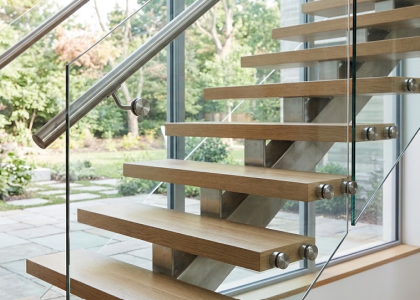
By the time someone searches for a custom glass railing installer, the design decision has usually been made. You have seen the clean lines on a staircase, a terrace or a mezzanine, and you want them in your own space. What is left is the part that carries real risk: who should fabricate and install it, what exactly should the specification say, and how do I know a quote is fair before I commit? Two railings that look identical in a photograph can differ completely in glass grade, fixing method, hardware metal and warranty. Those differences decide whether the railing is safe, whether it stays tight for years and whether you pay twice.
This guide is written for that decision stage. We will not spend time convincing you that glass railings look good. Instead we explain the systems available, the glass and hardware you should insist on, how site conditions change the design, what moves a quote up or down, how our process runs from the first measurement to the final inspection, and which red flags to watch for when you compare suppliers. If you finish this page with a clear specification and a short list of questions, it has done its job.
What You Are Really Buying With a Custom Glass Railing
A glass railing is a structural safety product, not a decorative panel. It is there to stop a fall, take a leaning load and keep doing so every day for years. The price and the performance both come from six layers working together.
- The glass. Type, thickness, edge finish and whether it is tempered, laminated or both.
- The fixing system. How the glass is held: a base channel, spigots, point fixings, standoffs or posts.
- The hardware. Stainless steel grade, fastener quality, finish and any handrail.
- The structure behind it. The slab, beam, wall or stair stringer that the railing is anchored to.
- The measurement and design. Site survey, CAD drawings and tolerances that make the glass fit first time.
- The service. Fabrication, delivery, installation, inspection and the warranty that stands behind the work.
A very low price usually means a saving in one of the layers you cannot judge by looking at the finished railing, most often the glass grade, the hardware metal and the quality of the anchoring. A fair price is one where each layer is stated in writing.
Worth Noting: “Glass railing” is a label, not a specification. Always ask for glass type and thickness, the fixing system, the stainless steel grade and the warranty in writing. A quote that lists only length and “glass railing” is incomplete.
Types of Custom Glass Railing Systems
Each system suits a different look, structure and budget. Choosing the right one early prevents expensive redesign later. Our
staircase glass railing installation service covers all of the systems below.
| System |
How the glass is held |
Look |
Best suited to |
| Base channel (frameless) |
Glass sits in a continuous channel fixed to the floor or slab edge |
Cleanest, no visible posts |
Terraces, balconies, modern staircases |
| Spigot fixed |
Individual stainless steel spigots clamp the glass at intervals |
Minimal, glass appears to float |
Pool areas, terraces, interior stairs |
| Standoff / point fixed |
Round stainless standoffs fix the glass to the face of a slab or wall |
Contemporary, visible fixing points |
Mezzanines, staircases with side-fix, façade-style guards |
| Post and clamp (semi-frameless) |
Posts carry glass held by clamps, often with a handrail |
Defined, familiar, more forgiving |
Commercial buildings, long runs, tighter budgets |
| Glass with handrail |
Any of the above plus a continuous stainless or wooden handrail |
Warm, finished, easy to grip |
Staircases used by children and elders, public spaces |
Base channel systems
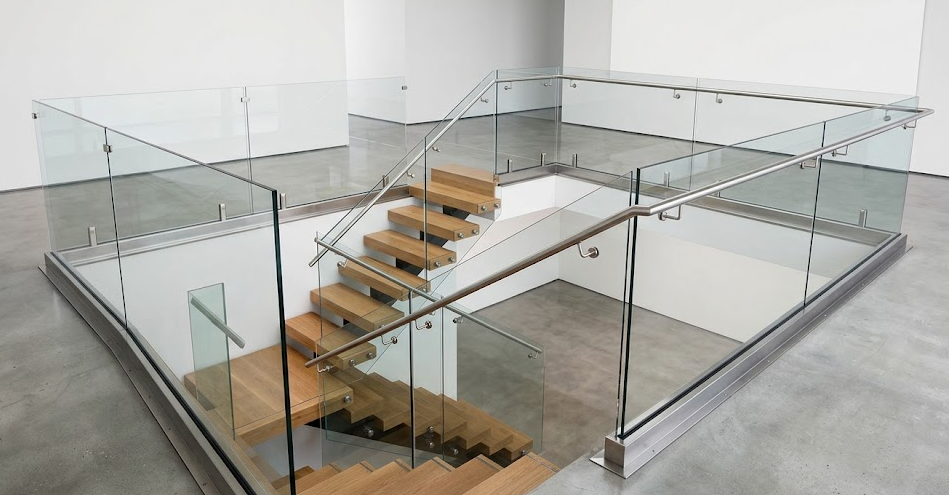
The glass is seated in an aluminium or stainless channel and secured with wedges or grout. Because the load is carried along the full length of the glass, this is the system most people picture when they think of a frameless balustrade. It gives the cleanest result and spreads the load well, but it needs a slab edge or floor with enough depth for the channel, and the waterproofing detail on a terrace needs care.
Spigot systems
Spigots are compact stainless fittings fixed to the slab, each clamping the glass at its base. They need less floor depth than a full channel and suit tight edges. The glass is carrying the load through fewer points, so correct thickness and correct anchoring are essential.
Standoff and point-fixed systems
Here the glass is drilled and fixed with round stainless fittings to the side of a slab, wall or stringer. It looks sharp and frees the walking surface. It also places more demand on the glass, because drilled holes concentrate stress, which is why drilled panels must be tempered and positioned with correct edge distances. Our
point glass façade installation experience carries directly into this type of fixing.
Post and clamp systems
Posts or stanchions hold the glass with clamps. These are practical for long runs, buildings with variable tolerances and projects where cost control matters. The visible posts are a design trade-off, but the system is forgiving of site irregularities.
Do you need a handrail?
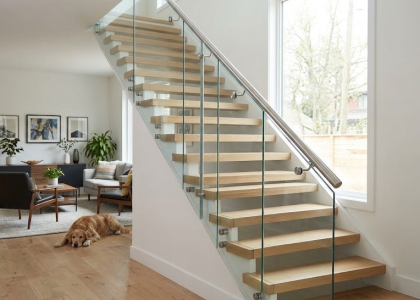
A handrail makes a glass guard feel safer and gives people something to hold on stairs. It also adds a second line of protection and can tie the guard together structurally in some designs. For staircases used daily by children and older family members, we usually recommend one. For terraces and mezzanines, a frameless look without a handrail is a design choice that must be balanced against the structural design and the requirements that apply to your building.
Choosing the Right Glass: Tempered, Laminated or Both
Glass choice is the most important safety decision in the whole project. Ordinary annealed glass should never be used in a balustrade. It breaks into sharp shards. The options that are suitable are below.
| Glass type |
How it behaves |
Typical use |
| Tempered (toughened) |
Several times stronger than annealed glass if broken, it crumbles into small blunt pieces |
Interior stairs, enclosed balconies, lower-risk guards |
| Laminated tempered |
Two or more tempered layers bonded with an interlayer broken pieces stay held in place |
Terraces, high-level guards, public areas, anywhere a fall risk is serious |
| Heat-strengthened laminated |
Stronger than annealed, less prone to spontaneous failure than some tempered glass |
Specific structural designs advised by the engineer |
Why laminated tempered is the safer choice
Tempered glass is strong, but when it fails, it fails completely, and the panel can drop out of its fixing. In a laminated tempered panel, the interlayer holds the broken glass together, so the barrier stays in place and continues to protect people until it is replaced. For anything above a single floor, outdoors or in a public building, this is the specification we recommend. Our
laminated glass installation service is built around exactly this kind of safety glazing.
Thickness
Thickness depends on the system, the span, the height and the load. Frameless channel systems normally use thicker glass than post-and-clamp systems because the glass carries more of the load itself. The correct thickness comes from the engineering for your project and not from a rule of thumb, so we confirm it after the site survey. Be cautious of any supplier who quotes a thickness before seeing the site.
Edges, clarity and finish
Polished edges are standard for exposed glass, both for appearance and for safety. Low-iron (extra-clear) glass removes the green tint of ordinary glass and suits modern interiors. Tinted, frosted or patterned glass can add privacy on balconies. These choices change appearance and cost, but they do not replace the safety requirement for tempered or laminated glass.
Worth Noting: Ask for the glass to be fabricated and heat-treated before it arrives, with cutting, drilling and polishing finished in the factory. Glass cannot be cut or drilled after tempering, so any on-site change means a remake. This is why accurate measurement matters so much.
Hardware and Finishes That Last
The glass gets the attention, but the hardware is what holds it. In a railing, a failed fitting is as serious as a failed panel.
Stainless steel grade
The two grades you will hear about are 304 and 316. Grade 304 performs well indoors and in normal conditions. Grade 316 contains molybdenum and resists corrosion better in humid, coastal or chlorinated environments. For terraces facing the sea in Karachi, pool-side installations and any exterior location with heavy exposure, 316 is worth the extra cost. For interior staircases in dry conditions, 304 is usually adequate. Ask which grade is quoted and, ideally, how it is identified.
Fasteners and anchors
The anchors that fix the railing to the concrete or steel are as important as the glass. Chemical anchors or high-quality mechanical anchors should be chosen to suit the base material, whether that is solid concrete, a thin slab, brick or a steel stringer. Cheap fasteners are one of the most common hidden savings in low quotes.
Finishes
Brushed stainless is the most popular finish because it hides fingerprints and light scratches. Polished stainless gives a brighter look but shows marks more easily. Black, bronze or gold finishes are available for design-led interiors and add to the cost. Pick a finish that matches your door handles, light fittings and other metalwork.
Gaskets and sealing
Gaskets and glazing blocks cushion the glass and keep it from touching metal. On exterior installations, good gaskets and proper sealing at the base also keep water from sitting in the channel. These are small items that make a big difference to how the railing ages.
Where Custom Glass Railings Work Best
Each location puts different demands on the railing, and a good installer designs for the place rather than copying one standard detail everywhere.
Staircases
In a staircase, the railing follows an angle, and every panel is cut to a slightly different shape. This is where accurate templating pays off. Open risers, floating treads and glass balustrades all work together visually, so we coordinate the glass with the stair design from the start. For a deeper look at safety, see our guide to
glass stair railing durability and safety.
Terraces and balconies
Outdoor railings face sun, rain, dust, wind load and temperature swings. Laminated tempered glass, 316 stainless in exposed locations, proper drainage at the base and a clear understanding of wind load are all part of a good specification. Terrace railings also protect views, so low-iron glass is a popular upgrade.
Mezzanines and double-height spaces
Mezzanine edges in homes, showrooms and offices need a guard that is strong and nearly invisible. Frameless or standoff systems suit these spaces, but they sit at a height where a failure would be serious, so laminated glass and tested fixings are the right choice.
Commercial and public buildings
Hotels, offices, malls and restaurants add crowd loads and stricter safety expectations. Handrails, post-and-clamp systems, laminated glass and documented installation are standard here. If your project also involves partitions, façades or shopfronts, we can coordinate it all through our
architectural glass supplier service so that one team manages the glazing package.
Pool areas and gardens
Water, chemicals and constant exposure make material choice critical. Grade 316 stainless and carefully selected finishes protect the railing from corrosion. Self-closing gates and proper height are also relevant when children are around.
Safety, Height and Structural Considerations
A railing does not work in isolation. It depends on the structure it is fixed to and the rules that govern its use. We cannot replace your architect or structural engineer, but we can build these considerations into the design.
- Guard height. Heights of roughly 900 mm to 1,100 mm are commonly used, depending on the type of building and the standard applied. Terraces and public spaces generally need the taller end of that range.
- Gaps and openings. Any gap in a stair or balcony guard should be small enough that a child cannot pass through. Many standards use a 100 mm sphere as the test.
- Load. The railing must resist a horizontal push at the top edge. The required load is higher in public and commercial areas.
- The base structure. A railing is only as strong as the slab or beam behind it. Thin slab edges, loose brickwork and cracked concrete need attention before glass goes on.
- Movement and tolerances. Buildings are never perfectly straight. Good detailing allows for small variations without forcing the glass.
We review these with you during the site survey and note anything that needs correction before fabrication starts. Where the project requires an engineer’s sign-off, we work with your consultant on the details.
Worth Noting: The structure that holds the railing is part of the railing. If the slab edge is weak or the wall is crumbling, no fixing will fix it. Tell us about the base condition early so that the design does not rely on something that cannot carry the load.
What Drives the Cost of a Custom Glass Railing
Every project is quoted individually because the variables are real. The factors below decide where your quote lands, so understanding them lets you spend where it matters and save where it does not. For a broader pricing view, our
glass staircase railing cost guide covers this topic in more depth.
1. Length and layout
Total length is the base number. Straight runs are the most economical. Curves, many corners, stair angles and landings need more cutting, more templating and more fittings, so they cost more per metre.
2. Glass type and thickness
Laminated tempered glass costs more than single tempered, and thicker glass costs more than thinner. Low-iron glass, tinted glass and patterned glass add more. This is the area where we recommend you invest in safety before style.
3. The fixing system
A full base channel uses more material than spigots. Drilled and point-fixed systems need precision drilling and special fittings. Post-and-clamp systems can reduce glass cost but add posts. The right comparison is the cost of the whole system and not just the glass.
4. Hardware grade and finish
Steel grade 316 costs more than 304. Specialty finishes cost more than brushed stainless. A continuous handrail adds material and fabrication time. Decide which of these matter for your location and which are cosmetic.
5. Site conditions
Height above ground, access for lifting heavy glass, the condition of the base and the amount of preparation required all affect labour and equipment. Installation on a high terrace is more demanding than on a ground-floor staircase.
6. Custom shapes and special details
Curved glass, bespoke cut-outs, integrated lighting and special corner details need extra fabrication. They deliver striking results but belong in the budget deliberately.
7. Project scale and timeline
A full villa or a multi-floor commercial project can be organised more efficiently than a small single job. A tight deadline may also affect scheduling. Share your timeline at the beginning so that we plan the work around it.
| Cost factor |
Effect on price |
Where we advise spending |
| Glass safety grade (laminated tempered) |
Moderate to high |
Always on terraces, mezzanines and public areas |
| Stainless steel grade (316) |
Moderate |
Coastal, pool-side and exposed exterior sites |
| Anchoring and base preparation |
Low to moderate |
Never cut it protects the whole installation |
| Low-iron glass |
Moderate |
Optional worthwhile for view-focused terraces |
| Special finishes and shapes |
Moderate to high |
Optional budget deliberately |
| Handrail |
Low to moderate |
Recommended for stairs with children and elders |
Our Installation Process, Step by Step
A predictable process keeps a custom project on schedule and removes surprises. This is how we work at Green Glass Designer, from the first call to the final inspection.
- Consultation. We discuss your space, your design intent, the use of the railing and your budget. You can start this conversation over WhatsApp or through our contact page.
- Site survey and measurement. We measure the site, check the base structure, note levels and tolerances and photograph the conditions. This step prevents most installation problems.
- Design and mock-ups. We prepare customised CAD drawings and a proposal that states the system, glass, hardware and finishes. You review it before anything is made.
- Fabrication. Glass is cut, drilled, polished and tempered or laminated to the approved drawings. Hardware is prepared to the agreed grade and finish.
- Delivery. Glass is crated and delivered with protection against edge damage. We deliver across Pakistan.
- Installation. Our team fixes the base, sets the glass, adjusts alignment, secures the fittings and tests the finished railing.
- Final inspection and handover. We check every panel, fitting and finish with you, explain care and maintenance and provide after-sales support under the warranty.
Because the glass is made to your drawing and cannot be altered after tempering, the survey and the design approval are the two steps we never rush.
Maintenance and Long-Term Care
A well-built glass railing needs very little attention. The essentials are simple.
- Cleaning. Use a soft cloth and a non-abrasive glass cleaner. Apply the cleaner to the cloth and not directly on the edges or the base seals.
- Metalwork. Wipe stainless steel with a soft cloth. In coastal or pool-side locations, rinse fittings with fresh water from time to time to remove salt or chemical residue.
- Periodic checks. Look at fittings, gaskets and the base every few months. If you notice movement, a loose fitting or a chip on an edge, contact us rather than attempting a repair.
- No impact or drilling. Do not hang loads from the glass or drill it. Any chip on an edge can grow into a crack.
Our
project references show how finished installations look in residential and commercial settings.
Custom-Made vs Ready-Made Glass Railing
Buyers often ask whether a standard, ready-made system would do instead of a custom installation. The comparison below shows where each makes sense.
| Factor |
Custom-made |
Ready-made / standard |
| Fit |
Cut to your exact measurements and angles |
Fixed sizes, gaps and compromises are common |
| Design freedom |
Choose system, glass, finish and shape |
Limited to the catalogue |
| Staircases |
Each panel templated to the stair angle |
Difficult to match, often needs adaptation |
| Lead time |
Needs survey, drawing and fabrication |
Faster if stock is available |
| Support |
Local fabrication, faster remakes and repairs |
Depends on the seller |
| Best for |
Staircases, terraces, mezzanines and commercial work |
Simple straight runs with standard sizes |
For most staircases and nearly every terrace, a custom installation gives a better fit and a cleaner result. Glass that is cut and tempered to the wrong size cannot be corrected, so accurate survey and fabrication are worth more than a faster delivery date.
How to Compare Quotes From Glass Railing Suppliers
Line up two or three quotes and compare specifications before you compare totals. Here is what to look for in each.
- Glass. Type (tempered or laminated tempered), thickness and edge finish.
- System. Channel, spigot, standoff or post, and the number of fixing points.
- Hardware. Steel grade (304 or 316), finish and fastener type.
- Scope. Whether the price covers survey, drawings, fabrication, delivery, installation and handover.
- Warranty. Duration, what it covers and who handles claims.
- Timeline. Fabrication and installation schedule.
- Payment terms. A clear schedule linked to milestones.
Red Flags in a Low Quote
A low price is not automatically a problem, because good suppliers can be competitive. But some patterns suggest corners are being cut.
- No specification list. The quote mentions only length and “glass railing”.
- No mention of glass type. Annealed or unspecified glass has no place in a railing.
- Thickness quoted before a site visit. The right figure depends on the project.
- No steel grade. Unstated hardware is often the cheapest hardware.
- Installation not included or unclear. It may appear as an unexpected extra.
- Unclear warranty. A verbal promise gives little protection.
- No comparable completed work. Ask to see examples.
- Pressure to pay everything upfront. Reasonable terms follow progress.
A railing that saves money by skipping the parts you cannot see is not a bargain. The cost comes later, as a repair, a replacement or, in the worst case, an accident.
Checklist Before You Request a Quote
Having these details ready makes quotes faster, more accurate and easier to compare.
- Location. Staircase, terrace, balcony, mezzanine or other, indoor or outdoor.
- Approximate length and height. Include any corners, curves or stair flights.
- Base condition. Concrete slab, steel stringer, brick wall or tile finish.
- Preferred system. Channel, spigot, standoff, post and clamp, or ask us to advise.
- Glass preferences. Clear, low-iron, tinted or frosted.
- Handrail. Yes, no or undecided.
- Finish. Brushed, polished, black or another colour.
- City and site access. This affects delivery and installation planning.
- Timeline. Your target completion date.
- Photos and drawings. Any images, plans or architect drawings you already have.
Sending a few site photos on WhatsApp is often enough to start a conversation.
Why Choose Green Glass Designer for Your Glass Railing
Green Glass Designer works in architectural and decorative glass for homes, commercial buildings and corporate projects across Pakistan. Here is what you get when you choose us.
- Over 15 years of experience in glass design, supply and installation.
- PEC-registered and ISO-certified, which matters for quality, reliability and projects that need documented contractors.
- Customised CAD drawings approved by you before fabrication starts.
- Precision cutting, tempering and finishing handled to the approved drawings.
- Transparent pricing with itemised quotes so you can see what you are paying for.
- Warranty-backed services with after-sales support and maintenance.
- Nationwide coverage, including Lahore, Karachi, Islamabad and other major cities.
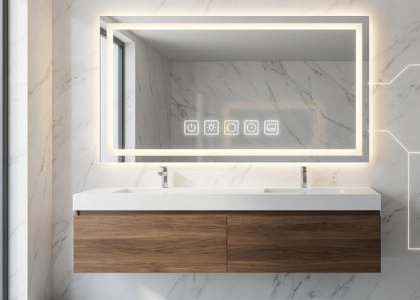
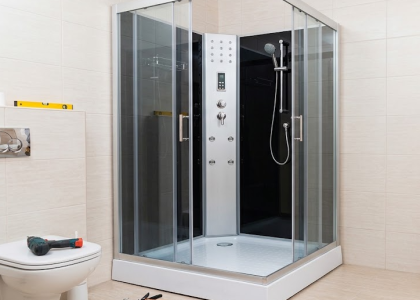
- One team for the whole glazing package, from railings to partitions, façades, shower cabins and mirrors.
You can see how our work looks in context on our project references page, or explore our
stairs glass railing product range.
Frequently Asked Questions
1. How much does a custom glass railing cost in Pakistan?
The cost depends on length, layout, glass type and thickness, the fixing system, hardware grade and site conditions. Because each project is different, we quote individually. Send us your measurements and photos on WhatsApp for a firm quote.
2. Which glass is best for a railing?
Tempered glass is the minimum for a balustrade, and laminated tempered glass is the safer choice for terraces, mezzanines, high-level guards and public areas because the broken pieces stay held in place.
3. Is a handrail necessary on a glass staircase railing?
A handrail is strongly recommended for stairs used daily, especially by children and elders. For other locations, it depends on the design and the requirements that apply to your building.
4. Can glass be cut or adjusted on site?
No. Tempered glass cannot be cut, drilled or reshaped after treatment. That is why we measure carefully and approve drawings before fabrication.
5. What stainless steel grade should I choose?
Grade 304 suits dry interior spaces. Grade 316 is better for coastal, pool-side and exposed exterior locations because it resists corrosion more effectively.
6. How long does a custom railing take?
Timelines depend on the project size and the glass treatment required. The process runs from survey and drawings through fabrication and installation, so share your deadline early and we will plan around it.
7. Do you install glass railings outside Lahore?
Yes. We deliver across Pakistan and offer installation in Lahore, Karachi, Islamabad, Rawalpindi and other major cities.
8. Does the quote include installation?
Our proposals state the scope clearly, including measurement, fabrication, delivery and installation. Always ask any supplier to itemise these lines so you can compare like with like.
9. Is a glass railing safe for children?
When it is built with the right glass, correct height, small gaps, strong fixings and a sound base structure, a glass railing can be safe for families. Laminated glass and a handrail add extra protection.
10. What warranty do you provide?
Our services are warranty-backed with after-sales support. Warranty terms are confirmed in your written quote, so you know exactly what is covered and for how long.
Turning a Design Idea Into a Safe, Lasting Installation
A custom glass railing is the sum of its glass, its hardware, the structure behind it and the team that fits it. When you know which choices affect safety, which affect appearance and which hide risk, you can invest where it counts and avoid paying twice.
The next step is straightforward. Define the location and approximate length, gather a few photos, and request an itemised proposal. If you would like help with that, you can explore our staircase glass railing installation page, review our project references, or speak with our team directly.