
Table of Contents
Think about the last time you really looked at your shower curtain. Not a glance on the way to brushing your teeth, but a proper look at the bottom hem, the folds near the rod, the spots where the plastic clings to itself when it is wet. For many households, that look reveals something uncomfortable faint pink or grey patches, dark specks creeping along the edges, and a slightly musty smell that never fully goes away no matter how often the curtain is washed. This is exactly why more and more homeowners are switching to glass shower cabins.
That is not a sign of poor housekeeping. It is simply what happens when a soft, flexible material hangs in one of the dampest rooms in the house. Bathrooms are warm, humid, and constantly exposed to water, soap residue, and skin cells. Those are exactly the conditions microbes like best. The question is not whether a shower curtain will collect grime. The question is how quickly, and how much effort it takes to keep it under control.
This guide looks at that question honestly. We will explain what actually builds up on shower curtains, why a glass shower cabin handles the same environment better, and where glass has limits of its own. If you are simply curious about how to make your bathroom cleaner, or you are at the very start of thinking about a bathroom upgrade, this will give you a clear picture without any pressure to decide anything today.
What Is a Glass Shower Cabin?
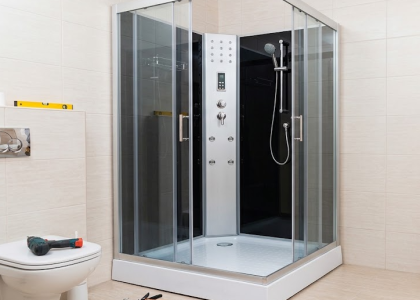
A glass shower cabin is a bathing enclosure built from tempered glass panels and doors, usually set in a slim metal frame or fitted with minimal hardware. It separates the wet shower zone from the rest of the bathroom, replacing the soft curtain and rod that many homes still use. Glass shower cabins come in several styles. Frameless cabins use thick glass with very little metal. Semi-frameless cabins add a light frame for extra stability. Sliding, hinged, and pivot doors suit different bathroom sizes, and clear, frosted, or tinted glass lets you choose how much privacy you want. Whatever the style, the common point is the material a hard, smooth, non-porous surface that behaves very differently from fabric or plastic in a wet room. That difference is what the rest of this guide explores.Why the Shower Is the Hardest Place to Keep Clean
Most rooms in a home are dry most of the time. A bathroom is the opposite. Several times a day, hot water turns the air heavy with moisture, surfaces stay damp long after you step out, and the room is often small with limited ventilation. In many homes, especially in warmer climates, that moisture lingers for hours. Three things combine to make showers uniquely difficult:Constant moisture
Microbes need water to grow. A shower area is wet daily, and any material that stays damp for long periods becomes a welcoming home for bacteria, mold, and mildew.A steady food supply
Every shower releases soap scum, body oils, shampoo residue, and tiny skin particles. To bacteria and fungi, that film is food. It collects on any surface it can cling to.Warmth
Warm water and a warm room speed up microbial growth. A cold, dry storeroom and a warm, steamy bathroom are not the same environment, even though they may be a few steps apart. In this setting, the material you choose for your shower enclosure matters more than most people realize. A surface that sheds water and wipes clean will behave very differently from one that absorbs, traps, and holds onto moisture. That is the heart of the comparison between glass and curtains.What Is Actually Living on Your Shower Curtain
Shower curtains come in fabric, vinyl, PEVA, and polyester blends. Despite differences in feel and price, they share a few traits that matter for hygiene they are soft, they hang in loose folds, and their surface is never perfectly smooth at a microscopic level.Biofilm: the slimy layer you can feel
Run your finger along the bottom third of an older curtain and you may feel a faint slickness. That is often biofilm, a thin community of bacteria held together by a sticky layer they produce themselves. Biofilms form on wet surfaces where nutrients are available, which describes a shower curtain well. Once established, they are harder to remove than loose dirt, because the layer protects the microbes beneath it. Research on shower curtains and other bathroom surfaces has repeatedly found diverse bacterial communities living on them. Most of these are common environmental microbes and are not dangerous to healthy people. Still, no one wants to share their morning routine with a slimy bacterial layer, and people with weakened immunity, open wounds, or respiratory sensitivities have more reason for caution.Mold and mildew
Mold prefers damp, poorly ventilated spots, and shower curtains offer plenty. The bottom hem, which often sits in a puddle or touches the tub wall, is a classic location. The seams and magnetic weights are others. Once mold takes hold in fabric or in the texture of plastic, surface wiping rarely removes it entirely, and the stains can come back quickly.Soap scum and hard-water deposits
Curtains also collect soap scum, which forms when soap reacts with minerals in water. In areas with hard water, this builds into a cloudy film. Because curtains are flexible, the film gets pressed into folds and creases where cleaning cloths cannot easily reach.The cling problem
Anyone who has felt a damp curtain billow inward and stick to their leg knows the cling effect. It is caused by air pressure differences created by hot water. Beyond being annoying, it means a surface that collects grime is brushing against your skin during every shower.Worth Noting: Washing a curtain helps, but it does not change the underlying design. A soft, folding, absorbent or textured surface will always be easier for microbes to hold onto than a hard, smooth one. Cleaning is a fix. Material choice is a prevention.
Reason One: Glass Shower Cabins Are Non-Porous
This is the single biggest hygiene advantage of glass shower cabins. Glass is non-porous, meaning it has no tiny pits, fibers, or gaps for water and dirt to sink into. Water that lands on a glass panel sits on the surface and runs down. Soap scum sits on the surface too, rather than soaking in. Anything sitting on top of a surface is far easier to remove than something embedded within it. Compare that to fabric, where water soaks into the weave and stays there, or to vinyl, which can develop micro-scratches and textured creases over time. Those small imperfections give bacteria and mold something to grip. Glass has far fewer places to hide. It is worth being clear about what this does and does not mean. A glass shower cabin does not kill germs on its own, and bacteria can still land on any surface in a bathroom. What glass does is make it much harder for them to settle in, form stubborn layers, and persist, while making it much easier for you to remove them with a simple wipe. In hygiene terms, that difference is huge.Tempered glass handles the wet environment well
Quality shower glass is typically tempered, which makes it stronger and safer than ordinary glass. Tempered glass handles repeated exposure to hot water, steam, and cleaning products without clouding or degrading, so the smooth surface stays smooth for years.Reason Two: Glass Shower Cabins Have No Folds, Hems or Trapped Moisture
Hygiene problems in a shower rarely start on open, easily visible surfaces. They start in the corners, crevices, and overlaps, the places where water collects and air does not reach. A curtain is made almost entirely of such places.A curtain is a collection of hiding places
Think about the anatomy of a shower curtain the top hem with its grommets, the pleats that form when it is pushed to one side, the bottom hem that bunches against the tub, and the folds where two layers touch. When a curtain is pushed open after a shower, it crumples into a heap, and the inner surfaces stay pressed against each other, wet and dark. That is nearly a perfect incubator.A glass panel dries open to the air
A glass shower cabin panel stays flat and exposed. After a shower, both faces of the glass are open to air, so water evaporates or drips away quickly. There is no pocket of wet material pressed against itself. Because glass does not fold, it does not create the damp, dark crevices where mold likes to start.Fewer contact points with the tub or tray
Curtains hang loosely and often touch the inside of the tub or the wall, creating another trapped-moisture zone. A properly installed glass shower cabin sits in a fixed frame or track with a clean seal at the base. When well designed, the contact points are limited and engineered to drain, rather than random and soggy. That said, hardware does matter. Poorly sealed frames, gaps in the bottom channel, or hidden pockets in track systems can trap water. This is why frameless or minimal-frame designs tend to be the most hygienic fewer metal channels means fewer places for scum to collect.Reason Three: Cleaning a Glass Shower Cabin Takes Minutes
The best hygiene system is one that people actually maintain. Most of us are not going to scrub our bathrooms for an hour every weekend. A good material is one that stays clean with realistic, low-effort habits. A glass shower cabin fits that description far better than a curtain.How curtain cleaning usually goes
Cleaning a curtain means taking it down, unhooking the rings, washing it (and not all curtains tolerate machines), drying it fully, and rehanging it. Plastic curtains are often simply replaced every few months because they never quite come clean. Between washes, you can only give it a half-hearted spray and wipe, and the folds make that ineffective.How glass cleaning usually goes
A glass shower cabin is cleaned where it stands. A quick wipe or squeegee after a shower removes most water before it can dry into spots. A weekly wipe with a mild cleaner handles soap film. A monthly deeper clean takes a few minutes. There is nothing to take down, nothing to launder, and nothing to throw away.| Hygiene factor | Shower curtain | Glass shower cabin |
|---|---|---|
| Surface type | Soft, flexible, can be textured or woven | Hard, smooth, non-porous |
| Moisture retention | Holds water in folds and hems | Water runs off quickly |
| Mold risk | High at hems, seams, folds | Low on glass watch seals and tracks |
| Biofilm buildup | Common, hard to remove fully | Wipes away easily |
| Cleaning method | Remove, wash, dry, rehang | Wipe or squeegee in place |
| Typical lifespan | Months to a couple of years | Many years with basic care |
| Odour retention | Can hold musty smells | Does not absorb odours |
Easy to see means easy to fix
Another quiet benefit you can see dirt on glass. A clear panel shows soap film, spots, and early signs of mildew at the seals right away. A patterned or dark curtain can hide growth until it is serious. Visibility encourages timely cleaning, which keeps problems small.Reason Four: Glass Shower Cabins Contain Water Better
Hygiene is not only about what is on the shower wall. It is also about where the water goes. Water escaping onto the bathroom floor leads to damp mats, slippery tiles, wet grout, and eventually mold at the base of walls and around the toilet. It also encourages bacteria to spread beyond the shower itself.Curtains leak at the edges
A curtain is rarely a tight seal. Water sprays past the edges, escapes when the curtain blows inward, and drips onto the floor when you step out. Many households respond by laying towels or mats on the floor, which become damp breeding spots themselves.Glass contains the spray
A solid glass shower cabin door or panel, set in a proper channel and sealed at the edges, keeps water inside the shower zone. A dry bathroom floor is more than a comfort. It means fewer damp textiles, less slip risk, and fewer hidden wet areas where mold can settle on grout and baseboards.Reason Five: Glass Shower Cabins Let in Light and Air
Mold and many bacteria prefer dark, still, damp conditions. A thick curtain pulled across a shower creates exactly that a dark, closed pocket with little air movement, especially if you leave it closed after bathing.Glass shower cabins let light through
Clear or lightly tinted glass lets natural and artificial light into the shower area, so surfaces dry in a brighter, more open environment. A bright shower also looks clean, and that visual cue prompts people to keep it that way.Glass encourages drying
Many glass doors can be left slightly open, or fitted with a pivot or swing option, so steam escapes and the interior dries faster. Pair that with a ventilation fan or a small window, and the whole zone dries far more quickly than a curtain bunched against a wall.Worth Noting: Whatever enclosure you choose, ventilation does most of the heavy lifting for bathroom hygiene. An exhaust fan or open window after showers reduces humidity, and lower humidity means less growth on every surface. Glass makes ventilation more effective, but does not replace it.