Table of Contents
By the time most people begin comparing glass shower cabins, they have already decided that a glass enclosure suits their bathroom. The clean lines, the bright feel and the end of the soggy shower curtain are what put cabins on the shortlist. What is left is a more serious question: which cabin will still be safe and looking good five or ten years from now?
That is harder to judge than it sounds. Two cabins can look almost the same in a showroom photo. One may have 10mm tempered glass, stainless steel hinges and proper seals. The other may have thinner glass, cheaper fittings and a sealant that yellows within a year. The difference shows up slowly, in a sagging door, a rusted hinge, a leaking edge or, in the worst case, a cracked panel.
This guide is written for that comparison stage. We won’t spend time on why glass cabins look good. Instead, we explain the features that decide whether a cabin is safe and durable, what to ask suppliers, and how to read a quote with confidence. If your main concern is budget, our guide to shower cabin installation cost in Pakistan covers pricing in detail. This article focuses on what you get for the money.
Why Safety and Durability Decide the Purchase
A shower cabin works in one of the harshest environments in your home. It is wet every day. It goes through repeated temperature swings from hot water and cool air. It is exposed to soap, shampoo, cleaning chemicals and, in many Pakistani cities, mineral-heavy water. People also lean on it, bump into it and slam the door in a hurry.
Glass cabins have to cope with all of this while staying safe for the person standing next to them, often barefoot. That is why safety and durability are linked. A cabin that is not durable becomes unsafe: a corroded hinge can drop a door, and a failed seal can let water into the wall behind the cabin.
Think of a quality cabin as five parts working together:
- The glass. Type, thickness, toughening quality and edge finishing.
- The hardware. Hinges, rollers, brackets, handles and clamps.
- The seals. Gaskets and silicone that keep water inside the cabin.
- The surface treatment. Any coating that helps the glass stay clean.
- The installation. How accurately and securely the whole system is fitted to your bathroom.
Weakness in any one of these shortens the life of the others. The sections below take them one at a time.
Worth Noting A cabin is only as strong as its weakest component. Strong glass on poor hinges, or good hardware on a badly levelled wall, will still fail early. Ask about every layer, not just the glass.
Tempered Glass: The Foundation of a Safe Cabin
If you remember only one fact from this guide, remember this: a shower cabin should be made from tempered (toughened) safety glass, not ordinary glass.
How tempered glass is made
Tempered glass starts as regular float glass. It is cut to size and its edges are finished. It is then heated in a furnace to around 600 °C or more and cooled rapidly with jets of air. This process puts the outer surfaces of the glass into compression and leaves the inner core in tension. That internal balance is what gives tempered glass its strength.
Why it matters in a bathroom
There are two reasons tempered glass is the standard for shower enclosures.
- Strength. Tempered glass is considerably stronger than ordinary annealed glass of the same thickness. Green Glass Designer’s cabins are made from 8mm to 12mm tempered safety glass, which is 4 to 5 times stronger than standard glass. That extra strength helps the panel withstand knocks, door slams and the stress of thermal changes.
- Safer breakage. If tempered glass does break, it crumbles into small, blunt, granular pieces instead of long, sharp shards. In a space where people are often barefoot and wet, this is a major safety advantage.
Cut first, temper second
Tempered glass cannot be cut, drilled or ground after toughening. Every hole for a hinge, every notch for a handle and every edge must be finished before the glass goes into the furnace. This is why accurate site measurement matters. A panel that is a few millimetres off cannot be trimmed on site. It has to be remade.
This is also why a supplier that offers a site visit and precise measurement is worth more than one that sells fixed sizes off a shelf. Our process starts with a site visit and consultation, moves to custom design, and only then goes to fabrication, where the glass is precisely cut and toughened.
What to ask the supplier
- Is every glass panel in the cabin tempered, including fixed side panels and the door?
- Is the glass marked or etched to show it has been toughened?
- Where is the glass tempered, and can the supplier show you finished panels or previous work?
Worth Noting Genuine tempered glass normally carries a small etched mark in one corner of the panel. If a supplier cannot tell you where the glass was toughened, treat that as a warning sign.
Glass Thickness: 8mm, 10mm or 12mm?
Thickness affects strength, weight, feel and cost. Thicker glass resists flexing better and gives a more solid, premium feel, but it needs stronger hardware and costs more. The right choice depends on the cabin style and the size of the panels.
| Thickness | Typical use | Strengths | Points to consider |
|---|---|---|---|
| 6mm | Light framed or sliding cabins with small panels | Lightweight, economical | Feels less solid less forgiving on large panels |
| 8mm | Framed, semi-frameless and standard sliding or corner cabins | Good balance of strength and cost | Works well when supported by a frame or track |
| 10mm | Frameless cabins and larger doors | Solid feel, strong, popular choice for premium bathrooms | Needs heavier-duty hinges and accurate fitting |
| 12mm | Large frameless panels, tall doors, commercial or hospitality use | Maximum rigidity and a luxury feel | Heaviest and highest cost needs very robust hardware |
How to choose
- Framed or sliding cabins that carry the glass in a profile or track usually do well with 8mm glass.
- Frameless cabins, where the glass carries the load, are better with 10mm or 12mm. The thicker the glass, the less the door flexes and the better the hinges can hold it.
- Tall or wide doors need thicker glass, because longer spans flex more.
- Commercial or high-traffic use, such as hotels, gyms and spas, benefits from the upper end of the range.
Thicker is not automatically better. A 12mm panel on light hinges is a worse choice than a 10mm panel on heavy-duty hardware. What you want is glass and hardware that are matched to each other.
Tempered, Laminated and Ordinary Glass Compared
You may hear three types of glass mentioned when you shop. Here is how they differ for shower use.
| Glass type | How it behaves when broken | Suitable for showers? |
|---|---|---|
| Ordinary (annealed) glass | Breaks into large, sharp pieces | No. Not safe for wet, barefoot areas |
| Tempered (toughened) glass | Crumbles into small, blunt pieces | Yes. The standard choice for shower cabins |
| Laminated glass | Cracks but stays held together by an inner layer | Used in special cases where fall-out must be avoided |
Laminated glass has a plastic interlayer between two sheets of glass. When it breaks, the pieces stay stuck to the interlayer. It is common in overhead glazing, balustrades and security glass, and it can be combined with tempered panes for added protection. For most shower cabins, single-layer tempered glass is the proper solution, because it offers strength, clarity and safe breakage at a sensible cost. If you want to know more about the laminated option for other parts of your project, see our laminated glass installation page.
The point to take away is simple: never accept ordinary glass for a shower enclosure, however low the price looks.
Edges, Corners and Glass Finishing
The edge of a glass panel is where many problems begin. It is where the glass is most exposed to knocks, and it is where moisture first attacks any coating or seal.
What good edge finishing looks like
- Polished or smooth-ground edges. Raw, rough edges are weaker, more likely to chip and unpleasant to touch. A polished edge is clean, uniform and safer to handle.
- Eased corners. On frameless cabins, the corners of a door and panel should be slightly rounded or “arrised.” Sharp square corners are more likely to chip and are a safety concern in a small bathroom.
- Clean, accurate holes and notches. Drilled holes for hinges and handles should have smooth edges and sit exactly where the hardware needs them. Poorly finished holes create stress points.
Why this matters for durability
Tiny chips on the edge are not just cosmetic. In tempered glass, damage that reaches the edge or surface can become a weak point. Careful handling in the factory, during delivery and during installation protects the glass. This is one reason glass should be crated properly, transported with care and fitted by experienced installers.
Hardware: Hinges, Rollers, Handles and Seals
Glass gets the attention, but hardware does most of the work. Every time you open or close a shower door, your hinges or rollers carry the full weight of the panel. If they fail, the door sags, drags or in the worst case comes loose.
Hinges and brackets (for hinged and frameless cabins)
Hinges on a frameless door carry a heavy load at a single point. Look for:
- Solid stainless steel construction, not thin plated metal that can rust.
- A hinge rated for the weight of your chosen glass thickness.
- Smooth, controlled movement with no wobble.
- Rubber or gasket cushioning where metal meets glass, so the two never touch directly.
Rollers and tracks (for sliding cabins)
Sliding cabins depend on rollers that glide smoothly day after day. Our sliding glass cabins use stainless steel rollers for smooth operation. Good rollers should:
- Run quietly along a well-aligned track.
- Resist corrosion from steam and cleaning products.
- Include a stopper or soft-close feature so the door cannot jump off the rail or slam against the frame.
- Be easy to clean, because soap residue and dust collect in tracks.
Stainless steel grades
Not all stainless steel is the same. The two grades you will hear about most are 304 and 316.
| Grade | Corrosion resistance | Best for |
|---|---|---|
| 304 stainless steel | Good for normal indoor bathrooms | Most homes in typical conditions |
| 316 stainless steel | Better resistance to humidity, salt and harsh chemicals | Coastal cities, steam rooms, hotels and spas |
If you live near the coast, as in Karachi, or plan a steam shower, ask whether higher-grade stainless steel is available for the hinges and fittings. In a typical home bathroom away from the coast, good 304 hardware is usually fine.
Handles and fittings
Handles take daily hand pressure and are often the first thing to loosen. Check that they are fixed through the glass with proper backing washers, not just stuck on, and that the finish (chrome, black, brushed or gold) is of a quality that will not peel.
Seals and gaskets
Seals sit around the door, along the floor and between panels. They stop water from escaping and also cushion the glass. Look for waterproof seals made of flexible, mould-resistant material, and ask how easy they are to replace. A seal is a wear item, so it should be a simple part to swap in future.
Worth Noting When two quotes look similar on glass, the hardware is usually where the difference is hiding. Ask for the hinge or roller type and material to be written into the quote.
Cabin Types Compared: Safety and Durability
Different cabin styles stress the glass and hardware in different ways. The table below summarises how each type performs.
| Cabin type | Safety and durability notes | Best for | Watch out for |
|---|---|---|---|
| Frameless | Thick glass (usually 10mm or 12mm) with minimal metal very clean look and easy to wipe down | Premium bathrooms, modern design | Needs accurate fitting and strong hinges higher cost |
| Semi-frameless | Frames on some edges or around the door, with extra support | Good balance of strength and price | Check frame finish and seal quality |
| Framed | Glass held in a full frame the frame adds rigidity | Budget-conscious homes, rental properties | More joins for water and mould to collect |
| Sliding | No door swing, so it suits tight spaces rollers and track carry the load | Small bathrooms, narrow layouts | Track cleaning and roller quality are critical |
| Corner enclosure | Two glass sides meet at a corner, using the bathroom corner efficiently | Space-saving layouts | Corner joint and wall alignment must be exact |
| Hinged / swing | Classic design with a single door that opens out | Spacious bathrooms | Needs clear room for the door to swing |
Frameless cabins look the most luxurious, and they are durable when well made, but the glass and hinges carry everything, so quality matters more. Framed and semi-frameless cabins give extra support at the edges, which can be a sensible choice if you want a lower price or a more forgiving system. Sliding cabins avoid door-swing hazards, which makes them a good fit for small bathrooms. If you are comparing options, browse our shower cabin and sliding glass door ranges.
Water, Sealing and Mould Control
A shower cabin that looks perfect but leaks is a bad cabin. Water that escapes causes damaged flooring, stained walls and slippery tiles outside the shower. Good sealing is both a safety feature and a durability feature.
The three places water usually escapes
- Along the bottom of the door. A bottom seal or sweep helps stop water running out under the door.
- Where the door meets the fixed panel or wall. Magnetic or flexible seals close the gap while still allowing the door to move freely.
- At the glass-to-wall and glass-to-floor joints. These are sealed with silicone. Poor silicone work is one of the most common causes of leaks.
Silicone: use the right type
Bathroom silicone should be a good-quality sanitary grade with mould resistance. Cheap or the wrong type of silicone can discolour, peel or grow mould within months. When fitted correctly, silicone gives a clean, waterproof line that lasts for years. It will still need renewing eventually, so do not be surprised if a resealing job is needed after a long period of heavy use.
Slope and drainage
Good sealing also depends on the bathroom floor. The floor inside the cabin should slope gently towards the drain so that water does not pool against the glass. Sitting water speeds up mineral deposits, seal wear and slippery build-up. Your installer should check this during the site visit, before the cabin is fitted.
Ventilation
Mould lives on moisture. A bathroom with a working exhaust fan or window will dry faster, which protects seals, grout and glass edges. A well-ventilated bathroom is one of the cheapest ways to extend the life of your shower cabin.
Coatings, Hard Water and Long-Term Care
Anti-stain and easy-clean coatings
Many cabins can be supplied with a water-repellent, anti-stain coating on the glass surface. Water beads and runs off, taking soap and minerals with it, which makes cleaning faster and keeps the glass clearer for longer. Green Glass Designer’s cabins use water-resistant glass with an anti-stain coating for easy maintenance. A coating is not magic. It reduces effort, but it does not remove the need for regular cleaning.
The hard water problem
In many parts of Pakistan, tap water contains dissolved minerals. When it dries on glass, it leaves white limescale marks that gradually etch the surface if left alone. To reduce the problem:
- Squeegee the glass after showers. It takes seconds and removes most of the water before it can dry.
- Wipe or rinse with a soft cloth if you do not use a squeegee.
- Treat limescale early. Old, built-up deposits are harder to remove and may leave permanent marks.
A simple cleaning routine
- Use a soft cloth or sponge with a non-abrasive glass cleaner or mild soapy water.
- Avoid scouring pads, steel wool and harsh abrasives. They scratch the surface, and scratches can become weak points.
- Avoid strong acid or bleach-based cleaners on seals, hardware and finishes.
- Rinse thoroughly so no cleaner residue sits on the fittings.
- Keep sliding tracks clear of dirt and soap residue so the rollers run smoothly.
What to check regularly
Every few months, do a quick inspection. Open and close the door and watch for any sagging or rubbing. Check that screws and brackets are tight, look for yellowing or cracking silicone, and see whether any seal is peeling. Small problems caught early are inexpensive to fix.
Worth Noting A cabin that is cleaned gently and checked regularly can last much longer than one that is neglected. Maintenance is not a chore for the glass. It is what protects your investment in the hardware and seals.
Installation: Where Safety Is Won or Lost
You can buy the best glass and hardware available and still end up with a poor result if the installation is careless. Installation is where measurement, fixing, levelling and sealing all come together.
What a professional installation involves
- Accurate site measurement. Walls and floors are rarely perfectly straight. The installer checks levels and plumb lines and allows for any variation before the glass is made.
- Wall checks. Tiles and walls must be strong enough to carry the weight of the glass and hardware. Hollow or weak walls need reinforcement or different fixings.
- Secure fixings. Hinges, brackets and channels should be fixed into solid backing with appropriate anchors, not just into tile.
- Careful glass handling. Tempered glass is heavy and can chip at the edges if knocked, so it must be handled with suction lifters and padding.
- Levelling and alignment. Doors should swing or slide freely, close properly and sit evenly against their seals.
- Sealing and finishing. Silicone is applied cleanly and left to cure before heavy water use.
- Final testing. The installer checks every moving part and the seal performance, and shows you how everything works.
Why DIY and unskilled fitting are risky
A frameless door can weigh a considerable amount. A hinge fixed into a weak spot, a cabin not levelled properly or glass that touches the tile directly can cause long-term damage. Installation by a trained team is a safety measure, not an optional extra.
Plan before the tiles go up
If you are building or renovating, share your cabin plan with your contractor early. Wall preparation, floor slope, the drain position and any niche or bench all affect where the glass will go. Fixing a problem before tiling is simple. Fixing it afterwards is expensive.
Green Glass Designer handles the full journey: site visit and consultation, customised design, fabrication, delivery, installation with structural fittings and finishing, and after-sales service with warranty handover and maintenance guidance. We supply and install in Lahore, Faisalabad, Multan, Gujranwala, Sialkot and other Punjab cities, and across Pakistan. See examples of our work in our project references.
Everyday Safety: Slip Risk, Door Swing and Households With Children
Glass strength is only part of bathroom safety. A few simple design decisions make the whole space safer.
Slip resistance
Wet tile is slippery, and glass cabins often make the shower area feel more open, so people can forget how slick the floor is. Choose a floor finish with texture inside the cabin, use a non-slip mat where suitable, and keep soap and shampoo residue off the floor.
Door swing and exit
- Outward-opening doors make it easier to exit quickly or to help someone who has fallen. They need clear floor space outside the cabin.
- Sliding doors do not swing at all, which makes them suitable for narrow bathrooms and for households where space is tight.
- Whichever style you choose, make sure the door opens freely and is not blocked by a vanity, toilet or towel rail.
Households with children or elderly family members
- Choose handles that are easy to grip and positioned at a comfortable height.
- Consider soft-close mechanisms on sliding doors to prevent fingers being trapped.
- Add a grab bar on a solid wall inside the shower area if mobility is a concern. Never use a glass door as a support, because it is not designed to carry body weight.
- Teach children not to hang on or push against the door.
Electrical safety
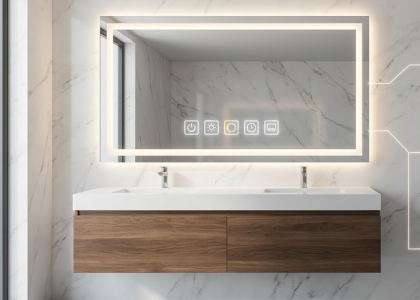
If your cabin includes a steam unit, lighting or a heated panel, the electrical work must be done by a qualified electrician using bathroom-rated, moisture-protected fittings. Water and electricity must be kept apart. If you are also planning a heated, lit mirror, our LED smart mirror supplier page explains how those fittings are made suitable for wet rooms.
Can Tempered Glass Break by Itself?
You may have read stories of toughened glass breaking “spontaneously.” It is worth addressing this directly, because it is a common concern.
Tempered glass is very safe in everyday use, but it is not unbreakable. A panel can break if it is struck hard on the edge, if it has been chipped during handling or installation, or if it is under uneven stress because of poor fixing. In rare cases, tiny impurities inside the glass can cause delayed breakage after installation. Good manufacturing and quality control reduce this risk.
Here is how to lower it further:
- Buy from a supplier that controls fabrication. Reliable cutting, edge work and toughening reduce flaws.
- Make sure the glass never touches metal, tile or concrete directly. Gaskets and cushions should always sit between them.
- Insist on professional installation. Uneven pressure from a badly fitted hinge or bracket can build up stress in the glass.
- Avoid hitting the edges during installation and use.
- Ask about warranty cover for the glass itself.
If a panel does break, it will typically crumble into small pieces. Keep children and pets away from the area, wear shoes and gloves while cleaning up and contact your supplier. This rare event does not mean glass cabins are unsafe. It means that quality and installation matter.
Warranty: What It Should Cover
A warranty is a written promise that the supplier stands behind the product, and it tells you how confident they are in their own work. When comparing offers, read it carefully.
What a useful warranty includes
- Glass panels. Cover for manufacturing defects in the glass.
- Hardware. Hinges, rollers, handles and fittings, since these take the most wear.
- Installation workmanship. Problems such as poor alignment or leaks caused by fitting.
- A clear duration and process. How long the cover lasts, how to make a claim and who to contact.
Green Glass Designer offers a 2-year warranty on glass panels and hardware, handed over with maintenance guidance at the end of the project.
Questions to ask any supplier
- Is the warranty in writing?
- Does it cover hardware as well as glass?
- What is excluded? Damage from impact or misuse is normally excluded, but defects should not be.
- Who will carry out repairs, and how quickly?
- Is installation workmanship included?
A long warranty from a supplier with no local support is worth less than a shorter one from a team that picks up the phone and arrives on site.
How to Compare Shower Cabin Quotes
Once you have two or three quotes, set them side by side. Compare specifications first and price second. Here is a practical checklist.
- Glass type. Is it tempered safety glass? Is it stated clearly?
- Glass thickness. 8mm, 10mm or 12mm, and is it suited to the cabin style?
- Hardware material. Stainless steel hinges, rollers and handles, with the grade stated if possible.
- Seals and silicone. Waterproof gaskets and sanitary-grade silicone included.
- Coating. Anti-stain or easy-clean treatment included, or available as an option.
- Edge finishing. Polished edges and eased corners on all panels.
- Measurement. A site visit before fabrication, not a guess from a phone call.
- Installation. Included or optional, and by whom.
- Warranty. Written, with duration and coverage stated.
- Itemised pricing. Glass, hardware, delivery and installation shown as separate lines.
Red flags in a low quote
A low price is not automatically a problem. But be careful if you see these signs:
- No mention of tempered glass or thickness. If it is not written down, do not assume it.
- Vague hardware descriptions. “Standard fittings” can hide thin or plated metal.
- No site visit. Cabins made from guessed measurements often need rework.
- No warranty, or a verbal-only warranty. You have no protection if something fails.
- Installation not mentioned. It may appear as an unexpected extra later.
- A price far below the others for the same description. Find out what has been left out.
To put prices in context, Green Glass Designer’s shower glass cabins start from around PKR 28,000 for standard designs and can go up to PKR 90,000+ for custom frameless and sliding cabins. The final figure depends on size, glass thickness, hardware and finish, so always ask for a written quote against your exact bathroom.
Choosing the Right Cabin for Your Space
The table below matches common situations to sensible specifications. Treat it as a starting point, not a fixed rule.
| Your space | Suggested cabin type | Suggested glass | Hardware priority |
|---|---|---|---|
| Small guest bathroom | Corner or sliding cabin | 8mm tempered | Smooth rollers, good seals |
| Family bathroom, daily use | Semi-frameless or sliding | 8mm to 10mm tempered | Corrosion-resistant fittings, easy-clean coating |
| Master bathroom | Frameless or custom cabin | 10mm to 12mm tempered | Heavy-duty stainless hinges, polished edges |
| Coastal home or steam shower | Frameless or semi-frameless | 10mm tempered | Higher-grade stainless steel, quality sealing |
| Hotel, spa or gym | Frameless or sliding | 10mm to 12mm tempered | Robust hardware, fast maintenance support |
| Rental or budget project | Framed or semi-frameless | 8mm tempered | Simple, replaceable parts |
Whatever your situation, the priority order is the same:
- Safety first. Tempered glass, proper thickness and secure fixing.
- Hardware second. Quality hinges, rollers and seals that match the glass.
- Installation third. Accurate measurement and professional fitting.
- Finish and design fourth. Frame colour, handle style and glass tint.
- Extras last. Coatings, custom shapes and special fittings if the budget allows.
If your budget is tight, do not buy a fancier cabin with weaker components. Buy a simpler cabin with better glass and hardware. A basic cabin that works well for ten years is far better value than a stylish one that needs repairs after two.
Frequently Asked Questions
1. Are glass shower cabins safe? Yes, when they are made from tempered safety glass and properly installed. Tempered glass is far stronger than ordinary glass, and if it breaks it crumbles into small, blunt pieces rather than sharp shards.
2. What thickness of glass is best for a shower cabin? It depends on the style. Framed and sliding cabins often use 8mm glass, while frameless doors usually do better with 10mm or 12mm. Our cabins use 8mm to 12mm tempered glass, chosen to suit your layout and door size.
3. How much stronger is tempered glass than regular glass? Tempered glass is typically 4 to 5 times stronger than standard glass of the same thickness, which is why it is the standard for shower enclosures.
4. Can a glass shower door shatter on its own? It is rare, but it can happen. Most cases are linked to edge damage, uneven stress from poor fitting or hidden impurities in the glass. Choosing a quality supplier and professional installation lowers the risk significantly.
5. Which hardware lasts longest in a bathroom? Stainless steel hinges, rollers and fittings resist corrosion best. In coastal areas or steam rooms, higher-grade stainless steel is a better long-term choice.
6. How do I keep a glass shower cabin looking new? Squeegee or wipe the glass after each shower, clean with a non-abrasive cleaner, avoid harsh chemicals and keep tracks and seals clear. A water-repellent coating makes this routine much easier.
7. How long does a glass shower cabin last? With quality glass, good hardware and sensible care, a cabin can last many years. The parts that wear first are usually seals and silicone, which are inexpensive to renew.
8. Does the price include installation and warranty? That depends on the supplier, so always ask. We provide a 2-year warranty on glass panels and hardware, and offer professional installation across Punjab and other major cities. Ask for each item as a separate line in your quote.
9. Can I get a custom size? Yes. Custom cabins are cut and toughened to your measurements after a site visit, which gives a better fit than fixed-size units.
10. Do you supply outside Lahore? Yes. We supply and install across Punjab, including Lahore, Faisalabad, Multan, Gujranwala and Sialkot, and deliver across Pakistan.
Making a Confident Decision
A glass shower cabin is a long-term part of your home, so the right question is not “which cabin looks best today?” but “which cabin will still be safe and attractive years from now?” The answer lies in features that are easy to overlook: genuine tempered glass, a thickness that matches the design, stainless steel hardware, waterproof seals, clean edge finishing, accurate installation and a written warranty.
When you know which of those details matter, you can compare quotes properly, spend where it counts and avoid cabins that save money in the places you cannot see. Define your bathroom size and preferred style, request itemised quotes from two or three suppliers and compare specifications before price.
If you would like help with that, explore our shower glass cabin supplier page, browse our shower cabin range, or talk to our team about your bathroom.