Table of Contents
Ask any interior designer what changes a room fastest, and many will point to the doors. A well-chosen sliding glass door can bring in daylight, make a small room feel larger, and separate spaces without building walls. It also works as a design feature in its own right.
Sliding glass doors are no longer limited to patios. Designers now use them in living rooms, kitchens, bedrooms, home offices, and even bathrooms. The right idea depends on your layout, your lighting, and how you live.
If you’re planning a renovation or building from scratch, here are the sliding glass door ideas designers return to most often, with notes on when each one works best.
1. Frameless Sliding Glass Doors for a Seamless Look
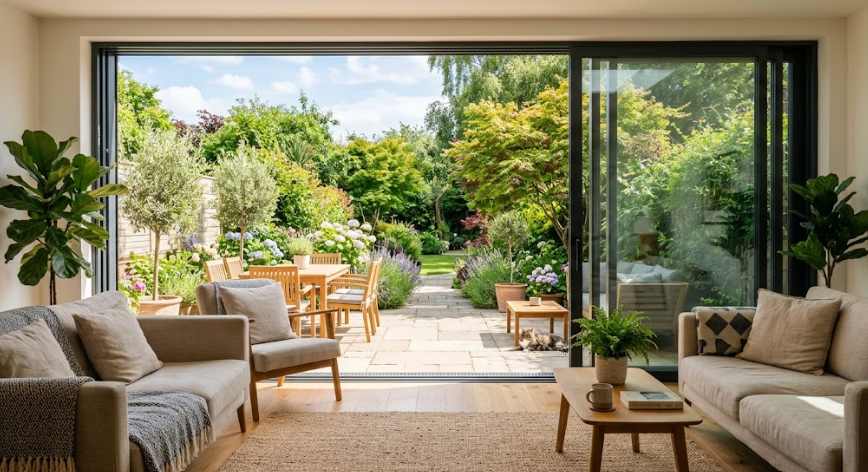
Frameless doors are a favorite among designers who want a clean, minimalist result. With no heavy frames to interrupt the view, the glass becomes almost invisible when open. Your eye travels straight through to the garden, terrace, or next room.
This style suits contemporary homes, luxury apartments, and villas with outdoor views. Frameless systems rely on thick tempered glass and precise hardware, so quality of fabrication matters a lot. You can see the idea in practice in this example of custom frameless sliding doors.
Best for: living rooms, terraces, and open-plan spaces where you want maximum light.
2. Slim Black Aluminium Frames for an Industrial Edge
If frameless feels too airy, slim black aluminium frames add structure and contrast. Designers love this look because it works like a graphic line: it outlines the glass and gives the room a defined, architectural character.
It pairs well with warm wood floors, neutral walls, and brass or matte-black fixtures. It’s popular in lofts, modern kitchens, and home offices. Slim profiles keep the glass dominant, so the room still feels bright.
Best for: home offices, kitchens, and modern or industrial interiors.
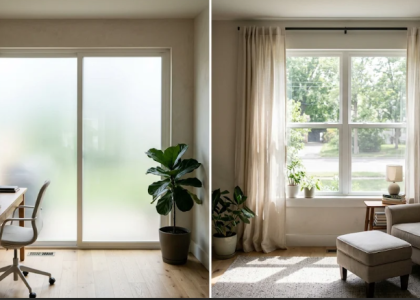
3. Frosted Glass Sliding Doors for Privacy With Light
Privacy is one of the most common worries about glass doors. Frosted glass solves it. It scatters the view while still letting daylight pass through, so you get a bright space without feeling exposed.
Designers often choose frosted sliding doors for bedrooms, bathrooms, walk-in wardrobes, and study rooms. You can go fully frosted for maximum privacy or use a partial frosted band at eye level for a softer, more decorative effect. If you want to explore the look, take a look at frosted glass partition options.
Best for: bedrooms, bathrooms, wardrobes, and shared family spaces.
4. Sliding Glass Partitions Between Kitchen and Living Areas
Open-plan living is popular, but cooking smells, noise, and heat can travel. Many designers solve this with a sliding glass partition between the kitchen and living area. When open, the spaces flow together. When closed, you keep the mess and the aroma in the kitchen while still seeing through.
This idea is especially useful in smaller homes where a permanent wall would make things feel cramped. Clear glass keeps the view open, while reeded or lightly tinted glass adds a touch of softness.
Best for: apartments, family homes, and anyone who loves entertaining.
5. Floor-to-Ceiling Sliding Doors to Open Up the Room
When designers want drama, they go tall. Floor-to-ceiling sliding glass doors remove the visual break at the top of a standard door frame, making ceilings feel higher and rooms feel larger.
They work especially well where you have a garden, pool, or skyline view worth showing off. They also change the feel of a room throughout the day, as natural light moves across the floor and furniture. For hot climates, designers often combine tall sliding doors with double glazed glass to help manage heat and noise.
Best for: villas, lounges, dining rooms, and homes with views.
6. Tinted and Smoked Glass for a Luxe Mood
Not every glass door has to be clear. Bronze, grey, and smoked tints add warmth and depth, and they cut glare in bright rooms. Designers use them in dining rooms, lounges, and home bars to create a calm, upscale atmosphere.
Tinted glass also reduces how much of the other side is visible, which gives a gentle layer of privacy. Pair it with warm lighting and natural textures, and it can feel closer to a boutique hotel than a standard home.
Best for: dining spaces, lounges, and rooms that get strong afternoon sun.
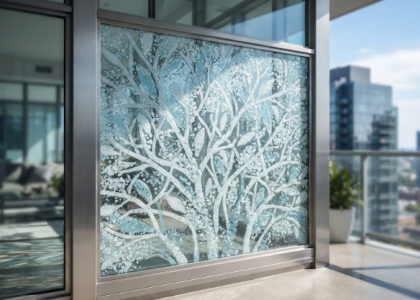
7. Textured and Reeded Glass for Character
Textured glass is one of the strongest trends in current interiors. Vertical reeded or fluted patterns create a soft, rhythmic look that blurs what’s behind the door without blocking light. It adds personality, especially in spaces that feel plain.
Designers use it for pantry doors, study partitions, entryways, and bathroom dividers. It looks great when light hits it from the side, throwing gentle patterns across the floor and walls.
Best for: entryways, studies, pantries, and stylish dividers.
8. Sliding Glass Doors for Bathrooms and Shower Areas
Glass has always been a go-to in bathrooms, but sliding designs add a practical twist. In tight spaces, a sliding shower door avoids the swing of a hinged door, so you save floor space and avoid awkward clearance problems.
Clear glass makes a small bathroom feel larger, while frosted or patterned glass adds privacy. Designers also favor minimal hardware and clean edges for easy cleaning. If you’re planning a bathroom update, explore shower glass cabin options for inspiration.
Best for: compact bathrooms, en-suites, and modern wet rooms.
9. Pocket and Wall-Hidden Sliding Doors
For the cleanest look of all, designers sometimes slide the door into the wall. A pocket sliding glass door disappears completely when open, leaving a wide, unobstructed opening. It’s a smart choice for connecting indoor and outdoor areas or for rooms that need to change function throughout the day.
It does need planning at the construction or major renovation stage, since the wall must be built to receive the door. Still, many designers consider it worth the effort for the sleek result.
Best for: new builds, major remodels, and indoor-outdoor living.
10. Combining Sliding and Folding Glass Doors
Some homes benefit from mixing systems. A sliding door might connect the living room to the lawn, while a folding glass door opens a dining area completely to a patio. Designers use this approach to match each door type to its purpose and to the space around it. Learn more about folding glass doors to see how they compare.
Best for: large homes, entertaining spaces, and indoor-outdoor layouts.
What Designers Check Before Choosing a Sliding Glass Door
Ideas are exciting, but a few practical points shape the final result. Designers usually think about these first:
- Glass type and thickness: Tempered or laminated glass adds strength and safety, especially for large panels or homes with children.
- Light and heat: West-facing rooms may need tinted or double glazed glass to stay comfortable.
- Track and hardware quality: Smooth rollers and sturdy tracks decide whether a door glides for years or sticks within months.
- Privacy needs: Decide early whether you want clear, frosted, tinted, or textured glass.
- Maintenance: Cleaning is easier with fewer frames, and tracks need occasional care to keep sliding smoothly.
- Space and layout: Check wall space for the door to slide, or consider a pocket design.
Thinking through these points early helps you avoid costly changes later and keeps the final look consistent with your overall design.
Final Thoughts
Sliding glass doors can do much more than separate one space from another. They shape how light moves through a home, how rooms connect, and how the whole interior feels. Whether you prefer the minimalism of frameless glass, the structure of black frames, or the character of reeded textures, there’s a style to suit your space and budget.
The best approach is to start with how you want a room to feel and work, then choose the glass, frame, and system that supports it. Gather inspiration, collect photos of designs you like, and note the rooms you’d like to update first.
If you’d like to see more options as you plan, browse our sliding glass door collection or explore architectural glass and decorative glass ideas. When you’re ready to talk through your project, the Green Glass Designer team is happy to help. Contact us or chat on WhatsApp for a free consultation.