Table of Contents
Architectural glass has become the defining material of modern architecture. It pulls daylight deep into buildings, frames skylines, and lets heavy structures feel almost weightless. From record-breaking towers to quiet garden pavilions, designers keep finding new ways to push what architectural glass can do.
Whether you are a homeowner dreaming of a brighter living room, a design student collecting inspiration, or a business owner curious about modern façades, these ten landmark projects show how far glass can go. Each one also carries a practical lesson about daylight, safety, energy performance or craftsmanship that applies to projects of every size, including the residential and commercial work we see across Pakistan. Let’s take a look.Why Architects Keep Choosing Glass
Glass is no longer just a window material. Modern tempering, lamination, coatings and structural fittings allow it to act as a wall, a roof, a floor and even a load-bearing element. It delivers natural light, which supports wellbeing and reduces electricity use. It also gives buildings a sense of openness that few other materials can match. The projects below show these strengths at their best, from towering icons to intimate homes.1. Burj Khalifa, Dubai, UAE
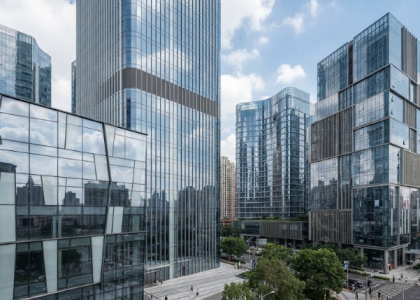
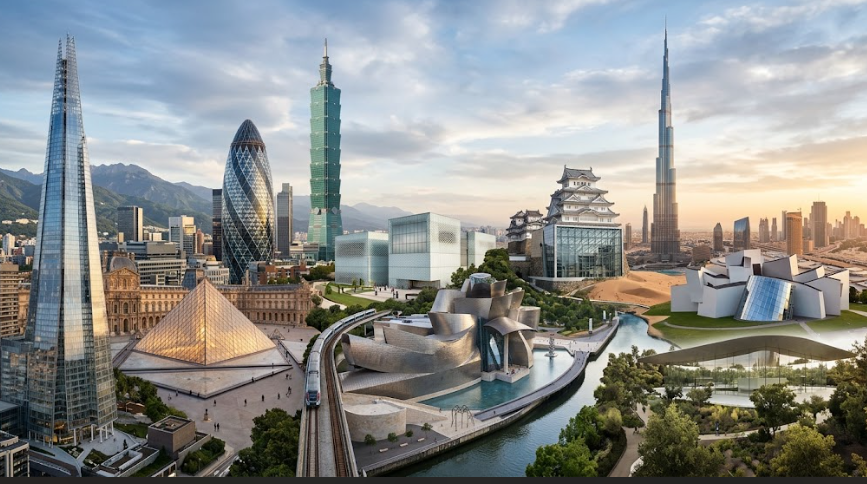
At 828 metres, the Burj Khalifa is the tallest building in the world, and its skin is a masterclass in high-performance glazing. The tower is wrapped in more than 100,000 square metres of reflective glass, engineered to withstand fierce desert heat while keeping views wide open. Special coatings reduce solar gain, which lowers the load on air conditioning in one of the hottest climates on earth. The takeaway: in hot regions, choosing the right type of glass matters as much as the design itself. The same thinking applies in Karachi, Lahore and Islamabad, where heat-reflective and double glazed glass can make interiors noticeably more comfortable.2. The Shard, London, UK
Designed by Renzo Piano and completed in 2012, The Shard rises 310 metres above the London skyline. Its façade is made of thousands of faceted glass panes, each angled slightly differently, so the tower seems to change with the weather and the light. Extra-clear glass helps it glow in sunshine and fade softly into cloudy skies. The takeaway: glass can be sculptural. A curtain wall does not have to look flat or repetitive. With careful detailing, proportion and glass quality, it becomes the personality of the entire building.3. 30 St Mary Axe (The Gherkin), London, UK
Norman Foster’s tower, opened in 2004, is 180 metres tall and wrapped in a curved skin of about 5,500 glass panes. Remarkably, almost all of those panes are flat; only the lens-shaped piece at the very top is curved. Inside, spiralling atria act as natural ventilation shafts, drawing fresh air through the building and reducing the need for mechanical cooling. The takeaway: glass works best as part of a system. When structure, ventilation and glazing are planned together, buildings use less energy and feel better to occupy, and smart glazing choices quietly cut running costs for decades.4. Louvre Pyramid, Paris, France
When architect I. M. Pei added a glass pyramid to the courtyard of a historic palace in 1989, many critics were sceptical. Today the 21.6-metre structure, made of 673 glass segments, is one of the most recognised glass landmarks on earth. It floods the underground entrance hall with natural light while leaving views of the old palace largely unobstructed. The takeaway: modern glass and heritage buildings can coexist beautifully. Transparency lets new additions respect the old instead of competing with it, a useful idea for anyone renovating a traditional home or commercial building.5. Fondation Louis Vuitton, Paris, France
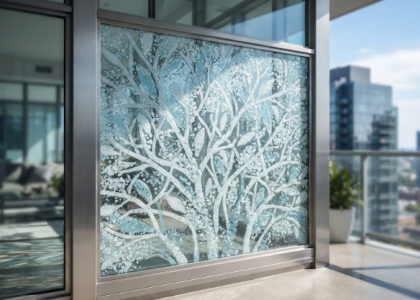
Frank Gehry’s art museum, opened in 2014, looks like a ship in full sail. Twelve enormous glass “sails” wrap the building, made from roughly 3,600 glass panels, many of them curved. Each panel had to be shaped, tested and fitted with extreme precision, and the result is a building that constantly reflects the garden and sky around it. The takeaway: bending glass is both art and engineering. Curved and shaped glass opens up forms that flat panels simply cannot achieve, and our architectural glass range shows how many finishes and shapes are possible today.6. Apple Fifth Avenue Cube, New York, USA
The glass cube at Apple’s Fifth Avenue store became an icon almost overnight when it opened in 2006. A 2011 redesign replaced the original 90 panes with just 15 enormous ones, and the cube was dismantled and rebuilt again in 2019. It shows how little hardware a glass structure needs when engineering is precise: slim joints and minimal fittings let the glass do the talking. The takeaway: structural glass delivers a clean, premium look. Systems such as point-fixed glass façades use the same principle of reducing visible frames to a minimum.7. Jewel Changi Airport, Singapore
Opened in 2019 and designed by Safdie Architects, Jewel Changi Airport places an indoor forest, shops and a 40-metre indoor waterfall called the Rain Vortex beneath a toroidal dome of glass and steel. The glass roof lets daylight reach the plants while the building stays comfortable for travellers in Singapore’s tropical climate. The takeaway: glass can turn a purely functional space into a destination. Skylight glass panels bring the same daylight benefits to homes, offices and retail spaces, at a much smaller scale.8. Farnsworth House, Illinois, USA
Completed in 1951, Ludwig Mies van der Rohe’s Farnsworth House is a steel-framed pavilion with glass on all sides, lifted above the ground to ride out seasonal floods. It remains one of the defining works of modernism and has inspired glass houses around the world ever since. The takeaway: floor-to-ceiling glass erases the line between inside and outside. Today, frameless sliding glass doors and folding systems bring that same connection to nature into everyday homes, patios and gardens.9. The Glass House, Connecticut, USA
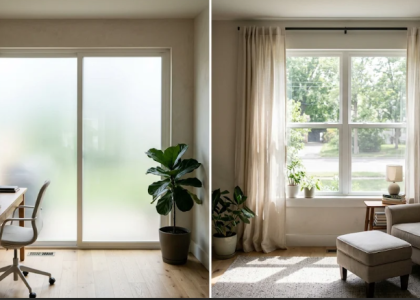
Philip Johnson built his own Glass House in New Canaan in 1949, a rectangular pavilion about 56 feet long with walls made almost entirely of glass. Privacy comes not from curtains but from the surrounding landscape, while a brick cylinder holds the bathroom and fireplace and anchors the whole composition. The takeaway: transparency needs planning. Where privacy matters in modern homes and offices, frosted glass partitions deliver daylight and openness without exposing everything to view.10. Grand Canyon Skywalk, Arizona, USA
Opened in 2007 above the Grand Canyon’s West Rim, the Skywalk is a horseshoe-shaped bridge with a glass floor that lets visitors look straight down into the canyon. The walkway is engineered with layers of strong glass designed to carry heavy loads and handle strong winds. The takeaway: safety is built into good glass design. Laminated glass holds together if it is damaged, which is why it is widely used in staircases, balustrades, skylights and façades.What These Projects Teach Us
Look across all ten and a few patterns appear:- Performance comes first. Coatings, double glazing and smart ventilation keep buildings comfortable and efficient.
- Safety is non-negotiable. Tempered and laminated glass protect people in every project, large or small.
- Light changes everything. Daylight improves mood, saves energy and makes spaces feel larger.
- Craftsmanship matters. Precise cutting, tempering and installation separate a stunning result from a disappointing one.
- Scale is flexible. The idea behind a landmark façade can be adapted to a shopfront, a villa or a small office.