Table of Contents
A building owner who’s just signed off on a point-fixed glass entrance, an atrium wall, or a feature facade element is usually thinking about one thing in that moment how it looks. And it should look remarkable that’s the entire reason point glass systems exist, delivering the closest thing to uninterrupted transparency that architectural glazing currently offers. What that same building owner is rarely thinking about, in the excitement of watching a design intent finally take physical form, is what that system is going to ask of them five, ten, and twenty years down the line. That’s not a criticism. It’s simply how most facade decisions get made, weighted heavily toward the immediate design outcome and lightly toward the decades of ownership that follow it.
This guide exists to close that gap, specifically for anyone who has already decided a point glass system is right for their project, or is far enough along in evaluating one, and now needs an honest, detailed understanding of what durability and maintenance actually look like over the system’s real service life. This isn’t a piece meant to talk you out of point glazing. It’s meant to make sure that when you commit to it, you’re doing so with full knowledge of what ownership actually involves, which is exactly the kind of information a serious buyer needs before finalizing a decision, not after.
What Point Glass Systems Are Actually Built to Withstand
Before getting into maintenance specifics, it’s worth grounding this guide in what a properly engineered point-fixed glazing system is designed to handle in the first place, because the durability conversation only makes sense against that baseline.
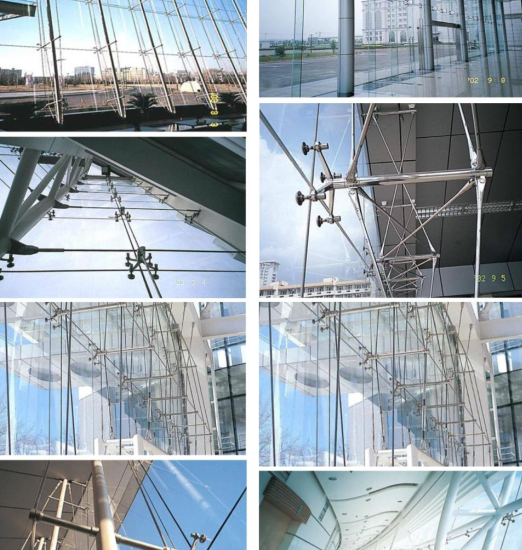
A point glass system holds glass panels in place through discrete mechanical fittings, typically stainless steel spider fittings, bolts, or clamps, anchored into a supporting structure behind the glass, a steel truss, cable net, or fin system, rather than relying on a continuous aluminum frame the way a curtain wall does. Because each panel’s structural load concentrates through a small number of fixing points rather than distributing along a continuous frame edge, the glass itself is almost always specified as toughened or laminated, and frequently both, engineered specifically to handle that concentrated point loading safely over decades of service.
Properly engineered and installed, a point glass system is built to withstand wind loads, thermal cycling, and the ordinary structural movement of the building it’s attached to, for a service life measured in decades, comparable to other high-quality architectural glazing systems. That durability, though, depends on three things working correctly together over the system’s entire life the glass itself holding its structural integrity, the mechanical fittings maintaining proper torque and connection integrity, and the sealants at every glass edge continuing to perform their weatherproofing function. Each of those three elements ages differently, at different rates, under different conditions, which is exactly why a genuine maintenance program for a point glass system needs to address all three separately rather than treating “maintenance” as a single undifferentiated task.
Worth Noting
A well-engineered point glass system is not a maintenance-free system, and any supplier who presents it that way during a sales conversation is setting a client up for an unpleasant surprise a few years into ownership. The honest comparison isn’t “point glass needs maintenance and other systems don’t.” It’s that point glass has a maintenance profile that includes an additional category, mechanical fitting inspection, that a framed system doesn’t carry in the same way, and that category needs to be planned and budgeted for from the start.
The Three Maintenance Categories Every Point Glass Owner Needs to Understand
Category One: The Glass Itself
The glass panels in a point-fixed system are, in most respects, similar to high-quality architectural glazing anywhere else on a building, and their maintenance needs reflect that. Regular cleaning, both for appearance and to prevent buildup of environmental residue that can, over time, etch or degrade certain glass coatings, is the most routine and frequent maintenance task associated with any glass facade, point-fixed or otherwise. For a highly transparent point glass installation, particularly in a high-visibility location like an entrance or storefront, cleaning frequency tends to be higher than it would be for a less prominent glazed area, simply because the entire design intent depends on the glass staying visibly clean.
Beyond cleaning, glass panels need periodic visual inspection for chips, cracks, or edge damage, particularly near the fixing points themselves, since this is where concentrated structural stress makes any existing flaw more likely to propagate over time than it would in an unstressed area of glass. Laminated glass, increasingly common in point-fixed applications specifically because of its safety characteristics, should also be checked periodically for any sign of delamination at the panel edges, a gradual separation of the laminate layers that, while uncommon in a properly manufactured and installed panel, is a legitimate long-term consideration worth including in a facility’s inspection checklist.
Realistic frequency: Routine cleaning should generally happen on a schedule matched to the building’s location and visibility requirements, often weekly to monthly for high-traffic entrances, with a more thorough structural and edge-condition inspection conducted at least annually as part of a broader facade inspection program.
Category Two: The Mechanical Fittings
This is the maintenance category that genuinely distinguishes point glass systems from framed alternatives, and it deserves the most detailed attention in this guide, because it’s the one most frequently underestimated or overlooked entirely in a building’s maintenance planning.
Each stainless steel fitting in a point-fixed system is carrying real, concentrated structural load, and while these fittings are engineered for long service life, that engineering assumes the fittings are actually inspected and maintained on an appropriate schedule, not simply installed once and left untouched for years. Fitting maintenance genuinely involves several distinct checks. Torque verification confirms that bolts and clamps remain at their specified tension, since even high-quality fasteners can experience minor loosening over years of thermal cycling and building movement, and a fitting that’s lost proper torque isn’t distributing load the way it was engineered to. Corrosion inspection matters even for stainless steel components, since different grades of stainless steel have different corrosion resistance profiles, and environmental factors, coastal air, industrial pollutants, or even certain cleaning chemicals used improperly, can affect long-term corrosion performance if the wrong grade was specified or if fittings aren’t inspected regularly enough to catch early-stage issues. And a general visual and mechanical check for any sign of movement, wear, or damage at each fitting point gives a facility team an early warning system for problems well before they become structurally significant.
Realistic frequency: A comprehensive fitting inspection, checking torque, corrosion condition, and mechanical integrity at each fixing point, should generally be conducted at least annually, with more frequent visual checks as part of routine building maintenance rounds. This is a task that genuinely benefits from being performed by a team experienced specifically with point-fixed glazing systems, rather than a general building maintenance crew without that specific technical background, since properly assessing fitting condition requires understanding what normal wear looks like versus what warrants further investigation or a manufacturer consultation.
Category Three: Sealants and Weatherproofing
Every glass panel edge in a point-fixed system, even with minimal or no visible framing, still needs a weatherproofing seal, typically a silicone sealant, at every joint between panels and at any junction where the glazing meets the building’s structure. This sealant is doing genuinely important work, keeping water and air infiltration out of the building envelope, and like all sealants, it degrades gradually over time due to UV exposure, thermal cycling, and general weathering.
Sealant failure in a point glass system doesn’t usually happen all at once or across the entire facade uniformly. It tends to show up first at the joints facing the most direct sun exposure or the most severe weather exposure, which means a facility’s inspection program should pay particular attention to south and west-facing elevations, or whichever orientation receives the harshest conditions locally, rather than assuming uniform sealant condition across the entire installation.
Realistic frequency: Visual sealant inspection should be part of the same annual comprehensive review that covers fitting condition, with any sign of cracking, separation, or discoloration flagged for closer assessment. Sealant replacement, when needed, is a genuinely routine maintenance task in the facade industry broadly, not unique to point glass systems, but the frequency and locations where it’s needed on a point-fixed installation should be tracked specifically as part of that system’s own maintenance record, rather than assumed to follow the same schedule as a curtain wall elsewhere on the same building.
| Maintenance Category | What It Involves | Recommended Frequency |
|---|---|---|
| Glass cleaning | Routine cleaning to remove residue and maintain transparency | Weekly to monthly, depending on visibility and location |
| Glass structural inspection | Checking for chips, cracks, and edge damage near fixing points | At least annually, as part of broader facade inspection |
| Fitting torque verification | Confirming bolts and clamps remain at specified tension | At least annually, more often for high-exposure elevations |
| Fitting corrosion inspection | Checking stainless steel fittings for early-stage corrosion signs | At least annually |
| Sealant condition review | Visual inspection for cracking, separation, or discoloration | At least annually, prioritizing high-exposure elevations |
| Laminated glass edge inspection | Checking for any sign of delamination at panel edges | As part of annual structural inspection |
What Actually Shortens a Point Glass System’s Service Life
Understanding what genuinely damages or degrades a point glass system over time is just as important as understanding routine maintenance, because it points directly to what a building owner should actively avoid or manage, rather than treating durability as something that happens automatically regardless of how the system is treated.
Improper cleaning products and methods. Harsh abrasive cleaners, certain acidic or alkaline chemicals, or improper cleaning tools can damage glass coatings, degrade sealants prematurely, or, in some cases, contribute to corrosion at nearby stainless steel fittings if cleaning chemicals aren’t properly rinsed away. Using cleaning products and methods specifically appropriate for architectural glass and stainless steel fittings, rather than general-purpose commercial cleaning products chosen without that consideration, meaningfully extends the system’s service life.
Deferred fitting inspection. This is, by a meaningful margin, the most common way a point glass system’s actual service life falls short of its engineered potential. A fitting issue caught early, minor corrosion, slight torque loss, is typically a straightforward, low-cost correction. The same issue, left unaddressed for years because fitting inspection was skipped or treated as optional, can develop into a more significant problem requiring more extensive, more expensive intervention, and in a worst case, can compromise the structural integrity the fitting was engineered to provide.
Incorrect original specification for the building’s environmental exposure. Not every stainless steel grade or sealant type is appropriate for every environment, and a system specified without adequate consideration of local climate, pollution exposure, or coastal proximity can experience accelerated degradation regardless of how diligently it’s maintained afterward. This is a decision made at the design and installation stage, not something a maintenance program can fully compensate for later, which is exactly why the original specification conversation with a qualified supplier matters as much to long-term durability as the maintenance program that follows it.
Building movement and settling not accounted for in the original structural design. Point glass systems, because they rely on a dedicated supporting structure rather than the building’s primary frame the way a curtain wall does, need that supporting structure to be properly integrated with the building’s actual structural behavior, including expected settling and thermal movement. A system engineered without adequate accommodation for this movement can experience stress concentrations at the fittings that no amount of subsequent maintenance can fully resolve.
Impact damage without prompt assessment. Any significant impact to a glass panel, even one that doesn’t result in immediately visible cracking, particularly near a fixing point, warrants prompt professional assessment rather than a wait-and-see approach, given how concentrated structural stress at a fitting location can make a hidden flaw more consequential than the same impact would be on an unstressed area of glass.
A Question Worth Asking Before Installation
Ask your supplier directly what stainless steel grade and sealant specification they’re proposing for your specific location, and why, rather than assuming a standard specification is automatically appropriate. A building close to industrial pollution sources, coastal salt air, or an unusually demanding local climate may genuinely warrant a higher-grade specification than a standard installation, and that’s a conversation worth having explicitly before installation, not discovered years later through accelerated wear.
Building a Genuine Maintenance Program: What to Actually Put in Place
Establish a documented inspection schedule from day one, not after the first problem appears. A written maintenance plan that specifies what gets checked, how often, and by whom, for all three maintenance categories, glass, fittings, and sealants, is the single most effective thing a building owner can do to protect their investment. This doesn’t need to be complicated, but it does need to exist as an actual document, not an informal understanding that tends to get deprioritized once a building’s initial excitement about its new facade has settled into routine daily use.
Use a maintenance provider with specific point-fixed glazing experience for the annual comprehensive inspection. While routine cleaning can reasonably be handled by a general building maintenance team, the annual fitting and structural inspection genuinely benefits from a provider who understands what normal wear looks like on this specific type of system, and who can catch early warning signs a general facilities team might reasonably miss without that specialized background.
Keep a maintenance record tied to the specific installation, not just general building maintenance logs. Tracking fitting condition, sealant condition, and any issues identified over time, specific to the point glass installation, gives both the building owner and any future maintenance provider a genuine historical record to work from, rather than starting each inspection with no baseline understanding of how the system has behaved over its life so far.
Budget for maintenance as part of the original project cost, not as a surprise expense discovered later. This is perhaps the most practical, actionable piece of advice in this entire guide. A point glass system’s total cost of ownership genuinely includes ongoing maintenance, and building that expectation into the original project budget, rather than treating maintenance as an unplanned future cost, is what separates building owners who are genuinely satisfied with their point glass investment years later from those who feel blindsided by costs they hadn’t anticipated.
Establish a direct relationship with your original supplier or installer for warranty and technical questions. A supplier who genuinely stands behind their installation should be a resource for maintenance questions and technical concerns well beyond the initial installation date, not a contact who disappears once the final invoice is paid. This is worth confirming explicitly before installation, as part of the original vendor evaluation, rather than assuming it by default.
How Point Glass Maintenance Compares to Framed Systems
For anyone still weighing a point glass system against a framed alternative, it’s worth being direct about how the maintenance comparison actually plays out, since it’s a legitimate factor in that decision, not a reason to avoid point glazing outright.
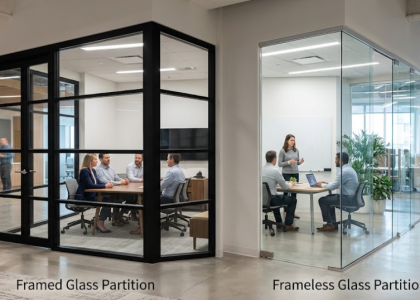
A framed glass system, whether curtain wall or a framed interior partition, carries its own ongoing sealant and gasket maintenance needs, genuinely comparable in frequency and importance to the sealant maintenance a point glass system requires. What a framed system doesn’t carry is the additional mechanical fitting inspection category that’s central to point glass maintenance, since a framed system’s continuous aluminum frame is distributing structural load in a fundamentally different way that doesn’t depend on discrete, individually inspectable fixing points.
This doesn’t make point glass a worse long-term investment. It makes it a different maintenance profile, one that includes a genuine, ongoing obligation that should be weighed honestly against the transparency and design impact that make point glazing worth its premium in the first place. A building owner who values that transparency enough to accept a properly resourced, properly budgeted maintenance program will generally find the system performs beautifully for decades. A building owner who wants the visual result of point glazing without genuinely planning for its specific maintenance needs is the person most likely to be disappointed by the system’s real long-term performance, not because the system itself failed, but because the maintenance it was designed to receive never actually happened.
Applying This Guide to Different Building Types
Retail entrances and storefronts. High foot traffic and high visibility mean cleaning frequency needs to be higher than for a less prominent installation, and impact risk from daily use is somewhat elevated, making prompt assessment of any impact damage particularly important for this application.
Corporate lobbies and atriums. These installations are often among the largest and most structurally significant point glass applications in a building, which makes the annual comprehensive fitting inspection especially important, given the scale of structural load being managed across a large glazed area.
Hospitality entrances and feature walls. Brand image depends heavily on the glazing staying visually flawless, which typically drives a higher cleaning frequency than a comparable commercial application, alongside the same structural maintenance obligations as any other point glass installation.
Institutional and healthcare facility entrances. These buildings often face particularly demanding cleaning and sanitation standards, which should be factored explicitly into the cleaning products and methods chosen, given the corrosion and coating-damage risks associated with improper chemical selection discussed earlier in this guide.
Frequently Asked Questions
1. How long does a well-maintained point glass system typically last?
A properly engineered, installed, and maintained point glass system is designed for a service life measured in decades, comparable to other high-quality architectural glazing systems. The specific service life achieved in practice depends heavily on maintenance discipline, environmental exposure, and the quality of the original specification and installation.
2. What’s the most commonly overlooked maintenance task for point glass systems?
Annual mechanical fitting inspection is, by a clear margin, the most commonly deferred or overlooked maintenance category, largely because fitting issues aren’t visually obvious the way a dirty glass panel or a visibly cracked sealant is, which makes it easy to assume everything is fine without an actual inspection confirming that assumption.
3. Can point glass fittings be replaced individually if one shows wear or corrosion?
In most well-engineered systems, yes, individual fittings can generally be assessed and replaced without requiring replacement of the entire glass panel or a large section of the installation, which is precisely why catching fitting issues early through regular inspection matters so much, since early intervention tends to be a considerably more contained and manageable repair.
4. Does climate significantly affect how often a point glass system needs maintenance?
Yes, meaningfully. Buildings in coastal environments, areas with significant industrial pollution, or climates with extreme thermal cycling generally warrant more frequent inspection, and potentially a higher-grade original specification for fittings and sealants, compared to a more moderate, less demanding environment.
5. Is it safe to use standard glass cleaning products on a point glass system?
Not always. While standard glass cleaner is generally fine for the glass surface itself, cleaning products and methods should be chosen with the nearby stainless steel fittings and sealants in mind as well, since some general-purpose or harsh chemical cleaners can contribute to sealant degradation or fitting corrosion over repeated use if not properly selected and rinsed away.
6. Who should perform the annual comprehensive inspection of a point glass system?
Ideally, a maintenance provider or the original installer with specific experience in point-fixed glazing systems, rather than a general building maintenance team without that specialized background, since properly assessing fitting torque, corrosion condition, and structural integrity requires understanding what normal wear looks like on this specific type of system.
Committing to a Point Glass System With Your Eyes Open
A point glass system, properly specified, installed, and maintained, delivers a genuinely remarkable architectural result and a durable, long-service-life facade element that will reward a building owner’s investment for decades. That outcome, though, depends on treating maintenance as a planned, budgeted, ongoing part of the system’s life from day one, not an afterthought discovered only once a problem has already developed.
If you’re currently evaluating a point glass system for an upcoming project, it’s worth having a direct, detailed conversation about the maintenance program that will support your specific installation before construction begins, not after, with a team that has both designed and maintained point-fixed glazing systems across a genuinely wide range of buildings and environmental conditions.
Schedule for a Free Consultation or Get an Instant Quote via WhatsApp to talk through what a properly planned point glass system, and its maintenance program, would look like for your building.