
Table of Contents
An office manager in Karachi installed glass partitions between meeting rooms expecting the clean, modern look every architecture photo promised. Three weeks later, the complaint started arriving from the finance team next door, they could hear every word of a sensitive client negotiation happening in the “soundproof” glass conference room, loud enough to know exactly what was being discussed. The glass had been sold and installed as acoustic partitioning. It wasn’t, not really, and the manager only found this out after the product had already gone in and the budget had already been spent.
This scenario plays out more often than it should in Pakistan’s growing open-plan office and commercial fit-out market, and it comes down to a genuine confusion in how “soundproof glass” gets talked about versus what it actually delivers. Some glass partitions genuinely do reduce sound transmission substantially. Others are glass partitions with an acoustic-sounding name attached to them, offering little more sound reduction than a standard single pane. The difference isn’t marketing spin, it’s physics, and understanding that physics is exactly what lets you tell a genuinely effective acoustic glass partition from one that’s going to disappoint you the same way it disappointed that office manager.
What “Soundproof” Actually Means, and Why It’s the Wrong Word
Before going further, it’s worth being direct about something: true soundproofing, meaning zero sound transmission, doesn’t exist in any practical building material, glass included. What’s actually achievable, and what a well-specified glass partition can genuinely deliver, is sound attenuation, a substantial, measurable reduction in how much sound passes from one side of the partition to the other.
This distinction matters because it sets realistic expectations. A well-designed acoustic glass partition won’t make a loud conversation on one side completely inaudible on the other, but it can reduce that conversation from clearly intelligible speech to a muffled murmur you can’t make out specific words from, which for most commercial and office purposes is exactly the practical outcome people actually need. The industry term for this performance is Sound Transmission Class, or STC rating (or its international equivalent, Rw), a standardized measure of how much a partition reduces airborne sound across a range of frequencies. Higher STC ratings mean better sound reduction. This rating is the single most useful number to ask for when evaluating any glass partition marketed as acoustic or soundproof, and it’s also the number that separates genuinely effective products from ones riding on the word “soundproof” without the performance behind it.
Why Ordinary Glass Is Bad at Blocking Sound
To understand why some glass partitions work and others don’t, it helps to understand why glass, as a material, has a natural disadvantage when it comes to sound.
Sound travels as vibration, and it passes through solid materials by making them vibrate in sympathy with the sound wave, then re-radiating that vibration as sound on the other side. Dense, rigid materials with mass tend to resist this vibration better than light, thin materials. A single pane of standard glass, even reasonably thick tempered glass, is a relatively thin, rigid, and acoustically “lively” material, it vibrates readily in response to sound, particularly at certain frequencies, and passes a significant portion of that sound energy straight through to the other side.
This is precisely why a single pane of ordinary glass, regardless of how thick or how well-framed, has fundamentally limited acoustic performance. You can increase the thickness of a single pane and gain a modest improvement, but you quickly hit diminishing returns, doubling glass thickness doesn’t come close to doubling sound reduction, because you’re still dealing with a single, rigid, continuously vibrating surface. Real acoustic improvement in glass partitions comes from changing the structure of the glass assembly itself, not just making a single pane thicker.
The Three Approaches That Actually Improve Acoustic Performance
Genuinely effective acoustic glass partitions rely on one or more of three structural strategies, and understanding these is what lets you evaluate whether a specific partition system is likely to perform as promised.
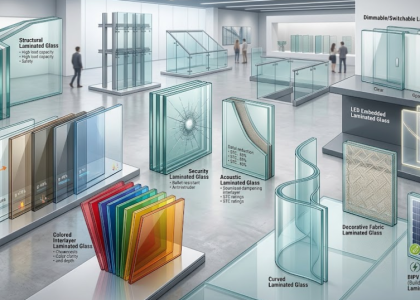
Laminated glass with an acoustic interlayer is one of the more effective single-pane-equivalent solutions. Standard laminated glass, built with a PVB interlayer, already offers somewhat better acoustic performance than an equivalent single sheet of monolithic glass, because the interlayer introduces a degree of damping that reduces how freely the glass vibrates. Specialized acoustic PVB interlayers, engineered specifically for sound damping rather than just safety, improve on this further, offering a meaningfully higher STC rating than standard laminated glass while still functioning as a single glazed unit.
Double or triple glazing with an air gap works on a completely different principle separating two panes of glass with a gap of air (or, in higher-performance systems, a specific inert gas) between them. Sound has to cross that air gap, and every time sound energy crosses from one medium to another, mass to air to mass again, some of it is lost. The wider the gap, generally speaking, the better the acoustic separation, up to a point, and asymmetric glazing, using two panes of different thickness on either side of the gap, improves performance further because the two panes resist vibrating at the same frequencies, closing off a shared “sympathetic vibration” pathway that identical panes would otherwise create.
Combining lamination with an air gap, using laminated glass (ideally with an acoustic interlayer) on one or both sides of a double-glazed unit, stacks these two strategies together and typically delivers the strongest acoustic performance of the three approaches, since you get both the interlayer damping and the air-gap separation working together rather than relying on either mechanism alone.
A standard single pane of tempered or even laminated glass with a basic PVB interlayer, installed as a simple partition without an air gap, sits well below what most people picture when they hear “soundproof glass,” while a properly specified double-glazed acoustic unit with an appropriate air gap and asymmetric or acoustic-interlayer glass sits considerably higher, this gap in performance between the lowest and highest options is genuinely large enough to be the difference between a partition that solves your noise problem and one that barely helps at all.
Comparing Partition Types by Acoustic Performance
Here’s a general comparison of how common glass partition configurations perform acoustically, using relative performance tiers rather than precise STC figures, since exact ratings depend on specific glass thickness, interlayer type, gap width, and frame/seal quality, all of which should be confirmed with your supplier for any specific product.
| Partition Configuration | Acoustic Performance Tier | Typical Use Case |
|---|---|---|
| Single pane, standard tempered glass | Low | Visual separation only minimal sound control |
| Single pane, standard laminated glass | Low–Moderate | Basic sound dampening, general office visual dividers |
| Single pane, acoustic-interlayer laminated glass | Moderate | Meeting rooms with moderate privacy needs |
| Double glazed, symmetric panes, narrow air gap | Moderate | Standard commercial partition walls |
| Double glazed, asymmetric panes, wider air gap | Moderate–High | Conference rooms, executive offices |
| Double glazed, laminated acoustic glass + wide asymmetric gap | High | Recording spaces, high-confidentiality meeting rooms, clinics |
The practical takeaway from this table is that the word “glass partition” alone tells you almost nothing about acoustic performance, the configuration behind that glass, single or double, symmetric or asymmetric, standard or acoustic interlayer, is what actually determines whether you’re getting meaningful sound reduction or largely cosmetic separation.
Worth Noting
The frame, seals, and door within a glass partition system are just as important to real-world acoustic performance as the glass itself, and this is the detail most often overlooked when a partition underperforms its rating. A high-performance acoustic glass unit installed with a poorly sealed frame, gaps at the floor or ceiling junction, or a standard (non-acoustic) door in the same wall will leak sound through those weak points regardless of how well the glass itself performs. Sound behaves like water, it finds the smallest gap, which means a partition system is only as good as its weakest acoustic link, not just its glass specification.
Why the Frame and Installation Matter as Much as the Glass
This point is worth expanding on because it’s genuinely where a lot of real-world disappointment with “soundproof” glass partitions comes from, and it’s rarely the glass itself that’s the problem.
A glass partition system isn’t just a sheet of glass, it’s glass plus a frame, seals, a floor and ceiling junction, and very often a door, and each of these components has to perform to a comparable acoustic standard for the overall system to deliver the rating you’re expecting. A standard aluminum partition frame without proper acoustic gaskets can allow sound to bypass the glass entirely by transmitting through the frame structure itself. Gaps at the floor track or ceiling junction, even small ones, create a direct acoustic leak path that can meaningfully undermine an otherwise well-specified glazing unit. And a door within a glass partition wall, unless it’s specifically an acoustic-rated door with proper seals, is very often the single weakest point in the entire system, since doors require a moving seal that’s inherently harder to make airtight than a fixed glass-to-frame junction.
This is exactly why asking a contractor “is this soundproof glass” is the wrong question, and asking “what’s the overall system’s acoustic rating, including the frame, seals, and any doors” is the right one. A genuinely high-performing glass panel installed carelessly, with unsealed gaps or a mismatched standard door, can end up performing closer to the Low or Moderate tier in practice than its glass specification alone would suggest.
What Determines Whether You Actually Need High-Performance Acoustic Glass
Not every space needs the highest tier of acoustic glass, and specifying more than you actually need adds cost without a corresponding practical benefit. The right tier genuinely depends on a few honest questions about your specific situation.
What’s the source and volume of the noise you’re trying to control? Normal conversational speech at typical office volume needs meaningfully less acoustic performance to block effectively than raised voices, phone calls on speaker, or external sources like street traffic, HVAC equipment, or an adjacent noisy area like a kitchen or print room.
What’s the confidentiality requirement of what’s being discussed behind the glass? A general open-plan meeting room where occasional overheard conversation is a minor annoyance has very different requirements from a legal consultation room, HR office, or clinical consultation space where confidentiality is a genuine professional or legal obligation, not just a comfort preference.
How close is the partition to the noise source or the listening space? Sound intensity drops with distance, so a partition separating two rooms with some buffer space, a corridor, furniture, distance from the wall, needs less extreme acoustic performance than a partition where people are sitting or standing close to the glass on both sides.
Is the space being used for anything acoustically sensitive on either side?, a recording studio, an audio/video conferencing room, a quiet clinical space, or anywhere background noise bleeding through would be a functional problem, not just an annoyance, generally justifies specifying toward the higher end of the performance range regardless of other factors.
A Quick Self-Check: Matching Glass Partition Tier to Your Actual Need
Walking through this before requesting quotes helps you have a much more precise conversation with a contractor rather than starting from “I want soundproof glass” and hoping the resulting quote matches your actual expectations.
If your primary goal is simply visual separation with a modern look, and occasional overheard conversation isn’t a real problem, standard single-pane glass, tempered or basic laminated, is likely genuinely sufficient, and paying for acoustic-tier glass here wouldn’t deliver a meaningful practical benefit relative to its added cost. If you want general office privacy, reducing but not eliminating the ability to follow conversation from an adjacent space, a mid-tier configuration, single acoustic-interlayer laminated glass or a standard double-glazed unit, is usually the sensible target. If you’re dealing with confidential conversations, client meetings, HR discussions, legal consultations, or simply a persistently noisy adjacent environment, it’s worth specifying toward the higher tiers, asymmetric double glazing or a laminated acoustic interlayer combined with an air gap, and being just as rigorous about frame, seal, and door specification as about the glass itself.
Application by Space Type
Different spaces have genuinely different acoustic requirements, and it’s worth thinking through your specific use case rather than defaulting to either the cheapest or the most expensive option available.
Corporate meeting and boardrooms generally warrant mid-to-high tier acoustic glass given the frequency of confidential business discussions, and it’s particularly worth prioritizing a properly sealed acoustic-rated door here, since boardrooms are exactly the kind of space where a weak door undermines an otherwise well-specified glass wall.
Open-plan office phone booths and focus rooms benefit from at least mid-tier acoustic performance, since their entire purpose is providing a quieter space within a noisy open floor plan, and underperforming glass here defeats the purpose of installing the booth at all.
Retail and hospitality spaces using glass partitions for visual zoning rather than acoustic separation, dividing a restaurant seating area or separating a retail display zone, generally don’t need high acoustic performance, standard glass usually serves the actual purpose here, which is visual definition rather than sound control.
Healthcare and clinical consultation rooms should prioritize acoustic performance more heavily than cost alone might suggest, given both patient confidentiality expectations and, in many cases, regulatory or professional obligations around private discussion of medical information.
Educational settings, particularly partitions between classrooms or between classrooms and corridors, benefit from solid mid-tier acoustic specification, since consistent background noise bleed between teaching spaces is a genuine, ongoing disruption rather than an occasional annoyance.
Recording, broadcast, or audio-sensitive commercial spaces are really the only category that consistently justifies the highest acoustic tier available, laminated acoustic interlayer glass combined with a wide asymmetric air gap, since even modest sound leakage is a functional problem for these specific use cases in a way it simply isn’t for most commercial or office applications.
Frequently Asked Questions
1. Is any glass partition actually completely soundproof?
No. No practical glass partition, or any building material for that matter, achieves complete sound isolation. What high-performance acoustic glass delivers is a substantial, measurable reduction in sound transmission, enough to take clearly intelligible speech down to an indistinct murmur or below, which is the practical outcome most people actually mean when they say “soundproof,” even though it isn’t literally zero transmission.
2. What’s the difference between laminated glass and double-glazed glass for acoustic purposes?
Laminated glass uses an interlayer bonded between two glass panes to dampen vibration within what functions as a single glazed unit. Double glazing uses two separate panes with an air gap between them, relying on that gap to break the direct vibration pathway. Combining both approaches, laminated glass within a double-glazed unit, generally delivers the strongest acoustic performance, since it uses both mechanisms together.
3. Does thicker glass automatically mean better sound blocking?
Not proportionally. Increasing the thickness of a single pane does improve acoustic performance somewhat, but with clearly diminishing returns, doubling thickness doesn’t come close to doubling sound reduction. Structural changes, adding an acoustic interlayer, introducing an air gap, using asymmetric pane thicknesses in a double-glazed unit, deliver far more meaningful acoustic improvement than simply increasing the thickness of a single pane.
4. Can I upgrade an existing standard glass partition to improve its acoustic performance, or do I need to replace it entirely?
This depends heavily on the existing structure. In some cases, adding a secondary glazed layer to create an air gap (effectively converting a single partition into a double-glazed system) can meaningfully improve performance without full replacement. In other cases, particularly where the frame or door is the main weak point rather than the glass, addressing seals, gaskets, and door specification can improve real-world performance without touching the glass at all. A site assessment is really the only reliable way to know which approach fits your specific installation.
5. Do glass partition doors need to match the acoustic rating of the glass?
Yes, and this is one of the most commonly overlooked details. A door is inherently a weaker acoustic point than fixed glazing because it requires a moving seal, and a standard, non-acoustic door installed within an otherwise well-specified acoustic glass wall will noticeably undermine the overall system’s real-world performance, regardless of how good the glass itself is.
6. Is higher acoustic performance glass significantly more expensive?
Yes, moving from standard single-pane glass to a mid-tier acoustic-interlayer or double-glazed configuration, and further to a high-tier asymmetric double-glazed acoustic system, does increase cost at each step, both in glass specification and in frame/door requirements. This is exactly why it’s worth matching your specification to your actual acoustic need rather than defaulting to either extreme, paying for high-tier acoustic performance in a space that doesn’t need it, or under-specifying a space where confidentiality or noise control genuinely matters.
Choosing a Glass Partition That Actually Solves Your Noise Problem
The honest answer to “do soundproof glass partitions really work” is some genuinely do, delivering a real, noticeable reduction in sound transmission that solves the actual problem you’re trying to fix, and some are glass partitions wearing acoustic marketing language without the structural specification to back it up. The difference isn’t about the glass being good or bad quality in a general sense, it’s about whether the specific configuration, laminated versus standard, single pane versus double glazed, symmetric versus asymmetric, and critically, the frame, seals, and door around that glass, was actually engineered for acoustic performance or just assumed to have it because it’s called a partition.
Getting this right starts with being specific about what you actually need, general visual separation, moderate office privacy, or genuine confidentiality, and then asking for a system specification, not just a glass type, that matches that need, including honest numbers on acoustic rating wherever a supplier can provide them.
If you’d like help specifying the right acoustic glass partition system for your office, clinic, or commercial space, reach out for a free consultation or message directly on WhatsApp to get started.