Table of Contents
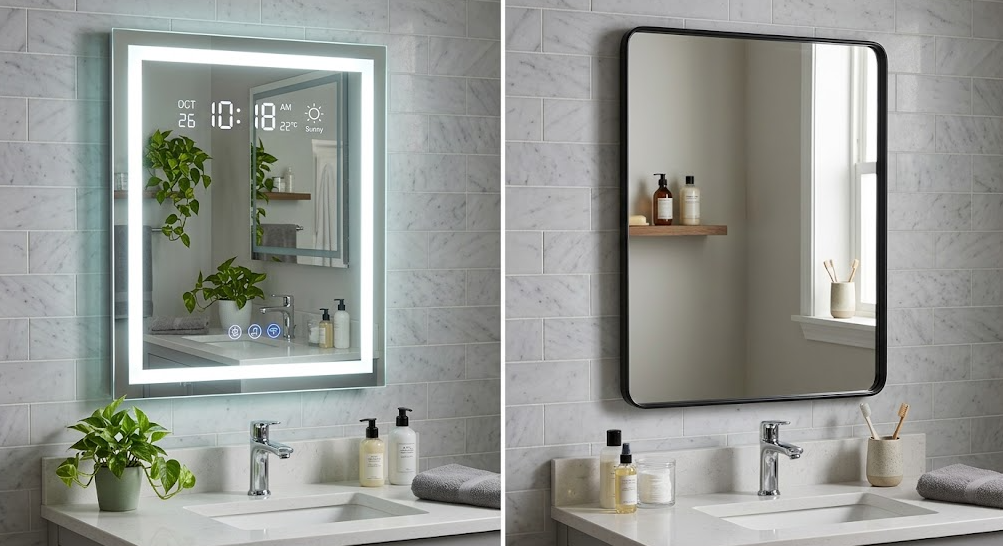
Picture two bathrooms in two otherwise similar apartments. In the first, a plain framed mirror hangs above the basin, lit by a single ceiling fixture that casts a shadow under every chin. In the second, a slim illuminated mirror glows evenly across the face, stays clear after a hot shower, and dims to a warm glow at night with one tap. Both mirrors show a reflection. Only one of them changes how the room feels, how easy it is to get ready in, and how the space reads to anyone who walks in.
If you’re reading this, you’ve probably already decided that a mirror matters more than it first appears, and you’re now trying to work out whether the extra investment in an LED smart mirror is justified. This guide is built for exactly that stage. It isn’t an introduction to what a mirror is. It’s a practical comparison of the two options across lighting, moisture, features, running cost, durability and design, with honest notes on where a regular mirror is still the smarter choice, so you can decide with confidence rather than guess.
The Short Answer
An LED smart mirror is worth the extra cost wherever a mirror is used for tasks that depend on good light or a clear surface grooming, makeup, shaving, skincare, or getting guests and clients ready. It’s also worth it wherever the mirror is a visible design feature, such as a hotel suite, a salon station, or a showpiece bathroom. A regular mirror remains perfectly sensible for low-use spaces, tight budgets, hallways, bedrooms with good natural light, and any situation where you simply need a reflection and nothing more. The rest of this guide explains why, so you can match the answer to your own space rather than follow a generic rule. If you’d like to see the range available while you read, our LED smart mirror supplier page shows the shapes, features and finishes we build.What a Regular Mirror Does Well
It’s easy to treat the comparison as old versus new, but that undersells the regular mirror. A conventional mirror is a sheet of glass with a reflective backing, and for centuries that has been enough. It has no electronics to fail, no power supply to plan for, and no controls to learn. You hang it and it works. That simplicity brings real advantages. A regular mirror costs less upfront, and the price depends mostly on size, glass thickness, and whether the edges are polished or beveled. It can be installed almost anywhere without thinking about wiring or switches. It’s also easy to replace if it cracks, and it doesn’t care about the electrical layout of the room. A well-chosen regular mirror can also be beautiful. Beveled edges, a solid frame, or a full wall of custom mirror wall installation can transform a gym, dance studio, or living room without a single LED. If the room already has strong, flattering light, a regular mirror often does everything that’s asked of it. Where it falls short is in the exact moments people tend to complain about poor lighting at the mirror itself, fogging in steamy rooms, and a flat look that adds nothing to the design of the space. Those are the gaps an LED smart mirror is designed to close.What Makes a Mirror “Smart”
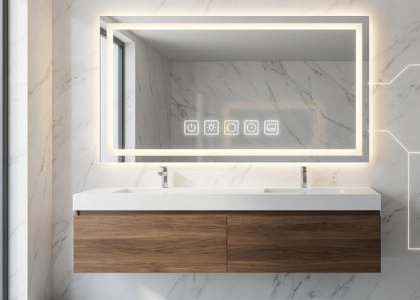
The term gets used loosely, so it helps to be specific. An LED smart mirror is a mirror with integrated lighting built into the glass or its edges, usually combined with one or more additional features. At Green Glass Designer, our decorative LED smart mirrors are built with integrated lighting, touch sensors, and defogging technology, and can include dimmable light, motion sensors, and Bluetooth speaker integration depending on the project. In practice, that breaks into three layers. The first is the light itself, which is usually soft, even, and positioned to illuminate your face rather than the ceiling. The second is control a touch sensor that switches the light on, adjusts brightness, or changes the tone from warm to cool. The third is comfort and convenience a defogging element that keeps the surface clear, and optional extras such as Bluetooth audio. Not every “smart” mirror needs every feature. Some buyers want only the lighting. Others want the full set. Understanding which layer matters to you is the first step to avoiding both overspending and under-buying, and we’ll come back to that in the section on choosing specs.Comparison One: Lighting
Lighting is where the gap is widest, and it’s the most underrated part of the decision. Most bathrooms and dressing areas are lit from above. That creates shadows under the eyes, nose and chin, which is the opposite of what you want when shaving, applying makeup, or checking skin. A regular mirror simply reflects whatever light the room provides, good or bad. An LED smart mirror brings the light to the face. Because the illumination comes from around or behind the glass, it falls evenly across the features and reduces harsh shadows. That’s why salons, makeup studios and hotel bathrooms favor illuminated mirrors consistent light means consistent results, whatever the time of day or the state of the room’s own fixtures. Adjustability matters too. A dimmable mirror lets you work in bright, cool light for detail tasks and drop to a softer glow for late-evening use or a relaxed atmosphere. A regular mirror can’t do either. If you rely on the ceiling light, you get one setting, and it’s rarely the right one. This also explains why makeup looks different in different rooms. If you’ve ever applied makeup in one room and been surprised by the result in daylight, you’ve seen the cost of poor mirror lighting first-hand. Even, controllable light at the mirror reduces that surprise.Comparison Two: Fog and Moisture
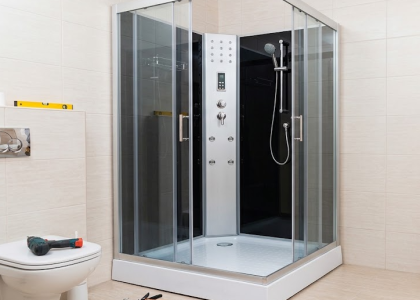
Steam is the natural enemy of a bathroom mirror. After a hot shower, a regular mirror fogs and stays unusable until the room ventilates or you wipe it down. Wiping leaves streaks, and waiting costs time, which is a small but daily irritation. Anti-fog technology in an LED smart mirror gently warms the glass surface so condensation doesn’t form in the first place. The mirror remains clear straight after the shower, which means you can shave, style your hair or do your skincare without waiting. For households with several people sharing one bathroom in the morning, that small convenience adds up quickly. Moisture resistance matters beyond fogging. Bathrooms are humid, and a mirror that isn’t designed for it can show edge damage or backing deterioration over time. Our smart mirrors are built to be moisture-resistant and anti-fog, which is why they’re safe for long-term bathroom use. If your mirror will live near a shower, pairing it with a glass shower cabin also keeps the surrounding area cleaner and easier to maintain. A regular mirror can be used in a bathroom, and many are. It simply asks you to accept fogging as part of the deal, and to choose a quality backing and sealed edges so it ages gracefully.Comparison Three: Everyday Features
This is where the “smart” part earns its name. A regular mirror has exactly one function. A smart mirror has several, and each one removes a small friction from your routine. Touch controls. Rather than reaching for a wall switch, you tap the mirror to turn the light on, off, or adjust brightness. It sounds minor, yet it’s one of the features people say they’d miss most once they’ve lived with it. Motion sensors. In a hotel room, an office washroom or a night-time bathroom, a mirror that lights up gently when someone approaches is both convenient and welcoming. It also avoids the glare of a full ceiling light at 3 a.m. Bluetooth audio. For some buyers this is a nice-to-have, for others a deciding feature. Listening to a podcast or music from the mirror itself, with no extra speaker on the counter, suits private bathrooms and spa-style spaces particularly well. Custom shapes and sizes. Rectangular, circular, oval or fully custom shapes can all carry the same technology. That means the mirror can match the room’s design instead of forcing the room to match the mirror. The question to ask yourself isn’t “do I want all of this,” it’s “which of these would I use every day.” That answer should shape the specification you choose.Comparison Four: Energy Use
A common worry is that adding electronics to a mirror means a higher electricity bill. In practice, LED lighting is among the more efficient ways to light a small area. Because the light is concentrated at the mirror, you often don’t need the larger overhead fixture running at full strength, and dimming lets you use only as much light as the moment requires. The anti-fog element does draw additional power while active, but most designs use it only when needed, and the amount involved is modest compared with, for example, running a geyser or an air-conditioner. For most households the running cost of an LED smart mirror is small enough to be a non-factor, but it’s fair to ask your supplier how the anti-fog and lighting are controlled, so you know whether they can be switched independently. A regular mirror uses no electricity at all, which is its quiet advantage. If you’re choosing between the two and energy matters, think about the whole room an efficient mirror light can reduce reliance on harsher overhead lighting, which narrows the gap further than it might first appear.Comparison Five: Cost Over Time
Price is where most comparisons get stuck, so let’s be direct. A regular mirror is cheaper to buy. An LED smart mirror costs more upfront, and the final price depends on size, features and customization. A simple illuminated unit sits at the lower end, while larger custom shapes with touch control, anti-fog and Bluetooth sit higher. The better question is what you get for that difference. If you’d otherwise buy a regular mirror and then add a separate wall light, a defogging solution, or a replacement a few years later because it no longer suits the room, the real gap is smaller than the sticker prices suggest. An integrated smart mirror combines the mirror, lighting and anti-fog into one installation. Warranty is part of the value calculation as well. Our LED smart mirrors come with a 1–2 year warranty covering electronics and installation, which gives you protection on the part of the product that carries the most risk. Regular mirrors rarely come with comparable coverage, though they also have less that can go wrong. For commercial spaces, the maths shifts again. In a salon, spa or hotel, the mirror is part of what the customer is paying for. A premium mirror experience supports higher perceived value and can reduce complaints about lighting or fogging. In that setting, the cost is better viewed as part of the guest experience than as a bathroom accessory.Comparison Six: Durability and Safety
Both options can last for years if they’re made well, but they age differently. A regular mirror’s weak points are its backing and edges, particularly in humid rooms. If moisture creeps in, you may see darkening at the edges over time. Quality manufacturing and sealed edges slow this considerably. A smart mirror adds electronics into the equation, which is why build quality and warranty matter so much. A well-built unit is moisture-resistant, uses safe low-voltage components where appropriate, and is installed with proper clearances. The glass is designed to be shatterproof and long-lasting, which is a safety advantage in busy or family settings. Installation quality is part of durability. A smart mirror needs a power connection planned in advance, a secure fixing, and sensible placement away from direct water spray. Our process covers this from the start consultation, custom fabrication, smart technology integration, safe delivery, optional on-site installation in Lahore and other major cities, and a final inspection. If you’re deciding purely on long-term simplicity, a regular mirror has fewer parts to worry about. If you’re deciding on long-term comfort and safety in a wet room, a properly built smart mirror justifies its place.Comparison Seven: Design Impact
The last comparison is the one that’s hardest to quantify and the easiest to feel. A mirror is often the largest reflective surface in a room, and it shapes how the whole space looks. A regular mirror reflects the room. An illuminated mirror becomes part of it. Backlit and edge-lit designs add a soft glow that works as ambient lighting, giving walls depth and making small rooms feel larger and more composed. In a bathroom, it can read as a boutique-hotel detail. In a retail space, a well-lit decorative mirror can act as a quiet display feature, drawing the eye inward in much the same way a well-planned glass shopfront does. This matters for hospitality in particular. Guests notice lighting and bathroom details, and many remember them. If you’re curious how that plays out in practice, our article on why hotels are choosing LED smart mirrors goes deeper, and how decorative LED mirrors can transform your bathroom covers the home side of the same idea.Side-by-Side Table
Here’s how the two options compare at a glance.| Factor | Regular Mirror | LED Smart Mirror |
|---|---|---|
| Lighting | Depends entirely on room lighting | Built-in, even, often dimmable |
| Fogging | Fogs in steamy rooms | Anti-fog keeps the surface clear |
| Controls | None | Touch, motion sensor, Bluetooth options |
| Upfront cost | Lower | Higher, varies by size and features |
| Power needed | No | Yes, planned in advance |
| Design impact | Neutral to decorative | Acts as ambient lighting and a feature |
| Warranty | Limited | 1–2 years on electronics and installation |
| Best for | Low-use areas, tight budgets | Grooming, hospitality, premium spaces |
Worth Noting None of these factors works alone. A mirror with beautiful light but poor placement still disappoints, and a basic mirror in a well-lit, well-ventilated room can be exactly right. The best choice comes from matching the mirror to how the space is actually used.