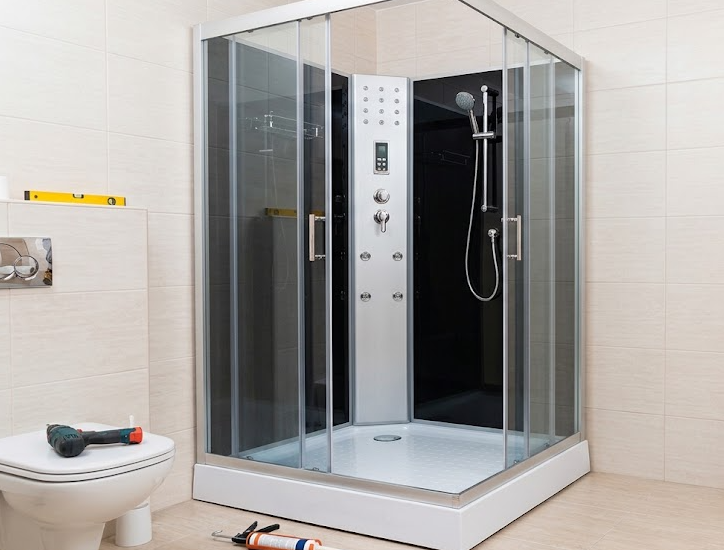
By the time someone starts searching for shower cabin installation costs, the big decision is usually made. You’ve decided the bathroom needs a glass shower cabin the curtain is tired, water keeps reaching the floor, or you simply want the clean, bright look you saw in a hotel or a friend’s renovated home. What you don’t yet know is what a fair price looks like, why quotes from different suppliers vary so much, and what you should insist on before you say yes.
That’s the question this cost guide to shower cabin installations in Pakistan is built around. Not “should you choose a shower cabin,” but how to compare styles, glass, hardware and installation scope so that two quotes can actually be compared, and so that you spend your budget on the parts that matter safety, waterproofing and long-term durability.
A quick note before we start this guide reflects how Green Glass Designer approaches
shower glass cabin projects across Pakistan. Shower cabins are custom-made to your bathroom, so the final figure always depends on your measurements, your chosen specification and your site. Treat this guide as a way to understand and compare, not as a fixed price list.
The Short Answer: How Shower Cabin Installation Is Priced
A shower cabin is not an off-the-shelf product like a tap or a mirror. Each glass panel is cut, edge-finished and tempered to the exact size of your shower area, and then fitted with hardware chosen for your door style. Because of that, the price is built from four layers added together the glass, the hardware, the fabrication of the enclosure, and the installation work on site.
In practical terms, most projects fall into one of three bands, set mainly by how much frame the enclosure has and how much hardware it needs.
| Tier |
Typical style |
Relative cost |
Best suited to |
| Essential |
Framed or semi-frameless shower cabin, standard tempered glass, sliding door |
Lowest |
Family bathrooms, rentals, first-time upgrades |
| Mid-range |
Semi-frameless or frameless hinged door, thicker tempered glass, stainless steel hardware |
Moderate |
Master bathrooms, renovations, most homes |
| Premium |
Fully frameless, 10 to 12 mm clear or low-iron glass, custom shapes, protective coating |
Highest |
Luxury homes, hotels, spa-style bathrooms |
These bands overlap. A small, simple frameless cabin can cost less than a large, complicated framed one. That’s why the rest of this guide focuses on the factors beneath the headline number.
Worth Noting A shower cabin quote is only comparable to another when the specification matches same glass thickness, same hardware grade, same door style and same installation scope. A lower quote often means a lower specification, not a better deal.
What Actually Drives the Cost
Seven factors account for most of the difference between one shower cabin quote and another. Understanding each gives you something concrete to compare.
1. Glass type and thickness
Shower cabins use
tempered glass, which is heat-treated to be several times stronger than ordinary glass and breaks into small, blunt granules rather than sharp shards. That’s non-negotiable in a wet, barefoot environment. Within tempered glass, thickness is the main variable common shower thicknesses range from 6 mm for lighter framed cabins up to 8, 10 and 12 mm for frameless designs, where the glass itself carries the structure.
Thicker glass costs more per square foot and needs heavier hardware, but frameless designs depend on it. A thin panel with no frame is a safety concern, not a saving. A supplier who recommends a thickness without asking about door size and fixing method isn’t doing the engineering.
2. Glass finish: clear, low-iron, frosted or tinted
Clear glass is the baseline. Low-iron (ultra-clear) glass removes the faint green edge of standard glass and gives a crisper, whiter look, at a higher cost. Frosted, etched or tinted glass adds privacy or character and also affects price. Frosting a lower section or adding a frosted band at eye level can be a smart way to get privacy without frosting the whole cabin. Our
decorative glass range and
frosted glass options show what’s possible.
3. Frame style: framed, semi-frameless or frameless
Framed: Aluminium profiles run around every panel. This is the most economical and the most forgiving of uneven walls, though the frame adds visual weight and gives water and soap scum more places to collect.
Semi-frameless: The door or some panels have a slim frame, while others are held by clips or channels. It’s a good balance of price and appearance.
Frameless: Thick glass held only by hinges, brackets and a thin channel or clamps. This is the clean, modern look most people picture, and it carries the highest cost because of the thicker glass, precise fabrication and more demanding installation.
4. Door type
The way the door opens changes both hardware and glass cost. Sliding doors are space-efficient and suit small bathrooms, but need a track and rollers. Hinged (swing) doors need strong hinges and a wall or panel to anchor to. Pivot doors swing on a top and bottom pivot and suit wider openings. Bi-fold doors save floor space in tight corners. If space is limited, our guide to
space-saving shower cabin ideas can help you choose.
5. Enclosure shape and size
A simple straight screen over a bath is the cheapest geometry. Corner (quadrant) cabins, square and rectangular enclosures with two or three panels, neo-angle designs and walk-in showers with fixed panels each add glass area and complexity. Larger cabins mean more glass and more hardware, and tall or oversized panels may need extra bracing or thicker glass. Custom shapes such as curved glass add a specialist step and sit at the top of the range.
6. Hardware quality
Hinges, handles, clamps, rollers, seals and brackets are small items that decide whether a cabin feels solid for years or starts to sag in two. Stainless steel (grade 304 or 316) resists rust in humid bathrooms, and 316 is better for coastal cities such as Karachi. Cheaper plated or low-grade hardware can show rust spots within a year or two. Finish also matters chrome, brushed stainless, matte black or gold each carry a different price. If you’re only going to upgrade one thing, hardware is often a better place to spend than extra glass thickness.
7. Protective coating and extras
Many suppliers offer a hydrophobic or anti-limescale coating that helps water bead off the glass. In areas with hard water, it can reduce cleaning effort noticeably. Other extras include rubber and magnetic seals, glass shelves, towel bars, a built-in niche, and LED lighting. None are essential, but each adds to the total.
Not sure which style fits your bathroom?
Shower Cabin Styles Compared
Because the style you choose shapes the cost more than almost any other decision, here is a side-by-side view of the common options.
| Style |
Cost level |
Best for |
Watch out for |
| Framed sliding |
Lowest |
Small bathrooms, tight budgets |
Track needs regular cleaning |
| Semi-frameless hinged |
Low to moderate |
Everyday family bathrooms |
Needs a solid wall to anchor to |
| Frameless hinged |
Moderate to high |
Modern homes, master baths |
Requires accurate measuring |
| Walk-in (fixed panel) |
Moderate |
Larger, open bathrooms |
Water splash if panel is too narrow |
| Corner / neo-angle |
Moderate to high |
Corner layouts |
More panels, more joints |
| Full frameless custom |
Highest |
Luxury and hotel projects |
Longer lead time |
If you want a frameless look but need to control cost, a walk-in shower with one fixed frameless panel is often the best compromise. You get the open, modern feel of frameless glass with far less glass and hardware.
Three Common Bathroom Scenarios
Costs become easier to judge when they’re tied to real bathrooms. These scenarios show how size, style and glass combine to place a project in a lower, middle or higher cost bracket. Your own quote will be confirmed after a site visit.
Scenario 1: Small family bathroom with a corner shower
A compact bathroom with a 3 by 3 foot corner shower and a sliding door in standard tempered glass with an aluminium frame sits in the lowest bracket. The priorities here are waterproofing and a smooth sliding door that won’t jam, not premium finishes.
Scenario 2: Master bathroom with a frameless hinged cabin
A master bathroom with a 4 by 3 foot enclosure, a frameless hinged door and one fixed panel in 8 to 10 mm clear tempered glass with stainless steel hardware sits in the middle bracket. This is the most common choice for renovations, and it’s where hardware quality and accurate measuring matter most.
Scenario 3: Luxury wet room with a full-height custom enclosure
A spacious bathroom with a floor-to-ceiling, fully frameless enclosure in 12 mm low-iron glass, a protective coating and premium hardware sits in the highest bracket. At this level, edge finish, alignment and installation precision matter as much as the price, and the waterproofing beneath the glass must be right before anything is fitted.
Worth Noting Notice how the total depends far more on enclosure size and style than on any single extra. Deciding your style early and measuring accurately saves more money than negotiating a final figure.
Costs People Forget to Budget For
A quote that counts only glass and hardware can leave you with surprises halfway through the project. Ask specifically about the following.
Waterproofing and drainage. A shower cabin keeps water in, but it can’t fix a bathroom floor that doesn’t slope properly or a drain that backs up. If the shower tray, curb or floor needs work, that’s a separate cost, and it should be sorted before the glass is installed.
Wall condition. Hinged and frameless cabins anchor to the wall. If the wall is hollow block, thin tile on weak plaster, or out of plumb, it may need reinforcement or a different fixing approach.
Tile drilling and making good. Drilling into finished tile or marble needs the right bits and care. Confirm who repairs any chips or marks, and whether silicone sealing is included.
Re-measurement and remakes. Tempered glass can’t be cut or adjusted after it’s made. If measurements are off by even a few millimetres, the panel must be remade. A supplier who measures on site, after tiling is finished, protects you from paying for this mistake.
Removal of the old setup. Taking down an existing curtain rail, old cabin or damaged screen takes time. Ask whether removal and disposal are included.
Water supply and plumbing changes. If you’re moving the shower position, adding a rain shower head or changing the mixer, plumbing work is separate from the glass installation.
Ongoing maintenance. Hard water leaves limescale on glass and hardware. Cheaper hardware may need replacing sooner. Think of maintenance and replacement as part of the true cost of ownership, not an afterthought.
Shower Cabin vs. Curtain or Fixed Screen: Where Does the Cost Sit?
If you’re still weighing options, it helps to see where a full shower cabin sits relative to alternatives. We cover the hygiene side in depth in our comparison of
glass shower cabins vs. curtains, but here’s the cost-focused summary.
| Option |
Upfront cost |
Maintenance |
Look and feel |
| Shower curtain |
Lowest |
Needs frequent replacing, mould-prone |
Basic, cuts the room visually |
| Fixed glass screen |
Low to moderate |
Low, but water can escape |
Clean, partial enclosure |
| Framed shower cabin |
Moderate |
Moderate, frame needs cleaning |
Practical, fully enclosed |
| Frameless shower cabin |
Highest |
Low, wipe-clean glass |
Open, bright, premium |
A glass shower cabin costs more than a curtain up front, but curtains need replacing, harbour mould and let water escape, which can damage floors and skirting over time. Glass lasts for many years, keeps the whole bathroom drier, and makes small bathrooms feel larger because the eye can see across the whole room. That visual benefit doesn’t appear on a quote, yet many homeowners count it among the most valuable.
How to Control the Cost Without Cutting Quality
If your first estimate is above your budget, there are sensible ways to bring it down without compromising the parts that keep the cabin safe and watertight.
Choose semi-frameless over fully frameless. It delivers most of the visual benefit at a lower cost because it needs less thick glass and fewer premium fittings.
Use a walk-in panel instead of a full enclosure. In a larger bathroom, one well-placed fixed panel can control splash and look modern with far less glass.
Keep the glass clear. Standard clear tempered glass is the most economical. Use frosting or low-iron glass only where it matters.
Standardize sizes where possible. If the bathroom layout allows it, repeating panel widths simplifies fabrication.
Time the installation. Fit the cabin after tiling and plumbing are complete, so it doesn’t need to be adjusted or protected during other trades’ work.
Don’t compromise on these. Tempered safety glass, appropriate thickness, corrosion-resistant hardware and proper sealing are the parts that matter if something goes wrong. A cabin that’s cheaper because it uses thin glass, low-grade hardware or skips sealing isn’t a saving. It’s a risk.
What a Good Quote Should Include
When you collect quotes from two or three suppliers, use this checklist to compare them fairly. If a quote leaves out several of these, ask before you commit.
Glass specification: tempered, thickness in mm, and whether it’s clear, low-iron, tinted or frosted.
Style and door type: framed, semi-frameless or frameless, and sliding, hinged, pivot or bi-fold.
Hardware: material and grade (for example, stainless steel 304 or 316), finish colour, and what’s included (handles, seals, hinges, rollers).
Dimensions: confirmation that measurements were taken on site, with the panel sizes written down.
Coating and extras: any anti-limescale treatment, shelves or lighting, listed clearly.
Inclusions and exclusions: delivery, installation, drilling, sealing, removal of old fittings, and any waterproofing or tile work.
Timeline: fabrication and installation time in writing.
Warranty and after-sales: what’s covered, for how long, and who to call if a hinge loosens or a seal fails.
Green Glass Designer’s approach is built around this transparency: a specification you can check line by line and no hidden extras. You can also see completed work on our
Project References page.
Timeline: From Site Visit to Handover
Understanding the process helps you plan around your own renovation schedule.
1. Site visit and consultation. We check the bathroom layout, wall condition, drainage and your style preferences.
2. Design and specification. You choose the style, glass, hardware and finish, with a written quote based on that specification.
3. Final measurement. Done after tiling is finished, so panels match the real dimensions.
4. Fabrication. Glass is cut, edge-polished, drilled and tempered to size.
5. Installation. Hardware is fitted, panels are aligned, and silicone seals are applied.
6. Final check and handover. We test the door, check the seals and review care instructions with you.
Frameless and custom designs generally take longer than standard framed cabins because the glass is made to order. Ask for the expected timeline when you receive your quote.
Frequently Asked Questions
1. How is shower cabin installation priced in Pakistan?
Pricing depends on the glass type and thickness, the frame style, the door type, the size of the enclosure, the quality of hardware and the work needed on site. Because every cabin is made to measure, a site visit is the only reliable way to get an accurate figure.
2. Is frameless always better than framed?
Not always. Frameless looks cleaner and is easier to wipe, but it costs more and needs accurate walls and thicker glass. A well-made framed or semi-frameless cabin can be an excellent, durable choice, especially in smaller bathrooms or on a tight budget.
3. What glass thickness should I choose?
Lighter framed cabins often use 6 mm tempered glass, while frameless designs typically use 8 to 12 mm. The right thickness depends on door size, fixing method and panel height, so it should be confirmed by your installer rather than chosen on price alone.
4. Can a shower cabin be installed in an existing bathroom?
Yes, in most cases. The key points are whether the walls can securely hold the hardware and whether the floor drains properly. A site visit will confirm what, if anything, needs to be corrected first.
5. Are glass shower cabins safe?
Yes, when made from tempered safety glass of the correct thickness and fitted with quality hardware. Tempered glass is far stronger than ordinary glass and breaks into small, blunt pieces if it ever fails.
6. How do I keep a glass shower cabin clean?
Wipe the glass with a squeegee or soft cloth after use and clean with a mild, non-abrasive cleaner. A protective coating helps water bead off, and regular drying prevents limescale buildup, especially in hard-water areas.
7. Does the quote include installation?
Always confirm this in writing. Some suppliers price glass and hardware separately from installation, sealing or removal of old fittings, so ask exactly what “complete” means.
8. Do you install shower cabins in all cities?
Green Glass Designer works on projects across Pakistan, including Lahore, Islamabad, Rawalpindi and Karachi. Reach out with your location and we’ll advise on the next step.
Choosing Your Shower Cabin With Confidence
A shower cabin is one of the few bathroom upgrades that improves comfort, cleanliness and appearance all at once. It keeps water where it belongs, replaces a mouldy curtain with something that lasts, and lets light travel through the bathroom instead of cutting it in half. It’s also a made-to-measure, safety-critical product, which is why the cheapest quote is rarely the best one, and why understanding what you’re paying for matters more than the headline number.
If you’ve read this far, you likely have a bathroom in mind and a rough budget. The most useful next step is to attach real numbers to your specific space an accurate measurement, a clear specification and a written quote that shows exactly what’s included.
To book a site visit or get a quote tailored to your bathroom, reach out for a free consultation or message us directly on WhatsApp. You can also explore our Shower Glass Cabin Supplier page for more options.