Table of Contents
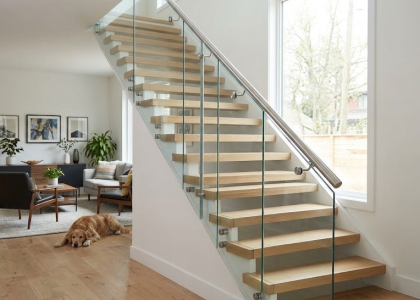
Picture two staircases in two homes of the same size, built in the same year, in the same neighborhood. The first has a heavy timber or wrought iron balustrade with closely spaced vertical bars. It is solid, traditional and perfectly functional. The second has clear glass panels held by slim steel fittings, so that the stairs seem to float and the light from the windows runs uninterrupted from the landing to the lounge below. Walk a guest through both houses and they will almost always say something about the second one. They rarely mention the staircase itself. They say the house feels bigger, brighter, more open.
That reaction is not an accident, and it is not only about fashion. A staircase is one of the largest single objects in the interior of a home, and a railing is one of its most visible parts. Whatever the railing is made of changes how the whole space is read by the eye. Glass changes it in a particular way it takes away visual weight while keeping the protection a railing is there to provide. This guide explains why glass railings have become the modern choice for staircases in homes, offices, villas, hotels and showrooms across Pakistan. We will look at what glass actually does to light and space, how it keeps people safe, what the different railing systems are, and where glass can disappoint if it is chosen without thought. If you are only beginning to think about your staircase, that is exactly the right moment to read this. Understanding the options first will help you make a much better decision than simply following a trend.The Science in Brief
Humans read a space largely through light, sightlines and the amount of visual clutter in front of them. A solid or heavily patterned railing interrupts all three. It blocks the line of sight across the room, it casts shadow onto the steps and floor, and it adds a dense pattern of vertical or horizontal lines that the eye has to work through. A glass railing does the opposite. It keeps the sightline open, lets daylight and artificial light pass through, and replaces visual clutter with a clean, quiet surface. The result is a staircase that protects without dominating. Modern architectural glass makes this possible because the material has changed. Today’s railing glass is toughened or laminated, cut and finished precisely, and supported by engineered fittings. It is a structural safety product, not a decorative pane. That is the real reason glass has moved from showpiece homes into everyday projects.Reason One: Light Travels Further When Nothing Blocks It
Staircases are often the darkest part of a house. They sit in a central position, away from outside walls, and they are tall and narrow. Daylight from a window at the top or bottom has to travel a long way, and a solid railing or a dense balustrade absorbs or blocks a surprising amount of it. Glass lets that light through. Daylight reaches the lower steps, the landing and the hallway beneath, and it does so without any extra fixtures or power. In houses with a double-height void or a tall window beside the stairs, a glass railing keeps the whole volume bright from morning until evening. At night the same effect works in reverse ceiling lights, wall lights and step lights shine across the glass instead of being trapped behind a solid barrier, so the staircase looks lit and welcoming rather than patchy. There is also a quieter benefit. Natural light has a well-documented effect on how comfortable people feel in a room. Bright, open, daylit spaces tend to feel more relaxed and more pleasant to spend time in. A glass railing will not make a dark house bright on its own, but it removes one of the most common obstacles to light moving through a home.Reason Two: Small Spaces Feel Bigger
In many city homes, the staircase is squeezed into a tight footprint. Plots in Lahore, Karachi and Islamabad are often narrow, and the stair has to share a compact core with the entrance, the lounge and sometimes the kitchen. A heavy railing in that setting can make the area feel crowded, like a wall dividing one room from another. Glass solves this visually. Because the eye can see through it, the floor area on both sides of the stairs reads as one continuous space. The entrance hall seems to extend into the lounge. The upper landing seems to open into the room below. Designers often use this trick deliberately in apartments, duplexes and narrow houses a transparent railing makes a limited area feel as if it has more breathing room than the plan suggests. This does not change the real square footage, of course. But how a space feels matters as much as how large it is on paper, and glass is one of the most effective tools for making a modest staircase feel generous.Reason Three: The Staircase Becomes a Feature, Not Just a Passage
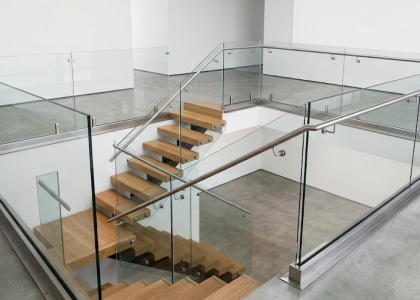
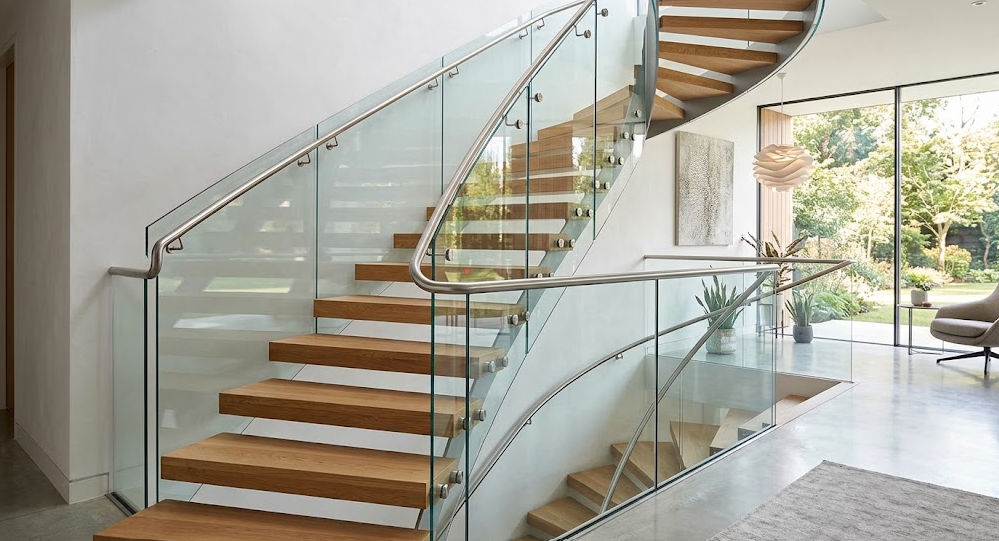
Traditional railings tend to be the part of a staircase people stop noticing. Glass changes that, because it lets the structure of the stairs themselves become visible. A floating timber tread, a polished marble step, a stainless steel stringer or a sculptural central spine can all be seen clearly through the glass, rather than hidden behind balusters. This is why glass railings are so common in contemporary villas, hotel lobbies, restaurants and corporate reception areas. The staircase turns into a design statement, a piece of architecture that guests see as soon as they walk in. In a retail or hospitality setting, that visual impact has direct value, because the stairs are often the first thing a visitor looks at. Glass also pairs well with the details around it. Backlighting under the treads, a feature wall behind the stairs, a pendant light hanging through the void or a bold flooring pattern all remain visible instead of being broken up by railings. The glass frames these elements without competing with them, much as a clean white mount frames a picture without taking attention from it.Reason Four: Safety Is Built Into the Glass
It is natural to ask whether something as clear and slim as glass can really protect people on a staircase. The answer depends on the type of glass, and this is where modern railing systems differ sharply from ordinary window glass. Railing glass is normally one of two safety types: Toughened (tempered) glass is heated and rapidly cooled so that it becomes much stronger than ordinary annealed glass. If it does break, it breaks into small blunt pieces rather than long sharp shards, which reduces the risk of serious injury. Laminated glass is made of two or more layers of glass bonded with a tough interlayer. If one layer cracks, the interlayer holds the fragments in place, so the panel stays standing rather than falling apart. This is why laminated glass is widely preferred for stair railings, balustrades and any location where a fall from height is possible. You can learn more about it on our laminated glass installation page. The thickness and construction of the glass, the way it is fixed and the height of the railing all matter just as much as the material. A properly designed system takes into account the span of each panel, the load it may need to resist, the position of the fittings and the building’s use. A private villa stair and a busy commercial staircase are not designed in the same way, and a good supplier will ask about both the building and the people who will use it before recommending a specification. This is also why the quality of fabrication and installation counts. Precise cutting, clean edges, correct hole positions and secure fixing are what turn good glass into a safe railing. Cutting corners here is the single most common source of problems.Worth Noting Glass is not unsafe simply because it is transparent. Most of the doubts people have about glass railings come from picturing ordinary window glass. Railing glass is a different product, chosen and fixed for a different job. The real safety question is not “is it glass?” but “is it the right glass, fixed the right way, by people who know what they are doing?”
Reason Five: Glass Is Easier to Live With Than You Might Expect
Before choosing a railing, many homeowners worry about maintenance, especially in a climate with dust, heat and, in coastal cities, salty humid air. It is a fair concern, and it is worth being honest about what glass asks of you. Cleaning is simple. Glass does not absorb dirt, stain or need repainting. A soft cloth and a standard glass cleaner are usually all that is required, and a wipe every week or two keeps it clear. Compare that with timber, which needs sealing or polishing, or with painted metal, which can chip and rust over time. Glass does not rot, warp or rust. Timber can swell, crack or be attacked by insects. Painted ironwork can corrode, particularly near the coast. Glass is inert, so the panel itself does not degrade with age or weather. The fittings matter more than the glass. What does need attention is the metal that holds the glass in place. Stainless steel is the usual choice for railing hardware, and the grade matters. In coastal or high-humidity locations, a higher corrosion-resistant grade is a sensible precaution. This is a design decision to make at the start, not something to fix later. Fingerprints show. This is the honest downside. Clear glass shows handprints, especially on the top section where people rest their hands. Many homes simply accept a quick wipe as part of weekly cleaning, and a handrail or a capped top edge can reduce contact with the glass. Overall, glass railings are among the more practical options for staircases, provided the hardware is specified correctly and you are comfortable with regular light cleaning.Reason Six: It Fits Almost Every Design Style
One reason glass railings have spread so widely is their flexibility. They suit very different interiors without looking out of place. In a minimalist or contemporary home, glass is the natural choice. It matches the clean lines, neutral colors and open plans typical of modern design. In a classic or traditional interior, a glass railing can sit comfortably beside a carved timber handrail, marble steps or an ornate chandelier. The transparency lets the traditional details stay in view rather than competing with them. In an industrial or loft-style space, glass paired with black steel fittings and exposed concrete or brick looks sharp and deliberate. In a luxury hotel, restaurant or showroom, glass supports a polished, high-end look. Tinted, frosted or patterned glass can add an extra layer of character where needed. Our range of decorative glass shows how far this can go. Because glass is neutral, the stair still looks current when furniture, paint colors and flooring change. That is a quiet but real advantage. A railing is not something most people want to replace every few years, so a design that ages gracefully is worth having.The Main Types of Glass Railing Systems
Not all glass railings are built the same way. The system you choose affects the look, the cost and the installation, so it helps to know the main options before you speak to a supplier. Frameless channel systems. Glass panels sit in a continuous aluminum or steel channel fixed to the edge of the stair or floor. With no posts, the look is the cleanest of all a continuous sheet of glass. It is a popular choice for modern homes and offices, and the channel is often hidden by a finishing cover. Spigot-fixed systems. Panels are held at the base by individual stainless steel spigots, small clamps fixed at intervals along the stair edge. The glass looks like it is standing free, with minimal hardware visible. Spigots suit straight runs and landings where a floating look is wanted. Post and clamp systems. Slim stainless steel posts are spaced along the staircase, and glass panels are clamped between them. This is a practical, familiar design that works well on many stair shapes, including curved layouts, and often costs less than fully frameless options. Standoff or point-fixed systems. Panels are fixed through drilled holes to the side of the stair with stainless steel standoff buttons. The glass appears to hang beside the staircase, and the fittings become a small architectural detail in their own right. Glass with a handrail. Any of the above can be combined with a stainless steel, timber or aluminum handrail on top. This adds a comfortable grip, helps with balance and can make the staircase feel more reassuring for children and older people. Each system suits certain stair shapes and budgets. A straight flight, a half-turn, a curved staircase and a floating cantilever stair all place different demands on the design. The best way to choose is to look at your own staircase, its dimensions and how it will be used, and match the system to that.| System | Look | Good For | Things to Consider |
|---|---|---|---|
| Frameless channel | Seamless, no posts | Modern homes, offices, showrooms | Needs a well-prepared fixing edge |
| Spigot-fixed | Floating panels | Straight runs, landings | Neat, minimal hardware precise setting-out |
| Post and clamp | Slim posts with glass infill | Most stair shapes, including curved | Visible posts often more economical |
| Standoff / point-fixed | Glass hangs beside the stair | Feature stairs, villas, hotels | Requires drilled holes and careful detailing |