Table of Contents
You’ve already decided that plain glass isn’t going to cut it. Maybe you’re finishing a mosque dome, designing a boutique hotel lobby, or renovating the entrance of your villa, and somewhere along the way you started picturing sunlight pouring through color instead of flat, transparent panes. That instinct is correct stained glass is one of the few architectural features that changes the feeling of a room, not just its look.
But once you start researching “stained glass installation in Pakistan,” the questions pile up fast. Is it durable enough for our climate? How much does it actually cost per square foot? Can a design be customized for a religious space versus a corporate lobby? Who do you even trust with something this specialized?
This guide answers all of that. We’ll walk through what custom stained glass installation really involves, where it works best, how pricing is structured, what separates a professional installer from a risky one, and why Green Glass Designer has become the go-to name for stained glass projects across Lahore, Karachi, Islamabad, and beyond.
What Makes Stained Glass “Custom”?
Stained glass isn’t a single product it’s a craft. At its core, a custom stained glass installation is a panel (or series of panels) built from individually colored and cut pieces of glass, arranged into a pattern, and joined together using lead came or copper foil techniques, then reinforced for structural and weather durability.
The word “custom” matters here more than most people realize. Off-the-shelf decorative glass panels are mass-produced and limited to a handful of generic patterns. A custom installation, on the other hand, is built around:
- Your space – the exact dimensions of your window, dome, door, or wall feature
- Your theme – religious motifs, floral patterns, geometric Islamic art, abstract modern designs, or corporate branding
- Your color palette – matching or contrasting with your existing interior design
- Your light conditions – orientation toward the sun changes how colors read throughout the day
At Green Glass Designer, every stained glass project starts as a custom design, not a catalog pick. That’s a deliberate distinction, and it’s the difference between a panel that looks like it was ordered from a warehouse and one that looks like it was made for your building specifically.
Why Businesses and Homeowners in Pakistan Are Choosing Stained Glass Again
Stained glass has a reputation problem it doesn’t deserve many people still associate it purely with old European churches. In reality, it’s having a strong resurgence across Pakistan’s residential and commercial construction scene, and for practical reasons, not just nostalgia.
1. It Solves the “Boring Facade” Problem
Developers and homeowners alike are tired of flat glass and plain walls. A single stained glass feature over an entrance, in a stairwell landing, above a reception desk instantly gives a building a signature look that photographs well and gets remembered.
2. It Filters Light Without Blocking It
Unlike curtains, frosted films, or heavy drapery, stained glass lets in natural light while diffusing direct glare and adding color warmth to a room. This is especially valuable in Pakistan’s bright climate, where full sun exposure through plain glass can make interiors uncomfortably harsh.
3. It Signals Investment and Craftsmanship
In commercial spaces hotel lobbies, corporate atriums, boutique retail a custom glass feature communicates that the owner cared about details. It’s a low-maintenance way to signal quality without ongoing operational cost.
4. It Carries Cultural and Religious Significance
For mosques, churches, temples, and shrines, stained glass isn’t just decoration it’s tradition. Dome interiors, mihrab surrounds, and clerestory windows have used colored glass for centuries to create a spiritual atmosphere. Modern fabrication and installation techniques now make this achievable at a much wider range of budgets than in the past.
Where Custom Stained Glass Installations Work Best
If you’re still deciding whether stained glass fits your project, here’s a breakdown of the applications where it consistently delivers the strongest visual and functional return.
Religious Buildings
Mosque domes, minaret windows, mihrab surrounds, church naves, and shrine interiors remain some of the most common and most rewarding settings for stained glass. Patterns here are typically geometric Islamic motifs, calligraphy-inspired designs, or traditional biblical scenes, depending on the space.
Luxury Homes and Villas
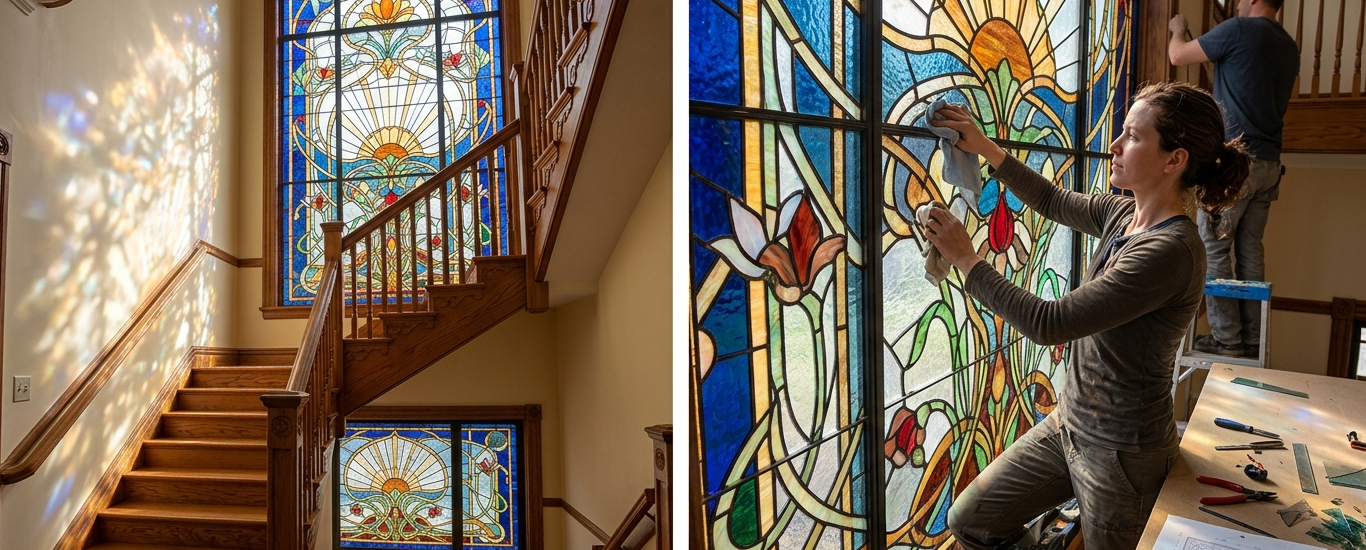
Entryway doors, stairwell landings, skylights, and feature walls are popular choice points for homeowners who want a single dramatic element rather than covering an entire room. A stairwell stained glass panel, for example, becomes the centerpiece of the whole staircase without needing any other decoration.
Corporate Offices
Atriums, reception lobbies, and boardrooms increasingly use stained glass as a branding tool incorporating company colors or abstract patterns that align with a firm’s visual identity. It reads as more permanent and premium than printed wall graphics.
Hotels and Resorts
Guests remember spaces with character. Decorative stained glass windows and panels in lobbies, restaurants, and corridors give hospitality projects an identity that plain finishes can’t replicate and they photograph beautifully for marketing.
Museums and Public Buildings
Cultural institutions often commission stained glass for its heritage value, using it to tell a visual story tied to the building’s purpose or history.
Whatever category your project falls into, the underlying principle is the same stained glass performs best when it’s placed where natural light will pass through it and be seen south or west-facing windows, stairwell voids, domes, and entry points.
What Actually Goes Into a Professional Installation
A lot of the risk in stained glass projects comes from treating it like ordinary glasswork. It isn’t. Here’s what a properly managed installation looks like, based on the process Green Glass Designer follows on every project.
Step 1: Consultation and Design Brief
This is where the installer needs to understand not just measurements, but intent the style, theme, and location of the piece. A mosque commission and a corporate lobby commission require entirely different design language, color psychology, and even glass types.
Step 2: Artistic Design Creation
Traditional hand-drawn sketches or modern digital renderings are prepared and shared for client approval before any glass is cut. This step protects you you should never approve a stained glass project without seeing a visual mockup first.
Step 3: Glass Selection and Fabrication
Individual glass pieces are selected for color, texture, and light transmission, then cut, shaped, and assembled into the final panel. This is the most skill-intensive stage and the one where craftsmanship differences between vendors become obvious.
Step 4: Delivery
Because finished panels are fragile until installed and reinforced, safe transport with protective packaging is critical especially for nationwide projects being shipped across cities.
Step 5: Installation
Skilled fitting, proper sealing, and structural reinforcement ensure the panel performs safely over years of use, not just on installation day.
Step 6: Final Handover
A professional vendor closes the project with a client walkthrough, warranty documentation, and after-sales support not just an invoice.
Skipping or rushing any of these six stages is where most stained glass disappointments come from: mismatched colors, panels that don’t fit their frame, or glasswork that starts to fail within a year or two.
Durability: The Question Everyone Should Ask (But Often Doesn’t)
Traditional stained glass has a reputation for being delicate, and historically that reputation was earned old lead-came construction methods weren’t built for extreme weather or high-traffic environments. Modern stained glass, when built correctly, is a different product entirely.
The key is lamination. Laminated stained glass sandwiches the decorative glass layer between protective layers, giving it resistance to:
- UV exposure – preventing color fading over years of direct sunlight
- Weather stress – protecting against Pakistan’s temperature swings, dust, and humidity
- Impact – reducing breakage risk compared to unlaminated panels
This is a question worth asking any vendor directly is your stained glass laminated and UV-protected, or just decorative float glass? The answer determines whether your installation will still look vibrant in ten years or start showing wear within two.
Green Glass Designer builds every stained glass project using laminated glass construction specifically to address this meaning the artistic panel you approve during design is the same panel you’ll still be looking at a decade from now.
How Much Does Custom Stained Glass Installation Cost in Pakistan?
Pricing is understandably the first practical question once the design excitement settles down. Stained glass installation in Pakistan is typically priced per square foot, and the range is wide because so many variables affect the final cost.
General price range PKR 3,500 – PKR 9,000 per square foot, depending on:
- Design complexity – a simple geometric repeat pattern costs less than a detailed figurative or calligraphic design
- Glass type – standard colored glass vs. hand-textured, cathedral, or opalescent glass varies significantly in cost
- Panel size and shape – domes, arches, and curved surfaces require more specialized fabrication than flat rectangular windows
- Customization level – fully bespoke artwork costs more than adapting an existing pattern to new dimensions
- Installation conditions – height, accessibility, and structural reinforcement needs (a dome installation is more labor-intensive than a ground-floor window)
Because of this range, any vendor who gives you a fixed price without seeing your space or design brief is guessing. A legitimate quote should come after a consultation which is also your opportunity to compare design concepts, materials, and timelines before committing.
What to Look for Before Choosing a Stained Glass Installer
Given the cost and permanence involved, it’s worth being selective. Here’s a practical checklist to run any vendor through before signing off on a project.
| What to Check | Why It Matters |
|---|---|
| Portfolio of completed projects | Confirms real experience across residential, religious, and commercial settings not just renders |
| Registration and certification | PEC registration and ISO certification indicate the company meets recognized construction and quality standards |
| Laminated / UV-protected glass | Determines long-term durability against Pakistan’s sun and weather |
| Design approval process | You should see a mockup or sketch before fabrication begins, not after |
| Transparent, itemized pricing | Avoids surprise costs tied to size, glass type, or installation complexity |
| Nationwide delivery capability | Relevant if your project is outside the vendor’s home city |
| Warranty and after-sales support | Protects your investment if sealing, fitting, or panel issues arise later |
If a vendor can’t confidently answer questions in each of these categories, that’s a signal to keep looking not because stained glass is inherently risky, but because the difference between a five-year installation and a twenty-year installation almost always comes down to who built it.
Why Green Glass Designer
Green Glass Designer has spent over 15 years working across architectural and decorative glass in Pakistan, and stained glass sits at the more artistic end of that portfolio alongside beveled mirror walls, frosted glass, and digital glass media walls. A few things set the approach apart:
- PEC-registered and ISO-certified, meeting recognized standards for construction quality and project reliability
- Custom artistic design for traditional, modern, religious, and abstract styles every project starts from a design brief, not a catalog
- Laminated, UV-protected stained glass built to withstand Pakistan’s climate rather than fade or degrade within a few seasons
- Transparent, tailored quotations, so pricing reflects your actual project instead of a generic per-panel rate
- Nationwide coverage, with completed projects in Lahore, Karachi, Islamabad, Multan, Faisalabad, and beyond
- Warranty-backed installation and after-sales support, closing the loop after handover instead of disappearing once the invoice is paid
The company has completed stained glass work across some of the settings covered earlier in this guide mosque domes, church interiors, corporate atriums, and luxury villas which means the design team has already solved the specific technical challenges that come with each category, from dome curvature to high-traffic corporate lobbies.
Frequently Asked Questions
What is the average price of stained glass installation in Pakistan?
Pricing typically ranges from PKR 3,500 to PKR 9,000 per square foot, depending on design complexity, glass type, and the level of customization involved.
Can I request a fully custom stained glass design?
Yes. Bespoke designs are the standard approach, including religious patterns, floral motifs, abstract art, and corporate branding elements tailored to your space.
Do you install stained glass in mosques and churches?
Yes, religious stained glass art for mosques, churches, shrines, and other spiritual spaces is a core part of the specialization, with designs adapted to each tradition’s visual language.
How durable is stained glass compared to regular decorative glass?
Tempered and laminated stained glass panels are built to resist UV exposure, moisture, and general environmental stress, which is why lamination should always be confirmed before installation.
Is nationwide delivery and installation available?
Yes, delivery and installation are available across major cities including Lahore, Karachi, Islamabad, Multan, and Faisalabad, with protective packaging for safe transport.
Ready to See What It Would Look Like in Your Space?
Reading about stained glass and picturing it in your actual project are two different things which is exactly why the design and mockup stage exists before any glass gets cut. If you’re weighing a stained glass feature for a mosque, home, hotel, or office, the next step isn’t to guess at pricing or patterns on your own. It’s to sit down with a designer who can turn your space’s dimensions and your vision into an actual concept.
Schedule a free consultation with Green Glass Designer to discuss your project, or get an instant quote via WhatsApp if you already have a space and idea in mind. Either way, you’ll walk away with a clearer picture of what’s possible and what it will actually cost before you commit to anything.