Table of Contents
If you’re reading this, there’s a good chance you’ve noticed the same thing a lot of homeowners, architects, and business owners have noticed recently buildings all around you, from corporate offices to restaurant fronts to newly renovated homes, seem to be wearing a sleek, uniform, almost seamless metal-like skin that wasn’t nearly as common a decade ago. You’ve probably heard it called “ACP cladding” or “aluminium composite panel,” and you’re trying to figure out whether it’s a genuine architectural upgrade worth considering for your own project, or just a passing design trend that happens to photograph well on Instagram.
That’s exactly what this guide is here to unpack. We’ll walk through what ACP cladding actually is, why it’s become such a dominant choice in modern architecture rather than a niche finishing option, what specific problems it solves compared to traditional exterior finishes, and how to think about whether it’s the right fit for your own building before you get into panel types, colors, or contractors. Nothing here assumes you’ve already made a decision this is the research stage, and the goal is an honest, clear picture of why this material has taken over so much of contemporary building design.
What ACP Wall Cladding Actually Is
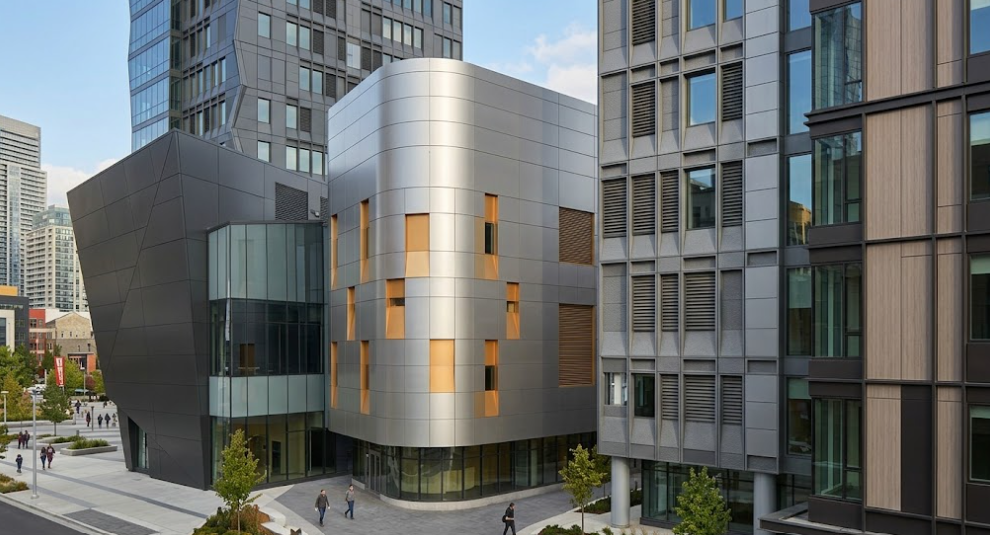
Aluminium Composite Panel, almost universally shortened to ACP, is a flat panel made from two thin sheets of aluminium bonded to either side of a non-aluminium core, most commonly a polyethylene core, though fire-retardant mineral-core variants are increasingly common in commercial applications. The result is a panel that’s lightweight, rigid, weather-resistant, and finished with a smooth, consistent surface that can be produced in an enormous range of colors, finishes, and even wood or stone-effect textures.
ACP panels are typically installed over a supporting frame attached to a building’s existing structure, creating what’s known as a “rain screen” system, a ventilated gap between the panel and the wall behind it that allows moisture to drain and evaporate rather than sitting against the building’s surface. This is different from simply gluing decorative panels directly onto a wall, and it’s a big part of why ACP performs so well over time compared to some of the finishes it’s replaced.
✓ The Core Idea in One Sentence
ACP wall cladding has become the modern architecture default because it delivers the clean, seamless, contemporary look designers want, at a fraction of the weight, cost, and installation complexity of the traditional stone, brick, and heavy metal finishes it’s increasingly replacing.
Why Traditional Exterior Finishes Are Losing Ground
To understand why ACP has spread so quickly across residential, commercial, and institutional projects alike, it helps to look at what it’s actually competing against, and why those older options increasingly fall short of what modern buildings and modern budgets actually need.
Natural stone and brick are heavy, slow, and expensive to install. A stone or brick façade requires a structural design that can support its weight, skilled masonry labor that takes considerably longer to install than a panel system, and a materials cost that puts it out of reach for a large share of commercial and residential projects that still want a premium, finished look.
Painted render and plaster finishes weather poorly and demand constant upkeep. Painted exterior surfaces are vulnerable to cracking, staining, fading, and moisture damage, particularly in climates with intense sun exposure or heavy seasonal rain, which means a building’s exterior can start looking tired within just a few years without regular repainting and maintenance.
Solid metal cladding is heavy and expensive relative to what it delivers. Full-thickness aluminum or steel panels can achieve a similar aesthetic to ACP, but at a significantly higher material cost and weight, without necessarily offering better performance for the vast majority of building applications where a full solid-metal panel’s extra mass isn’t actually doing anything useful.
Older finishes struggle to keep pace with how fast architectural trends move. A building finished in a traditional material is expensive and disruptive to update if the look falls out of favor or simply starts to feel dated, while ACP’s wide range of finishes and relatively straightforward reinstallation process make it far easier for a building to be refreshed without a full structural renovation.
ACP cladding didn’t become popular by accident. It emerged directly in response to these specific, recurring frustrations, offering architects and property owners a way to get a genuinely premium, modern look without the weight, cost, and maintenance burden that traditional finishes carry.
The Case for ACP Cladding, Point by Point
A Seamless, Premium Look That’s Hard to Achieve Any Other Way
One of the most immediately obvious reasons ACP has become the default choice for modern building fronts is simply how clean it looks. Panels are manufactured with tight tolerances and can be cut, grooved, and joined to create crisp lines, flush seams, and a level of surface uniformity that’s genuinely difficult to replicate with masonry, render, or painted finishes, all of which are more prone to visible inconsistency across a large surface area.
This uniformity is a big part of why ACP shows up so consistently on corporate office fronts, retail storefronts, and hotel façades, projects where a polished, high-end first impression matters directly to the business behind the building. A crisp, seamless exterior signals a level of design intent and quality that a patchy render finish or an inconsistent brick pattern often struggles to match.
Dramatically Lighter Than Traditional Alternatives
ACP panels are a fraction of the weight of natural stone, brick, or solid metal cladding of a comparable size, which has consequences that go well beyond just being easier to lift during installation. Lighter cladding reduces the structural load a building’s frame needs to support, which can lower overall construction costs, simplify structural engineering requirements, and make cladding upgrades genuinely feasible on existing buildings that were never designed to carry the weight of a full stone or heavy metal façade.
This weight advantage is one of the main reasons ACP has become such a common choice for retrofitting older buildings rather than just new construction. A building owner looking to modernize a dated 1990s office front, for example, can often achieve a dramatic transformation with ACP cladding without the extensive structural reinforcement a heavier material would require.
Genuinely Fast Installation Compared to Masonry or Render
Because ACP panels arrive pre-fabricated and are mounted onto a supporting frame system rather than built up in place like masonry or wet-applied render, installation timelines are considerably shorter. For commercial projects, particularly retail fronts where a business needs to minimize the time its storefront is under construction and disrupting foot traffic, this speed advantage translates directly into real cost savings and less lost business during the renovation period.
A Genuinely Wide Range of Design Options From a Single Material Family
ACP panels are manufactured in an extensive range of solid colors, metallic finishes, and increasingly convincing wood, stone, and brushed-metal effect textures, all from what is fundamentally the same underlying panel system. This means a single material family can deliver a dramatically different aesthetic depending on the finish chosen, a sleek matte charcoal front for a tech company, a warm wood-effect finish for a hospitality project, or a bold branded color for a retail chain, without needing to source entirely different materials or trades for each look.
This flexibility also makes ACP a natural fit for corporate branding applications, where a company wants its exact brand color reproduced consistently and precisely across a building front, something that’s considerably harder to achieve reliably with painted render, which can vary in tone across a large surface or fade unevenly over time.
Weather Resistance Without Constant Maintenance
Properly installed ACP cladding, especially within a ventilated rain screen system, handles sun exposure, rain, and temperature fluctuation considerably better than painted or rendered finishes, without the same cycle of cracking, peeling, and recoating that traditional painted exteriors require every few years. The aluminum face sheets are also commonly finished with PVDF (polyvinylidene fluoride) coatings specifically engineered to resist fading and chalking under prolonged UV exposure, which matters considerably in hot, sun-intense climates where color retention on a building front is a real, visible concern over time.
Genuinely Cost-Effective for the Look It Delivers
Compared to natural stone, solid metal, or high-end architectural finishes, ACP cladding delivers a comparable premium visual impact at a meaningfully lower material and installation cost. For property owners and developers working within a defined budget who still want their building to look modern, finished, and intentional rather than plain or dated, this cost-to-impact ratio is a major part of why ACP has become the practical default rather than a compromise choice.
A Simple Way to Think About the Trade-Off
Traditional heavy finishes solve durability and prestige, but at a real cost in weight, price, and installation time. ACP cladding is popular because it delivers most of that same visual prestige and genuine weather durability while giving up far less of the budget, structural flexibility, and installation speed that a modern project actually needs.
Where ACP Cladding Makes the Biggest Difference
Corporate offices and headquarters buildings. A clean, seamless ACP front immediately signals a modern, professional image to clients, partners, and employees alike, which matters directly to how a business is perceived before anyone even walks through the door.
Retail storefronts and shopping mall façades. Retail businesses depend on a strong, attention-grabbing street presence, and ACP’s ability to combine bold color, branding, and a polished finish makes it one of the most effective materials for creating a storefront that actually stands out.
Restaurants and hospitality venues. Wood-effect and warm-toned ACP finishes let hospitality projects achieve an inviting, high-end aesthetic without the cost and maintenance burden of real timber cladding exposed to weather.
Hospitals and healthcare facilities. Healthcare buildings benefit from ACP’s clean, easy-to-maintain surface and its ability to project a modern, well-maintained image, an association that matters to patients and visitors forming an impression of the facility’s overall quality.
Residential renovations and modern home fronts. Homeowners increasingly use ACP cladding to modernize an older home’s exterior, add a contemporary accent wall or feature strip, or refresh a tired-looking front elevation without the cost and disruption of a full masonry renovation.
Signage, branding walls, and building identity features. Beyond full façades, ACP is widely used for standalone signage panels, branded feature walls, and building identity elements where color accuracy, a flat clean surface, and durability all matter simultaneously.
ACP Cladding Compared to the Alternatives
| Material | What It Offers | Where It Falls Short |
|---|---|---|
| Natural stone or brick | Premium, timeless appearance, high durability | Heavy, expensive, slow to install, difficult to update later |
| Painted render/plaster | Lower upfront cost, flexible shaping | Weathers poorly, needs frequent repainting and maintenance |
| Solid metal panels | Durable, modern industrial look | Heavier and more expensive than ACP for a similar visual result |
| Standard ACP cladding | Lightweight, fast installation, wide finish range, cost-effective | Standard-core panels need fire-rated variants specified correctly for taller or regulated buildings |
| Fire-retardant (FR) core ACP | Same visual and installation benefits with enhanced fire safety performance | Slightly higher cost than standard-core panels |
This comparison is useful for understanding the general landscape, but the right specification for your project, standard versus fire-retardant core, finish type, and panel thickness, depends on your building’s height, use, and local code requirements, which is exactly the kind of detail worth confirming before finalizing a design.
A Few Things Worth Understanding Before You Move Forward
Not All ACP Panels Are Built the Same Way
This is genuinely one of the most important things to understand before assuming all ACP quotes are comparable. Panels vary meaningfully in core material, standard polyethylene core versus fire-retardant mineral core, aluminum face sheet thickness, and coating quality, and these differences directly affect fire performance, weather resistance, and long-term color retention. A lower-priced quote using a thinner face sheet or a non-fire-rated core isn’t necessarily a bargain if it compromises safety compliance or fades and delaminates years before a properly specified panel would.
Fire Safety Standards Matter More Than Ever
Building codes and fire safety standards around composite cladding materials have become considerably more rigorous in recent years, particularly for taller buildings and buildings with specific occupancy classifications like hospitals, hotels, and high-occupancy commercial spaces. Fire-retardant (FR) core ACP panels are widely available and specifically engineered to meet these more demanding safety requirements without sacrificing the visual and installation benefits that make ACP attractive in the first place. This is a detail worth raising directly and early with whoever is planning your cladding project, rather than assuming any ACP panel automatically satisfies your building’s specific fire safety requirements.
Installation Quality Determines Long-Term Performance
Because ACP performs best within a properly designed rain screen system, with correct framing, drainage, and sealing, installation quality genuinely matters as much as the panel itself. Poor installation, gaps that let water intrude behind the panel, inadequate structural framing, or improper sealing around joints and edges, can undermine even a high-quality panel’s weather resistance and longevity. This is exactly why experienced installation is worth prioritizing alongside panel selection rather than treating cladding as a purely material-driven decision.
Why a Real Assessment of Your Building Matters
General information about ACP is genuinely useful for understanding why it’s become so popular, but the right panel specification, core type, thickness, finish, and the right installation approach for your specific building depends on its height, use, structure, and local code requirements. That’s the kind of detail that only comes from someone actually assessing your building rather than working from general assumptions.
Frequently Asked Questions
Is ACP cladding only suitable for commercial buildings, or does it work for homes too?
ACP cladding works well for both. While it’s especially common on commercial and corporate projects due to its branding flexibility and fast installation, it’s increasingly popular for residential renovations, feature walls, and modern home exteriors where homeowners want a contemporary look without a full masonry renovation.
How long does ACP cladding typically last before needing replacement?
Properly specified and installed ACP cladding, particularly panels with quality PVDF coatings, can last for several decades with minimal maintenance beyond routine cleaning. Panel lifespan depends significantly on coating quality, climate exposure, and installation quality, which is why specifying the right panel grade for your specific project matters.
Is ACP cladding fire-safe for use on taller buildings?
Fire-retardant (FR) core ACP panels are specifically engineered for enhanced fire performance and are widely used to meet the stricter fire safety requirements that apply to taller buildings and higher-occupancy structures. Standard polyethylene-core panels are generally not appropriate for these applications, which is why confirming the correct core type for your specific building is an essential step before installation, not an optional upgrade.
Does ACP cladding require a lot of ongoing maintenance?
ACP cladding is generally low-maintenance compared to painted or rendered finishes, typically requiring only periodic cleaning to keep the surface looking fresh. It doesn’t need repainting or resealing the way traditional painted exteriors do, which is a meaningful part of its long-term cost advantage.
Can ACP cladding be installed over an existing building façade, or does it require demolition first?
In most cases, ACP cladding can be installed over an existing structure using a supporting frame system, without requiring demolition of the original façade, which is exactly why it’s such a popular choice for renovating older buildings. The specific approach depends on the condition and structure of the existing wall, which is worth assessing directly before finalizing a renovation plan.
Will ACP cladding fade or discolor over time in intense sun exposure?
Quality ACP panels finished with PVDF coatings are specifically engineered to resist fading and chalking under prolonged UV exposure, performing considerably better over time than standard painted surfaces. Lower-grade coatings, however, can fade more noticeably, which is part of why coating quality is worth confirming rather than assuming all ACP finishes perform equally.
How do I know what panel thickness and finish is right for my specific project?
This depends on your building’s height, use, local fire code requirements, and the specific aesthetic you’re aiming for, all details that are difficult to generalize accurately without looking at your actual building and project goals. Walking through these specifics with an experienced ACP cladding contractor is the most reliable way to get the right specification rather than guessing based on general information alone.
Getting a Real Answer for Your Specific Building
Everything above is genuinely useful for understanding why ACP cladding has become such a dominant choice in modern architecture, but it isn’t a substitute for actually looking at your specific building. How much of a transformation ACP cladding delivers, and which panel type, finish, and installation approach genuinely make sense, depends on details like your building’s existing structure, its height and fire safety classification, and the specific look you’re trying to achieve.
If you’re planning a new build or considering an exterior upgrade, it’s worth understanding what a proper ACP wall cladding installation would actually look like for your specific project before committing to a design or budget. A proper look at your building, including its structure, code requirements, and design goals, is the only way to get a real, specific answer instead of a generic recommendation that may not match your actual project.
A Simple Way to Think About Next Steps
You don’t need a finalized design or a fully decided panel specification before reaching out. Working through those specifics is exactly what a proper conversation about your building is for. If you can point to a façade that feels dated, plain, or in need of an upgrade, that’s already enough of a starting point.
Building exteriors tend to be treated as a fixed, unchangeable backdrop rather than an active design decision, right up until a dated, weathered, or plain façade starts genuinely affecting how a business, home, or institution is perceived by the people walking past it. ACP cladding exists largely to solve exactly that problem, offering a faster, lighter, and more design-flexible way to transform a building’s exterior than the heavier, slower traditional finishes it’s increasingly replacing.
If you’re ready to see what that would actually look like for your specific building, schedule a free consultation to talk through your project, design goals, and what a realistic ACP cladding plan would involve, or get an instant quote via WhatsApp if you already have a clear picture of what you’re working with.