Table of Contents
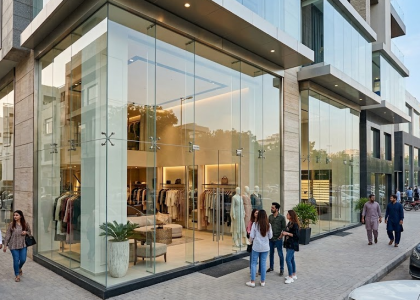
You have already decided that glass is right for your shop. The open, bright, modern front you have in mind is what customers respond to, and you have probably seen enough good examples to be sure of it. What you are weighing now is a different set of questions which type of glass, how thick, which fittings, and which supplier can be trusted to deliver a front that is still safe and still looking sharp years from now.
That is what this guide covers. A shop front faces the street every hour of every day. It takes summer heat, monsoon rain, dust, slammed doors, careless trolleys, crowds, and occasionally a person with bad intentions. Two glass fronts can look identical on installation day and behave completely differently on the day something goes wrong.
Below, we compare the main glass types, explain the safety and durability features that matter, look at what Pakistani conditions demand, and finish with a checklist of questions to put to any supplier before you sign. If you are comparing quotes right now, keep this page open next to them.
Why Safety and Durability Deserve as Much Attention as Design
Most storefront decisions begin with appearance, and that is understandable. But the cost of getting durability wrong is almost never cosmetic. A front that breaks badly can injure a customer and expose you to liability. A front that cracks means boarding up, closing for days, and losing sales while a replacement is made. A front that can be defeated quickly invites theft. Even a front that simply looks tired, with yellowing seals, sagging doors, and rust streaks, tells passers-by something about how the business is run. It helps to think of a shop front as doing three jobs at once. It must protect people, meaning customers and staff, if the glass is struck or fails. It must protect the business, meaning stock, cash, and premises. And it must keep performing, meaning it survives weather, temperature swings, and thousands of door cycles without drifting out of shape. Every feature in this guide serves at least one of those jobs, and a good specification covers all three.Glass Types Compared: What Each One Actually Does
The glass itself is the biggest decision, and the names get used loosely in quotations. Here is what each type means in practice.Tempered (toughened) glass
Tempered glass is ordinary glass heated to roughly 620–650°C and then cooled rapidly, which locks the surface into compression. The result is a panel about four to five times stronger than annealed glass of the same thickness, and one that tolerates much greater temperature differences. When it does break, it crumbles into small, relatively blunt pieces rather than long shards. It is the standard choice for shop doors and large fixed panels. Its limits are that it cannot be cut, drilled, or edged after tempering, and when it fails, the whole panel usually goes at once, leaving an open hole in your front.Laminated glass
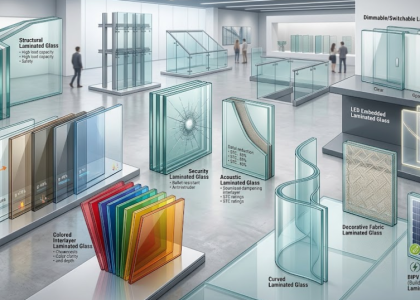
Laminated glass bonds two or more layers of glass with a tough interlayer, usually PVB. If it is hit hard, it cracks, but the fragments stay stuck to the interlayer and the pane stays in the frame. That makes it far harder to break through quickly, which is why it is favoured for security-sensitive fronts. It also blocks nearly all UV, which protects stock and interiors from fading, and it reduces street noise. It is heavier and costs more than a single tempered pane, and its edges need proper sealing where they are exposed to water. See our laminated glass installation service for the options we supply.Tempered laminated glass
Combining the two gives a laminated unit made from tempered layers. You get the strength and thermal resilience of tempering with the stay-in-place behaviour of lamination. For large frameless doors, jewellery and electronics shops, and busy street-facing fronts, this is often the specification worth paying for.Double-glazed units
An insulated glass unit places two panes either side of a sealed gap. On its own it is more a comfort and energy feature than a safety one, but each pane can be tempered or laminated, so a unit can do both jobs. For air-conditioned retail, especially on west-facing frontages, it reduces heat gain and condensation. Our double glazed glass supplier page covers the configurations.Ordinary annealed glass
Plain float glass is cheap, and that is its only advantage. It breaks into sharp, dangerous shards and handles heat poorly. It is not appropriate for doors or large shop front panels, and if a quote quietly specifies it to hit a price, treat that as a red flag.| Glass type | How it breaks | Best suited for | Watch out for |
|---|---|---|---|
| Tempered | Small blunt granules panel usually falls out | Doors and standard fixed panels | Cannot be altered after tempering sudden total failure |
| Laminated | Cracks but stays in the frame | Security-sensitive, noisy, or UV-exposed fronts | Higher cost and weight edges need sealing |
| Tempered laminated | Granules held in place by the interlayer | Large frameless fronts, high-value retail | Highest cost hardware must be rated for the weight |
| Double-glazed | Depends on the panes used | Air-conditioned, sun-facing fronts | Seal quality extra weight |
| Annealed | Long, sharp shards | Not recommended for shop fronts | Injury risk cracks under heat stress |
Choosing the Right Thickness
Thickness is not a simple quality dial, and thicker is not automatically better. The correct figure depends on panel size, how the glass is supported, wind load, and whether it is a door or a fixed panel. As a rough guide, small framed panels often use 6–8 mm glass, framed shop front panels and doors commonly use 10–12 mm, and large frameless panels or doors move into the 12–19 mm range. Treat those as ranges, not recommendations. Weight is the part people forget. Glass weighs about 2.5 kg per square metre for every millimetre of thickness, so a 12 mm door measuring 2.1 by 1 metre weighs roughly 63 kg. Hinges, floor springs, and patch fittings have rated capacities, and a heavy door on light hardware sags, drags, and eventually damages its own edges. A competent supplier should show you a calculation covering span, wind pressure, and deflection instead of quoting a thickness from habit.The Safety Features That Matter Most
Safe breakage behaviour
Ask what happens when the glass fails, not just whether it will. Tempered glass fails into granules, and laminated glass fails in place. Neither is unbreakable, but both are designed so that failure is far less likely to injure someone. Standards such as EN 12150 (thermally toughened safety glass), EN 14449 (laminated safety glass), and ASTM C1048 describe what these products must meet, and a reputable supplier can name the standard their glass is made to.Impact resistance
Doors and low-level panels take the most punishment from shoulders, bags, delivery trolleys, and running children. Impact tests such as EN 12600, which swings a heavy twin-tyre pendulum against the glass, exist to show that a pane can withstand human impact without breaking dangerously. Ask whether the glass and framing have been assessed as a system, because the frame and fixings matter as much as the pane.Forced-entry resistance
For jewellery, mobile phone, and cash-handling businesses, look at security-rated laminated glass. Thicker interlayers and multiple plies slow an attacker who has to work through the glass repeatedly, and EN 356 classifies this resistance. Be realistic burglar-resistant means delay, not immunity, and its value is buying time for alarms and neighbours. Also make sure the frame, locks, and fixings are as strong as the glass, because attackers go for the weakest link.Anti-collision markings
Clean clear glass is nearly invisible. Frameless doors and full-height panels should carry visible markings at eye level, such as a frosted band, a logo strip, or a dot pattern. It is a small design detail that prevents walk-into-glass accidents, and many building codes expect it. Our frosted glass options can turn this safety requirement into a branding opportunity.Fire and emergency exits
Standard tempered and laminated glass is not fire-rated. If your unit sits in a mall or building with fire compartment requirements, ask whether fire-rated glazing is needed for any part of the front. Whatever the glass, doors on escape routes must open easily from the inside without a key. Check the building’s rules before the design is finalised.Safety film: a supplement, not a substitute
Adhesive safety film can hold fragments together on existing glass and is a sensible upgrade for an older shop. It is not equal to a properly laminated pane, and its performance depends heavily on how it is anchored at the edges. If you are building new, specify laminated glass instead of relying on film later.
Worth Noting No glass is unbreakable. The goal of every feature above is to control how a front fails and how long it takes to fail, so people stay safe and the business stays protected. Be wary of any supplier who uses the word unbreakable as a selling point.
Durability Features That Decide How Long It Lasts
Edge quality
Glass rarely fails in the middle of a pane. Most breakage begins at an edge or hole, where small chips concentrate stress. Good fabrication means polished, arrised edges, with every cut-out, hole, and notch made before tempering. Ask to see finished edges. Rough, chipped, or inconsistent edges are a sign of rushed work.Heat-soak testing
Tempered glass can contain microscopic nickel sulphide inclusions that, in rare cases, cause spontaneous breakage months or years after installation. Heat-soak testing, which holds tempered panels at around 290°C for a set period, deliberately breaks vulnerable panels in the factory instead of on your shop front. It is standard for high-rise glazing and worthwhile for large or high-traffic shop fronts, so ask whether it is offered and what it adds to the price.Thermal stress resistance
When part of a pane sits in shade and part in direct sun, the temperature difference creates stress. Annealed glass copes with roughly 40°C of difference, while tempered glass handles well over 200°C. That is why annealed glass cracks for no obvious reason on hot afternoons, and why tempered or heat-strengthened glass is the sensible choice for frontages with strong sun.Framing and hardware
The frame and fittings carry the glass, and they age faster than the glass does. Look for aluminium sections with a proper powder-coat or anodised finish (ask for the specified coating thickness, not just the colour), stainless steel patch fittings and hinges, floor springs and closers rated for the door’s weight, and tight, well-fitted gaskets. Cheap hardware is where budget quotes usually hide their savings, and it is where callbacks begin.Sealants, gaskets, and drainage
Silicone and rubber gaskets keep water out and cushion the glass against the frame. Poor sealant shrinks, peels, and lets moisture in. Poor drainage lets water sit in the bottom of the frame, corroding fittings and staining glass edges. Ask about the sealant type, the setting blocks under each panel, and the drainage paths. These details are unglamorous, and they separate a front that lasts from one that leaks.Built for Pakistani Conditions
Specifications that work in a temperate climate do not always translate here. This is what local conditions ask of a shop front. Extreme heat. Summer temperatures across Punjab and Sindh regularly pass 40°C, and surface temperatures on sun-facing glass and frames run far higher. That raises thermal stress and makes tempered or heat-strengthened glass the baseline. Solar-control, tinted, or Low-E glass also reduces the heat entering the shop, which shows up in your air-conditioning bill. Monsoon and dust. Heavy rain and dust storms test seals, drainage, and wind-load calculations. Sliding doors with open tracks collect grit that wears rollers, so sealed, brushed tracks and regular cleaning make a real difference. Coastal air. In Karachi, salt-laden humid air corrodes ordinary fittings. Insist on marine-grade stainless steel (316) and well-coated aluminium, and expect to rinse the frame periodically. Seismic movement. Parts of Pakistan sit in active seismic zones. Glass should never be jammed tight into a frame, since proper clearances let the building move without loading the glass. Installers either understand this detail or they do not, so ask how they handle it.Security Without Losing the Open, Transparent Look
Many owners fear that stronger means more closed. It does not have to. Laminated or tempered laminated glass adds security without changing the appearance at all. Add interior lighting that keeps the shop visible after dark, a monitored alarm, and, where needed, a retractable grille set behind the glass line, and you have protection that disappears in daytime. Roll-down metal shutters deliver security but block the view and the after-hours display that transparent fronts do so well. Our comparison of a glass shop front versus a metal front weighs those trade-offs in detail, and our guide to the psychology of transparent storefronts explains why keeping that openness is worth protecting.Matching the Specification to Your Business
Jewellery, mobile, and electronics shops should look at tempered laminated glass with a security-rated interlayer, a reinforced frame, and an alarm. The glass should slow an attacker down, and everything around it should do the same. Pharmacies and clinics benefit from laminated glass for safety and noise reduction, with frosted or treated sections wherever privacy matters. Cafés and restaurants usually want tempered doors and double-glazed panels for air-conditioning efficiency. If you are considering folding or sliding glass to open the space up, insist on well-sealed tracks and hardware rated for daily use. Fashion and general retail get the most from large tempered panels for visibility, with UV-filtering laminated glass where fabrics need protection from fading, plus clear eye-level markings on doors. Units in malls and multi-storey buildings often have glazing rules set by the building, covering fire, wind load, and finishes. Confirm those requirements before you finalise a design or accept a quote.Ten Questions to Ask Any Glass Shop Front Supplier
Quotes are easy to compare on price and hard to compare on quality. These questions make quality visible.- Which glass type and standard is each panel made to? Look for named standards such as EN or ASTM, not vague words like premium or heavy duty.
- What thickness is proposed, and why? Ask to see the wind-load and deflection reasoning.
- Are all cuts, holes, and edges finished before tempering? Work done afterwards weakens or destroys the glass.
- Is heat-soak testing available? It matters most for large tempered panels.
- What are the frame material, finish, and coating thickness?
- Which hardware brands and grades are used? Check the stainless steel grade and the rated door weight.
- Which sealants and gaskets are specified, and how is drainage handled?
- Who installs the front? A trained in-house crew is usually a better sign than an unnamed subcontractor.
- What does the warranty cover, and for how long? Get it in writing, including defects, seal failure, and hardware.
- Can I see completed projects and speak to past clients? Real references beat any brochure.
Maintenance, Lifespan, and Warranty
A well-made glass front can serve for many years with modest care. Clean it with a soft cloth and a non-abrasive glass cleaner. Inspect seals and gaskets once a year, keep drainage paths clear, lubricate hinges and floor springs, and check that doors still close square. Treat chipped edges promptly, because a small chip is where a large crack begins. For a deeper look at upkeep on structural systems, see our durability and maintenance guide for point glass systems. On warranty, read what is excluded as carefully as what is included. A useful warranty names the components covered, the duration for each, and who to call. Vague promises of lifetime quality are not a warranty.Cost vs. Value: Where the Extra Money Pays Back
Better specifications cost more upfront, and it is fair to ask where the money goes. Rather than chasing the lowest quote, compare the total cost over ten years. Laminated upgrades, heat-soak testing, and quality hardware raise the price but lower the odds of breakage, callbacks, and closed-shop days. Pricing depends on glass type, thickness, size, hardware, and site conditions, so any figure quoted without a site assessment is a guess. Our laminated glass pricing guide explains what drives the numbers.How Green Glass Designer Builds Shop Fronts
We are PEC-registered and ISO-certified, with over 15 years of experience in glass design, supply, and installation across Lahore, Karachi, Islamabad, and beyond. Our process for a shop front has five stages:- Consultation. We start with your business, your frontage, your security needs, and your budget.
- Design and mock-ups. You receive customised CAD drawings and a written proposal that names the glass, thickness, and hardware.
- Fabrication. Glass is cut, tempered, and finished with precision, with edges and cut-outs completed before tempering.
- Installation. Our team installs to the approved drawings, with quality guaranteed.
- Support. After-sales service and warranty maintenance keep the front performing.
Frequently Asked Questions
1. Is tempered glass safe enough for a shop front, or do I need laminated?
For many general retail fronts, tempered glass is a safe and widely used choice, since it breaks into small blunt pieces. Laminated or tempered laminated glass is the better choice when security, noise, or UV protection matters, or when a broken panel falling out would leave your stock exposed.
2. Can a glass front be secure enough for a jewellery or mobile phone shop?
Yes, within limits. Security-rated laminated glass, a strong frame and locks, good lighting, and an alarm together make a break-in slow and noisy. No glass is burglar-proof, so the aim is delay and deterrence rather than invulnerability.
3. Will a tempered glass front crack in Pakistan’s summer heat?
Properly made tempered glass tolerates far larger temperature differences than ordinary glass. Cracking from heat is more often caused by poor edges, incorrect installation, or annealed glass that should not have been used. Good edge finishing and correct setting clearances matter as much as the glass type.
4. How long does a glass shop front last?
The glass can last for decades, but the seals, gaskets, and hardware usually need attention sooner. Lifespan depends on the specification, the environment, and how well the front is maintained. Regular inspections are the cheapest way to extend it.
5. Do I need double glazing for a shop front?
Not always. It is most useful for air-conditioned shops, sun-facing fronts, and noisy streets, where it lowers heat gain, condensation, and sound. For a small shop with light cooling needs, a single tempered or laminated pane may be enough.
6. Can I upgrade my existing shop front glass to make it safer?
Often, yes. Options include replacing panes with laminated or tempered glass, upgrading hardware, adding safety film as an interim measure, and improving lighting and alarms. A site visit is the best way to see which option suits your existing frame.