Table of Contents
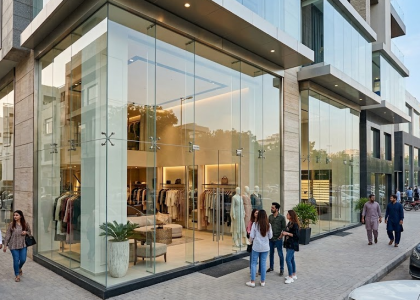
A shop owner in DHA Lahore once described a problem that comes up constantly in Pakistan’s retail and commercial spaces her storefront looked beautiful for the first six months, then the mannequins in the window started fading, the flooring near the glass began to discolor, and by midday the front section of the shop was noticeably hotter than the back, hot enough that customers would linger near the AC vents instead of browsing near the window displays she’d spent money designing. She assumed this was just the price of having a glass-heavy storefront in a hot climate. It isn’t. It’s the price of having the wrong glass.
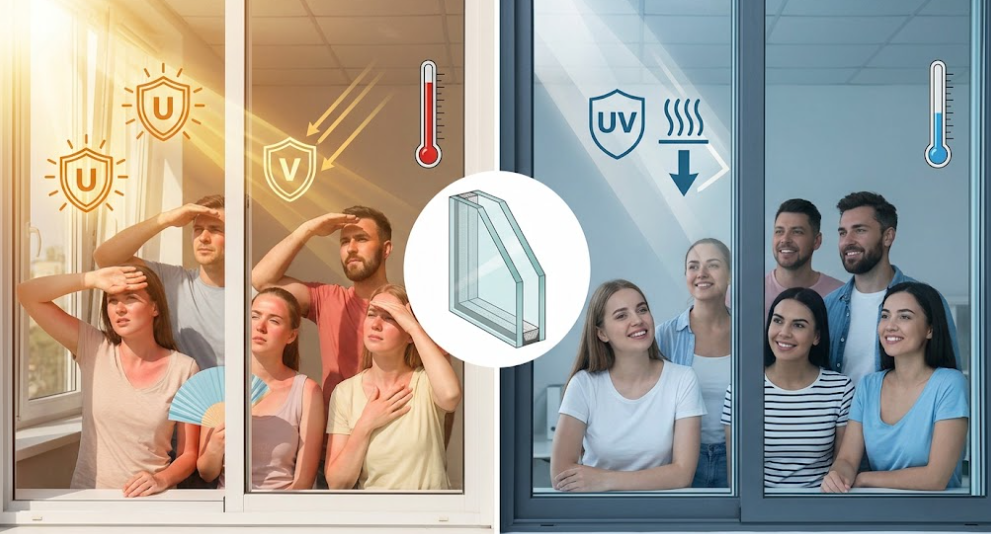
This is one of the most common gaps in how shop owners, architects, and homeowners in Pakistan think about glass. Glass is glass, in the popular imagination, transparent, lets light in, that’s the whole story. In reality, different glass types behave completely differently when it comes to two things that matter enormously in Pakistan’s climate ultraviolet radiation and solar heat gain. Laminated glass, when specified correctly, addresses both of these in a way that ordinary glass simply doesn’t, and understanding exactly how it does that is what separates a storefront or building that performs well year-round from one that’s fighting the sun every single day.
Why UV and Heat Are Two Separate Problems
Before getting into what laminated glass actually does, it’s worth untangling something people often lump together UV damage and heat gain are two distinct problems caused by two different parts of sunlight, and a glass type can address one without necessarily addressing the other.
Ultraviolet radiation is the part of sunlight responsible for fading fabrics, degrading plastics, bleaching wood finishes, and causing the slow discoloration you see in flooring, furniture, and merchandise sitting near a window. UV damage happens regardless of whether a room feels hot, a space can be perfectly air-conditioned and comfortable while everything inside it is still quietly fading under UV exposure.
Solar heat gain, on the other hand, is about infrared radiation and visible light carrying thermal energy through the glass and into the space behind it, which is what makes a sun-facing room feel noticeably hotter than the rest of a building and what drives up air conditioning costs. This is a separate physical mechanism from UV transmission, and ordinary clear glass, even glass that blocks some UV, can still let a significant amount of heat-carrying radiation through.
The reason this distinction matters practically is that not every glass upgrade solves both problems equally. Some tinted glass reduces glare and heat somewhat but does little for UV. Some UV-filtering films block ultraviolet effectively but have limited impact on heat. Laminated glass, particularly when specified with the right interlayer, is one of the few glazing solutions that meaningfully addresses both, which is exactly why it’s worth understanding on its own terms rather than assuming any glass upgrade does the same job.
What Laminated Glass Actually Is, and Why the Interlayer Matters
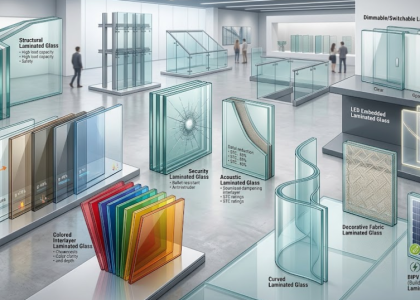
Laminated glass is built from two (or more) layers of glass permanently bonded together with an interlayer, most commonly polyvinyl butyral (PVB), sandwiched between them under heat and pressure. From the outside, it looks like a single pane of glass. Structurally and functionally, it behaves very differently from a single sheet of ordinary glass, and the interlayer is doing most of that work.
The interlayer serves several purposes simultaneously. It’s what holds the glass together if it’s ever cracked or shattered, which is why laminated glass is classified as a safety glass and is widely used in applications where impact resistance matters. But that same interlayer is also, largely as a secondary benefit of its chemical composition, highly effective at blocking ultraviolet radiation. Standard PVB interlayers block the vast majority of UV radiation passing through the glass, typically over 99% of UV rays in the most damaging wavelength range, which is a dramatically higher level of protection than ordinary annealed or tempered glass provides on its own.
This UV-blocking property isn’t an added feature bolted onto laminated glass, it’s essentially built into the chemistry of the interlayer itself, which means it’s consistent and doesn’t degrade or wear off the way a surface-applied film might over years of sun exposure. This is one of the key reasons laminated glass performs so differently from ordinary glass with an aftermarket UV film applied to it, the protection is inside the glass assembly, not sitting on top of it as a separate layer that can peel, bubble, or degrade.
How Laminated Glass Blocks UV Radiation
To understand why this matters in practical terms, it helps to look at what happens to sunlight as it passes through different types of glazing.
Ordinary annealed or tempered clear glass blocks a portion of UV radiation, but a meaningful amount still passes through, enough that furniture, fabrics, artwork, flooring, and merchandise positioned near untreated glass windows will show visible fading and degradation over months and years of exposure. This is why homes and shops relying purely on standard glass often see curtains near windows fade faster than curtains elsewhere in the same room, and why product displays positioned in a sun-facing shop window need to be rotated or protected far more carefully than displays elsewhere in the store.
Laminated glass with a standard PVB interlayer changes this picture substantially. Because the interlayer itself absorbs the majority of UV radiation in the range responsible for most fading and material degradation, what passes through to the interior is dramatically reduced. This doesn’t mean zero UV exposure, some UV transmission still occurs, and materials will still age over very long timeframes under any level of sun exposure, but the rate of fading and degradation drops substantially compared to standard glass, often enough that the practical difference is visible within the first year or two of comparison.
For businesses specifically, this translates into concrete, tangible benefits merchandise displayed in shop windows retains its original color and appearance for longer, reducing the need to rotate stock away from window displays purely to protect it from sun damage. Flooring, fixtures, and furniture near glazed areas age more slowly. Artwork, photographs, and printed signage displayed near windows hold their color rather than bleaching out within months.
Worth Noting
UV protection from laminated glass is a property of the interlayer itself, not the glass panes on either side of it. This means the UV performance is essentially the same whether you’re using laminated glass with two layers of clear tempered glass, laminated glass with a tinted outer layer, or laminated glass combined with a Low-E coating. If UV protection is your primary concern, laminated glass with a standard PVB interlayer already delivers strong performance on its own, additional tinting or coatings are worth adding primarily for heat and glare control, not because they’re necessary for UV protection.
How Laminated Glass Reduces Heat Gain
Heat performance works through a somewhat different mechanism, and it’s where the specific configuration of laminated glass, what kind of glass panes are used, whether it’s tinted, whether it’s combined with a Low-E coating, starts to matter more than the interlayer alone.
A standard laminated glass unit using two clear tempered panes with a plain PVB interlayer does offer some improvement in heat performance compared to a single pane of ordinary glass, partly because the additional layer of material and the interlayer itself add a degree of thermal resistance, and partly because some solar energy is absorbed and re-radiated rather than passing straight through as it would through a single thin pane. But this baseline improvement, while real, is modest compared to what’s achievable when laminated glass is specified with heat performance specifically in mind.
The bigger heat-control gains come from combining lamination with other glass treatments. A laminated unit using a tinted or reflective outer pane reduces the amount of solar energy entering the interior more significantly than clear laminated glass alone, since the tint itself absorbs or reflects a portion of incoming solar radiation before it ever reaches the interlayer. Laminated glass combined with a Low-E (low-emissivity) coating goes further still, since Low-E coatings are specifically engineered to reflect infrared radiation, the part of sunlight most responsible for heat transfer, while still allowing visible light through, meaning you get a bright, naturally lit interior without the accompanying heat load.
This layered approach, lamination for UV protection and safety, combined with tinting or Low-E coating for heat control, is why the most effective glazing specifications for Pakistan’s climate rarely rely on a single glass property in isolation. A shop owner specifically concerned about heat gain in a west-facing storefront gets meaningfully better performance from laminated glass paired with a Low-E coating than from either laminated glass or Low-E glass alone, since each is addressing a distinct part of the problem.
Comparing Glazing Options for UV and Heat Performance
To make these differences concrete, here’s a general comparison of how common glazing options in Pakistan perform against UV and heat, using relative performance levels rather than precise percentages, since exact performance depends on specific product specifications, coating type, and interlayer formulation.
| Glazing Type | UV Protection | Heat Reduction | Notes |
|---|---|---|---|
| Standard annealed/tempered clear glass | Low | Low | Baseline glazing, minimal protection against either factor |
| Tinted/reflective glass (non-laminated) | Low–Moderate | Moderate | Reduces glare and some heat limited UV benefit |
| Laminated glass (clear, standard PVB) | High | Low–Moderate | Strong UV blocking via interlayer modest heat improvement |
| Laminated glass (tinted outer pane) | High | Moderate | Combines UV blocking with meaningful heat reduction |
| Low-E coated glass (non-laminated) | Low–Moderate | High | Strong heat performance UV protection is secondary benefit, not primary |
| Laminated + Low-E combination | High | High | Addresses both UV and heat comprehensively |
The pattern worth noticing here is that no single glazing type maximizes both UV and heat performance on its own except the combined laminated plus Low-E specification. This is genuinely useful to know when a supplier or contractor recommends one type of glass as a solution for “sun protection” broadly, it’s worth asking specifically whether they mean UV protection, heat reduction, or both, since these are different performance characteristics that don’t automatically come bundled together.
Why This Matters More in Pakistan’s Climate Specifically
Pakistan’s climate makes this a genuinely higher-stakes consideration than it might be in a more temperate country. Much of the country experiences intense, sustained sun exposure for a large portion of the year, with summer temperatures regularly pushing well above what most glazing specifications were originally designed around in cooler climates. This has two compounding effects on any building or shop relying on standard glass.
First, UV-driven material degradation happens faster under Pakistan’s sun intensity than it would in a milder climate, which means the fading and discoloration problems described earlier tend to show up sooner and more visibly than shop owners might expect, sometimes within months rather than years for cheaper or more UV-sensitive materials.
Second, the cooling cost burden from poor heat performance is amplified by how much of the year air conditioning runs continuously in most of Pakistan’s commercial and retail spaces. A storefront or office losing significant cooling efficiency to solar heat gain through standard glass isn’t a minor seasonal inconvenience, it’s a cost that compounds across many months of the year, every year, for as long as that glass remains in place.
This combination is exactly why laminated glass with appropriate heat-control specification has moved from being a premium or optional upgrade in Pakistan’s commercial glazing market to something increasingly treated as a baseline consideration for any sun-exposed glass installation, whether that’s a retail shop front, an office facade, or a residential window facing west or south.
A Quick Self-Check: Does Your Space Actually Need This?
Not every glazed space faces the same level of UV or heat exposure, so it’s worth honestly assessing your specific situation before assuming you need the highest-tier specification available.
Does your glass face east, west, or south, directions that receive significant direct sun exposure for much of the day, or is it shaded, north-facing, or otherwise protected from prolonged direct sunlight? Do you have merchandise, furniture, flooring, or fixtures positioned close to the glass that would visibly show fading or discoloration over time, or is the space behind the glass largely open with nothing sensitive to UV exposure sitting nearby? Is air conditioning running for extended periods in the space behind this glass, making heat gain a real ongoing cost, or is it a space that’s naturally ventilated or only occasionally climate-controlled? And has your current glass already shown visible signs of UV damage nearby, fading fabric, discolored flooring, bleached signage, that would justify prioritizing this upgrade now rather than later?
If several of these point toward significant sun exposure and sensitive interior contents, laminated glass with appropriate heat-control specification is very likely worth prioritizing. If your exposure is more limited, a lighter-touch solution might reasonably meet your needs, though it’s still worth discussing directly with a glazing specialist who can assess your specific orientation and usage.
Application by Business and Space Type
Different types of businesses and spaces have different priorities when it comes to UV and heat performance, and it’s worth thinking about your specific use case rather than assuming a generic specification fits everyone.
Clothing and fashion retailers have a particularly strong stake in UV protection specifically, since fabric fading is one of the most visible and costly forms of UV damage, a faded garment in a window display isn’t just aesthetically disappointing, it’s often unsellable at full price. Laminated glass for window displays is close to essential for any retailer using their storefront as active merchandising space rather than just a barrier.
Restaurants and cafés with large glazed seating areas tend to prioritize heat performance heavily, since customer comfort near windows directly affects how usable and desirable that seating actually is. A laminated glass and Low-E combination here protects both furniture and customer comfort simultaneously.
Jewelry and high-value retail benefit from UV protection for a somewhat different reason, many display materials, from certain gemstone settings to printed backdrops and signage, are UV-sensitive in ways that aren’t always obvious until damage has already occurred, making laminated glass a reasonably low-cost insurance policy against a higher-value loss.
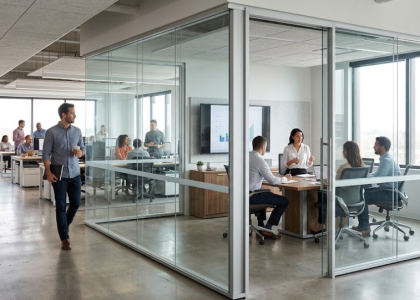
Office buildings and corporate facades with significant west or south-facing glazing see the heat-gain cost accumulate the most directly, since cooling costs across a full floor or building scale up dramatically compared to a single shop window, making the combined laminated plus Low-E specification a genuinely meaningful long-term cost consideration, not just a comfort upgrade.
Residential applications, particularly homes with large west-facing windows, benefit from both properties equally, protecting furniture, flooring, and artwork from fading while keeping living spaces comfortable without over-relying on air conditioning during Pakistan’s hottest months.
Frequently Asked Questions
1. Does laminated glass completely block UV radiation?
No glazing blocks UV radiation entirely, but laminated glass with a standard PVB interlayer blocks the significant majority of UV radiation in the range most responsible for fading and material degradation, typically over 99% in that critical range. This represents a dramatic improvement over standard glass, even though it isn’t literally zero UV transmission.
2. Is laminated glass the same as tinted or Low-E glass?
No, these are distinct properties that can be combined but aren’t the same thing. Lamination refers to the bonded, multi-layer construction that provides safety and UV-blocking benefits. Tinting refers to color added to the glass itself, which primarily affects glare and some heat absorption. Low-E refers to a thin coating that specifically reflects infrared heat radiation. Laminated glass can be clear, tinted, or combined with a Low-E coating, each combination changes the performance profile.
3. Will laminated glass make my shop or room darker?
Standard clear laminated glass has minimal impact on visible light transmission compared to ordinary clear glass, so it generally doesn’t make a space noticeably darker. If tinting or a reflective coating is added for additional heat control, there is some reduction in visible light, but this can usually be balanced against your specific brightness and heat-control priorities when specifying the glass.
4. How long does the UV protection in laminated glass last?
Because the UV-blocking property comes from the interlayer’s chemical composition rather than a surface coating or film, it doesn’t wear off, peel, or degrade the way an applied UV film might over time. It’s effectively a permanent property of the glass assembly for the practical lifespan of the installation.
5. Is laminated glass worth it if my building already has decent air conditioning?
Air conditioning addresses comfort but doesn’t stop UV-driven fading and material degradation, which continues regardless of how cool the space feels. If UV protection for merchandise, furnishings, or finishes matters to you, laminated glass is worth considering independently of your cooling setup, and it can also meaningfully reduce the cooling load itself when combined with heat-control features like tinting or a Low-E coating.
6. Can I add UV or heat protection to my existing glass instead of replacing it with laminated glass?
Aftermarket UV and solar control films are available and can offer some improvement over untreated glass, but they generally underperform laminated glass over the long term, since films can degrade, bubble, or peel with age and sun exposure, and they don’t carry the added safety and impact-resistance benefits that come built into laminated glass itself. For new installations or full glazing replacements, specifying laminated glass directly tends to be the more durable long-term solution.
Choosing the Right Laminated Glass Specification for Your Space
UV fading and solar heat gain aren’t cosmetic inconveniences to be managed after the fact, they’re predictable physical consequences of how sunlight interacts with ordinary glass, and they’re consequences that compound daily for as long as the wrong glass stays in place. Laminated glass addresses the UV side of that equation reliably through its interlayer, and when paired thoughtfully with tinting or a Low-E coating, it addresses the heat side just as effectively, without forcing a trade-off between a bright, transparent space and a comfortable, protected one.
The right specification genuinely depends on your building’s orientation, what’s sitting near your glass, and how much of the year your space relies on air conditioning, which is exactly the kind of assessment worth doing with someone who can look at your actual space rather than applying a one-size-fits-all recommendation.
If you’d like a proper assessment of which laminated glass specification fits your shop, office, or home, reach out for a free consultation or message directly on WhatsApp to get started.